Right to repair should be legally mandated
Aldo's Synthesis high
Based on the strength of the Arguments below
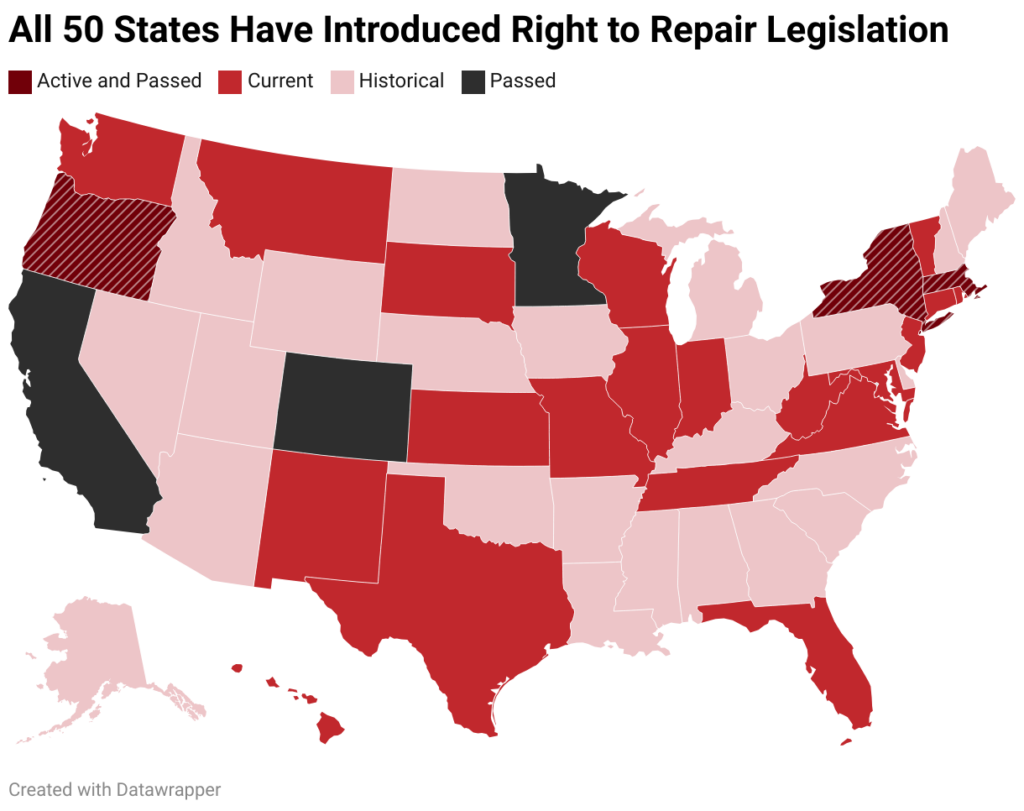
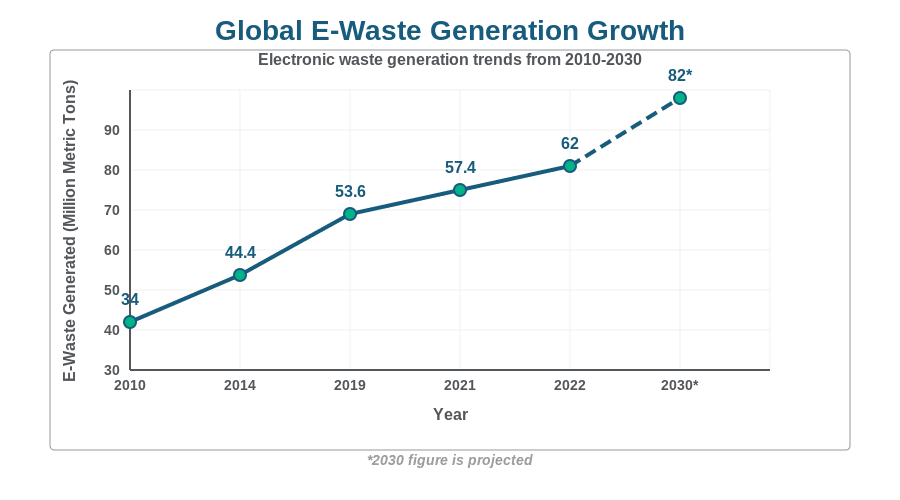
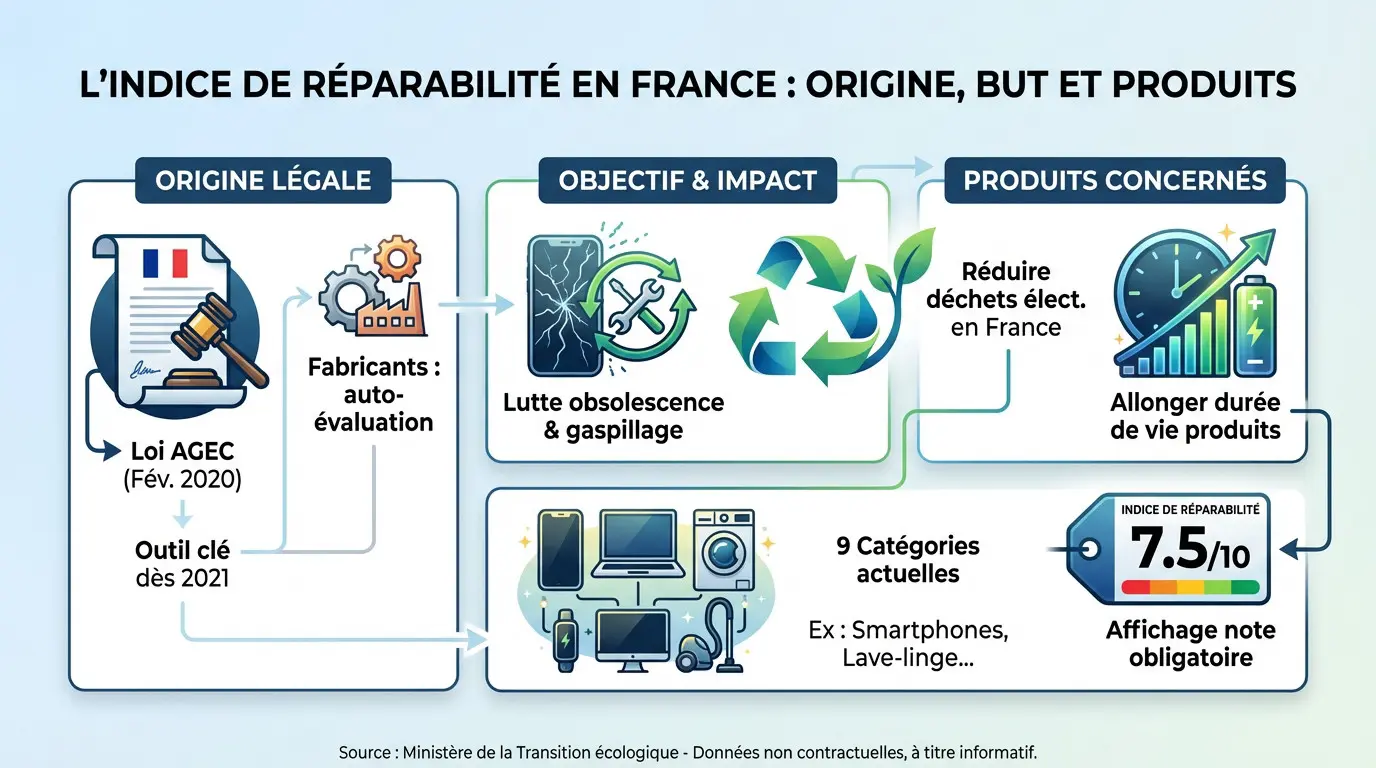
The claim asks whether governments should require manufacturers to supply, on reasonable terms, the parts, tools, documentation, diagnostics, and software access needed by owners and independent businesses to repair purchased products. The central policy question is not merely whether repair is desirable, but whether legally guaranteed access would meaningfully improve competition, ownership, affordability, and product longevity without imposing disproportionate security, safety, privacy, or compliance costs. The appropriate judgment therefore depends both on the case for intervention and on how narrowly the mandate defines reasonable access, protected information, covered products, and safeguards. The strongest case for a legal mandate is that manufacturer control over data, diagnostics, parts, and related resources can constrain independent repair competition in ways that purchasers cannot readily overcome through ordinary market choice. A U.S. Government Accountability Office review found that increasingly complex vehicle technologies and manufacturer-controlled data can affect independent repair access, although stakeholders disputed the adequacy and security of existing arrangements. The most direct empirical policy evidence is a peer-reviewed observational study finding results consistent with an increase in small independent automotive-repair establishments following Massachusetts's 2012 law; this supports a competition mechanism, though not broad generalization beyond that state and sector (see Figure 1). Government-recognized copyright exemptions also show that technological protection measures can obstruct otherwise lawful diagnosis, maintenance, and repair, while demonstrating why legal permission to circumvent a lock is incomplete if manufacturers need not provide parts, tools, passwords, or documentation. A second supporting rationale is that accessible repair may lower household replacement spending and reduce premature disposal when repairing an otherwise serviceable product is economical. European Commission analyses project consumer savings, less premature disposal, and additional repair-sector activity from repair-promoting policies, but these are prospective estimates produced in support of proposed policy rather than observed post-enactment effects. Likewise, an advocacy estimate of nearly $40 billion in potential annual U.S. household savings indicates possible scale, but it depends on assumptions about repair rates, costs, and replacement behavior and is not a measured statutory effect. Peer-reviewed research supports the underlying product-life mechanism: batteries, displays, continued software support, spare parts, documentation, modular design, diagnostics, and economic viability can all determine whether electronics remain usable and repairable. European Environment Agency analysis concludes that longer useful lives for selected electronics and appliances can reduce environmental and climate pressures by avoiding production, while noting that gains vary by product and can be offset when continued use preserves inefficient equipment (see Figure 2). The case for intervention is especially compelling where repair delays affect access to essential equipment rather than merely the timing of a discretionary replacement. An advocacy investigation documented accounts in which powered-wheelchair repair delays impaired mobility and were associated with employment and health consequences, although its survey- and case-based evidence cannot establish prevalence. Colorado responded with a targeted requirement that powered-wheelchair manufacturers provide owners and independent providers with documentation, parts, embedded software, firmware, tools, and related access on fair and reasonable terms, illustrating a legally workable sector-specific model even though enactment alone does not demonstrate improved outcomes. The strongest objection is not that all independent repair is unsafe, but that privileged access to firmware, credentials, diagnostics, and connected-product data can create genuine cybersecurity and privacy risks. A peer-reviewed analysis concludes that expanded repair access can enlarge attack surfaces where work involves diagnostic privileges, security credentials, firmware signing, or comparable controls, while rejecting cybersecurity as a categorical justification for prohibiting repair. The GAO likewise recorded disagreement among vehicle stakeholders about the cybersecurity implications of wider data access, leaving implementation risks unresolved even where the competition problem is recognized. Safety-critical products also resist a single undifferentiated access rule because faulty work may threaten patients or bystanders as well as the owner's property. The FDA did not find available evidence establishing a widespread public-health concern sufficient to justify blanket regulation of all third-party medical-device servicers, but it identified weaknesses in incident data and favored quality-management practices and a clearer distinction between servicing and remanufacturing. That finding undercuts a blanket safety exclusion for independent service, but it also supports calibrated requirements for competence, records, quality systems, and the treatment of modifications that effectively create a different product. A further limitation is that compelling manufacturers to maintain inventories, documentation, interfaces, and secure-access systems can impose compliance costs, while access by itself does not ensure that consumers will choose repair. Peer-reviewed consumer research finds that price, convenience, perceived remaining product life, trust, skills, and the appeal of replacement all influence willingness to repair. European policy analyses accordingly anticipate both benefits and producer or administrative compliance costs, but their prospective nature leaves the net magnitude uncertain. More broadly, the evidence establishes plausible competition and product-longevity mechanisms more securely than it establishes nationwide causal effects on prices, waste, reliability, or innovation, because the principal direct statutory study is observational and confined to one state's automotive sector. Taken together, the evidence better supports a scoped legal right to repair on fair and reasonable terms than either unrestricted disclosure or complete manufacturer discretion. The cybersecurity literature points toward authenticated access, access controls, disclosure rules, and sector-specific standards rather than a categorical denial of repair resources. For medical and other safety-critical devices, the FDA evidence supports differentiating ordinary servicing from remanufacturing and pairing access with appropriate quality-management expectations. Colorado's powered-wheelchair law demonstrates one available design: sector-specific coverage and access to enumerated repair resources on fair and reasonable terms, without proving that the same details fit every product category. Access mandates are also more likely to produce their intended effects when policy addresses physical design, component replacement, continuing software support, repair economics, and consumer information. Research on electronics and smartphones identifies modularity, spare parts, documentation, replaceable batteries and displays, diagnostics, economic viability, and software support as interdependent determinants of useful life, so documentation access alone may not make repair practical (see Figure 3). Even a technically repairable product may still be replaced when repair is inconvenient, costly, distrusted, or unattractive relative to a new purchase. Environmental justification is similarly product-dependent: extending life can avoid manufacturing burdens, but keeping inefficient appliances in use can reduce or reverse the gain. The principal gap is not a lack of arguments or relevant source types, but a shortage of post-enactment causal evaluations across products and jurisdictions. The bundle does not permit confident estimates of how mandates affect final product prices, manufacturer compliance expenditures, repair prices, product reliability, innovation, waste volumes, or consumer welfare over time. It also leaves unresolved how often broader software or diagnostic access produces security or privacy incidents relative to secure-access alternatives, and which safeguards are proportionate in each sector. Potential conflicts of interest are an important interpretive limitation because several prominent savings, wheelchair-impact, and prospective policy estimates originate from advocates or institutions supporting the policies assessed. Accordingly, modeled benefits and implementation claims should receive less weight than replicated independent evaluations until comparable outcome data accumulate. On balance, the evidence supports legally mandated repair access, but supports a qualified, sector-sensitive mandate more strongly than an absolute or technologically indiscriminate right. Confidence in that directional judgment is high because the underlying access, competition, security, and repairability mechanisms are supported by strong peer-reviewed and government sources. The dominant uncertainty is not whether both benefits and risks exist, but their magnitude under particular statutory designs, especially where influential projections come from interested institutions and independent post-enactment evaluations remain scarce.
Supporting Arguments
P1Mandates can correct manufacturer control over repair markets
Manufacturers can control parts, diagnostics, manuals, firmware, and authorization in ways that owners and independent shops cannot overcome through ordinary market choice. The FTC found little evidence for broad restrictions, while the Massachusetts study provides limited but concrete evidence that mandated access can expand independent repair activity.
79/100 · Direct Evidence
P2Repair access can reduce replacement spending
Repair can cost less than replacing an otherwise serviceable product, so access to competitively supplied repair may benefit households. Advocacy and EU models project substantial savings, but these estimates should be treated as potential rather than guaranteed because they rely on assumptions about prices and consumer behavior.
49/100 · Data Analysis
P3Longer product life can reduce environmental burdens
Manufacturing new electronics and appliances uses materials and energy and creates emissions, so extending product life through repair can avoid some impacts. EEA analysis and technical smartphone research support this mechanism, although benefits differ by product and depend on whether repair actually postpones replacement.
79/100 · Logical Inference
P4Software locks can nullify practical ownership rights
Owners may possess the physical product yet remain unable to diagnose or restore it because repair requires access to protected software. Copyright exemptions recognize legitimate repair, but because they do not compel provision of parts, credentials, or documentation, legislation may be necessary to make that permission usable in practice.
83/100 · Logical Inference
P5Repair access is especially important for essential equipment
For powered-wheelchair users, long repair delays can restrict mobility and create health or employment harms that ordinary replacement-market analysis understates. Colorado's targeted law shows how a mandate can prioritize access for essential equipment, although stronger post-implementation evaluation is still needed.
48/100 · Direct Evidence
Opposing Arguments
C1Privileged repair access can introduce cybersecurity and privacy risks
Modern repair may require diagnostic privileges, firmware access, security keys, or telematics data, and careless disclosure can expand attack surfaces or expose personal information. Vehicle and cybersecurity evidence supports genuine risks, so an unlimited mandate applying identical rules to every product would be difficult to justify.
77/100 · Expert Opinion
C2Repair mandates may impose costs without ensuring repair
Manufacturers may incur costs to maintain inventories, documentation, interfaces, training material, and secure access systems, and some of those costs may be reflected in product prices. Consumer research also shows that access alone does not ensure repair because convenience, trust, price, skills, and replacement preferences remain influential.
71/100 · Logical Inference
C3Safety-critical sectors require tighter controls
Incorrect work on vehicles, medical devices, batteries, or mobility equipment can create risks beyond damage to the owner's property. FDA did not find evidence supporting a blanket exclusion of third-party medical-device service, but its emphasis on quality systems and the limitations of incident data support calibrated standards and a distinction between repair and remanufacturing.
71/100 · Direct Evidence
C4Estimated savings and environmental gains are not yet robust causal proof
Many prominent benefits are modeled projections or technical mechanisms rather than measured outcomes following enacted laws. The strongest direct policy study is limited to one state's auto-repair sector, making broad claims about nationwide prices, waste, innovation, or reliability premature.
73/100 · Data Analysis
All contributions are reviewed for clarity, balance, and evidence. The strongest insights are elevated into the argument graph — with credit to you.
Help improve this analysis on ProConWiki →