Cryptocurrency has failed as a currency but succeeded as an asset class
Aldo's Synthesis high
Based on the strength of the Arguments below
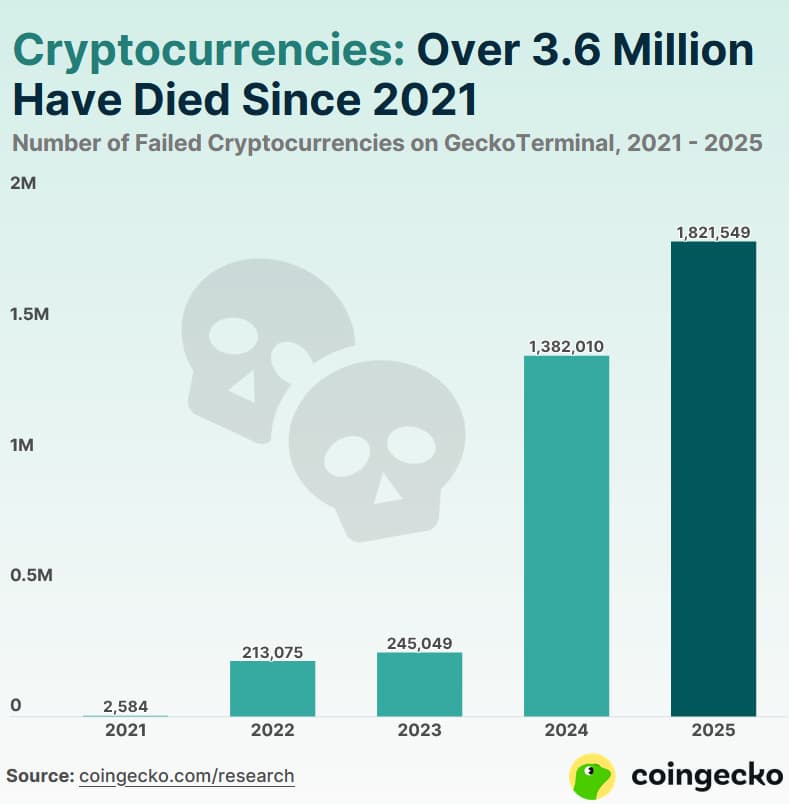
The claim asks whether cryptocurrencies should be judged as unsuccessful money but successful investments, a distinction that turns on the benchmarks assigned to “currency,” “asset class,” and “success.” The strongest interpretation compares routine payment use and monetary stability with national money, while treating investability, liquidity, trading infrastructure, and portfolio use as evidence of asset-class standing rather than proof of social value or investor welfare. The affirmative case is strongest for major unbacked cryptocurrencies: evidence from household surveys, transaction studies, institutional assessments, market infrastructure, and portfolio research consistently depicts them as marginal payment instruments but established objects of investment, speculation, custody, trading, and allocation. U.S. Federal Reserve evidence finds that only a small share of consumers use cryptocurrency for payments and that investment is a more common reason for ownership than purchases or transfers. A nationally representative study of El Salvador likewise found that cash remained dominant after Bitcoin became legal tender, most users stopped using the subsidized government wallet after spending its sign-up bonus, and Bitcoin was rarely used for taxes or remittances. Transaction-level and volatility studies reinforce the behavioral distinction: Bitcoin has predominantly been held for investment or speculation, and its purchasing power is substantially more volatile than that of major currencies. That volatility impairs Bitcoin’s usefulness as a dependable short-horizon store of value and medium of exchange, because prices and transaction balances can change sharply relative to conventional monetary units (see Figure 1). Asset-class standing is supported most clearly by the durable financial infrastructure through which major cryptoassets are traded, custodied, valued, and connected to conventional finance. The Cambridge benchmarking study documents a global ecosystem of exchanges, miners, custody providers, and tens of millions of verified users, although its estimates depend on participating firms and imperfect methods for identifying unique users. The SEC’s January 2024 approval of multiple spot Bitcoin exchange-traded products made Bitcoin accessible through mainstream securities accounts, providing unusually clear evidence of institutional investability even though the agency expressly withheld endorsement and warned that Bitcoin remained speculative and volatile. BIS analysis similarly recognizes crypto’s links with traditional finance while identifying fragmentation, leverage, unstable incentives, congestion, and dependence on centralized intermediaries, so institutionalization establishes recognition rather than safety. Portfolio research supplies a narrower but economically relevant form of success: selected cryptocurrencies have sometimes improved historical diversification or risk-adjusted performance when added in small allocations. These studies show portfolio relevance, not guaranteed outperformance: the results depend on the asset, sample period, optimization method, transaction costs, estimation error, tail risk, and correlations that can change over time. The principal objection is categorical: “cryptocurrency” includes volatile unbacked tokens and price-stabilized arrangements with materially different monetary properties, so evidence about Bitcoin cannot establish universal currency failure. Payment use is limited rather than nonexistent: U.S. surveys record a minority using cryptocurrency for purchases or transfers, and payment relevance may differ across demographic and financial-access groups. The BIS payments committee further finds that stablecoin arrangements could reduce some cross-border payment frictions, although governance, settlement, redemption, liquidity, operational, and regulatory risks make those benefits conditional. Accordingly, the evidence supports weak broad adoption more securely than literal functional failure, especially where the relevant function is transfer or settlement rather than stable retail pricing. The second objection concerns the meaning of asset-class “success”: large capitalization, active trading, integration with traditional finance, and ETF access demonstrate investability and recognition, but do not establish durable returns, productive value, safety, or favorable outcomes for typical investors. BIS estimates based on app activity and inferred purchase timing indicate that a large majority of users in nearly all sampled economies probably lost money over the examined period, while larger holders tended to sell as smaller users bought. Those estimates are not definitive because they infer acquisition timing from app-use data, but they materially weaken any equation of market survival with broad investor welfare. Market scale also coexists with fragmentation, unstable incentives, leverage, and project-level failure, so aggregate capitalization cannot be generalized to every token or venture. The supplied evidence documents market scale but does not substantiate the particular cumulative “dead coins” count presented in Figure 2, so the figure should not determine the assessment (see Figure 2). Claims of investment success are also vulnerable to unstable diversification: systematic review and portfolio studies find that hedging or risk-return benefits vary with the cryptocurrency, comparison asset, period, model, and market state. Low historical correlation therefore establishes possible portfolio distinctiveness, not a dependable safe haven or a reliable future allocation rule. The evidence supports the claim most strongly when its scope is narrowed to Bitcoin and similar unbacked tokens, and when “asset-class success” means recognized, liquid investability rather than reliable returns or broad investor benefit. For unbacked cryptoassets, high volatility, speculative demand, and weak routine adoption support failure relative to national money’s functions as a stable unit of account, short-horizon store of value, and broadly accepted payment medium. Stablecoins require separate treatment because their payment function and price behavior depend on issuers, reserves, redemption, settlement arrangements, and regulation rather than the monetary design of an unbacked token. Legal recognition is not sufficient for organic monetary adoption, as El Salvador’s experience shows. Despite legal-tender status and substantial incentives, continued wallet use was limited and cash remained dominant, indicating that formal status did not produce persistent, widespread use. The asset side likewise changes with the comparator: relative to a nonexistent market, crypto has achieved liquidity, specialized infrastructure, and mainstream product access; relative to diversified traditional investments, its risk-adjusted performance and investor-welfare record remain contested. Historical portfolio improvements justify calling crypto allocation-relevant, but their model and period dependence precludes treating success as universal, durable, or prospective. The principal evidentiary gaps concern global representativeness, changing market conditions, category aggregation, outcome benchmarks, and unresolved conflict-of-interest classifications. U.S. and El Salvador evidence cannot by itself resolve payment use in every jurisdiction, particularly where access to conventional money or cross-border payment systems differs. Several studies concern earlier periods or historical optimization, leaving uncertainty about whether payment behavior, correlations, and portfolio performance will persist. The bundle does not provide a common success threshold for payment penetration, price stability, investment returns, market durability, or investor welfare, so the conclusion necessarily depends on an explicit choice among those standards. It also offers less direct evidence on stablecoin transaction volumes and outcomes than on Bitcoin, limiting any cryptocurrency-wide verdict. Finally, some market-scale evidence comes from an industry source, and the supplied structural classification identifies unresolved conflict-of-interest classifications as the dominant residual uncertainty. On balance, the claim is substantially supported with high confidence if read as applying chiefly to Bitcoin and similar unbacked tokens and if asset-class success means meaningful investability and portfolio relevance, not consistently favorable returns or investor welfare. The evidence for weak routine monetary use is stronger than the evidence for literal failure, because payment use persists at low levels and the strongest adverse findings concern unbacked assets rather than every crypto design. The evidence for asset-class recognition is strong, but the evidence for durable economic or investor success is mixed because infrastructure and occasional diversification benefits coexist with volatility, unstable correlations, ecosystem risks, and estimated retail losses. The dominant uncertainty is therefore definitional and classificatory—especially whether stablecoins belong in the same judgment and whether “success” denotes market recognition or investor outcomes—with unresolved conflict-of-interest classifications adding residual caution.
Supporting Arguments
P1Routine payment use remains marginal
Surveys in both the United States and El Salvador show that investment or one-time incentive use is substantially more common than recurring payment use. Even legal-tender status and a subsidized wallet did not make Bitcoin a broadly used transactional currency in El Salvador.
70/100 · Direct Evidence
P2Volatility impairs core monetary functions
Extreme and unpredictable purchasing-power changes make it difficult to price goods, write contracts, or hold short-term transaction balances in unbacked cryptocurrencies. Empirical and institutional research therefore finds that assets such as Bitcoin perform poorly as stable units of account and everyday stores of value.
78/100 · Direct Evidence
P3Observed behavior is primarily speculative
Blockchain and user-behavior studies indicate that Bitcoin has generally been acquired and held for capital gains rather than spent in ordinary commerce. This behavioral evidence supports the claim's distinction between currency use and asset-market use.
77/100 · Direct Evidence
P4A mature investment infrastructure now exists
Cryptoassets can be bought, sold, custodied, and valued through global exchanges and specialized service providers, while regulated spot Bitcoin exchange-traded products provide access through conventional securities accounts. This institutional infrastructure is strong evidence that at least major cryptocurrencies function as investable assets, regardless of whether they are good investments.
71/100 · Direct Evidence
P5Crypto can add portfolio diversification
A substantial empirical literature finds that small cryptocurrency allocations have sometimes improved historical portfolio diversification or risk-adjusted performance. The findings are conditional rather than universal, but they show that crypto can possess portfolio characteristics distinct from conventional currencies and securities.
87/100 · Data Analysis
Opposing Arguments
C1Failure is too absolute because payment use exists
Cryptocurrency is used by a minority for purchases, transfers, and remittances, so it has not literally ceased to function as a medium of exchange. Stablecoins may be especially useful in cross-border settlement or where local currencies and payment systems are weak, although governance and redemption risks remain substantial.
54/100 · Direct Evidence
C2Cryptocurrency is not one homogeneous category
The claim groups together volatile unbacked tokens, reserve-backed stablecoins, and other designs with materially different monetary properties. Evidence about Bitcoin's volatility or speculative demand cannot automatically establish that every cryptocurrency has failed as currency.
58/100 · Logical Inference
C3Market scale does not prove asset-class success
Large capitalization, trading volume, and ETF availability establish investability and market recognition, not durable economic success. Crypto markets have experienced crashes, failures, manipulation concerns, and severe investor losses, so the word 'succeeded' depends on whether success means market survival, returns, utility, or investor welfare.
77/100 · Logical Inference
C4Diversification benefits are unstable and period-dependent
Low historical correlation does not guarantee protection during future crises, and optimized allocations can be highly sensitive to the chosen sample. Reviews find inconsistent safe-haven performance and emphasize volatility, tail risk, and shifting relationships with traditional assets.
86/100 · Data Analysis
C5Many retail investors did not share in the success
BIS estimates suggest that most retail users in its sample probably lost money, especially those entering after price increases. If asset-class success is evaluated by broad investor outcomes rather than capitalization or financial-product availability, the evidence is much less favorable.
75/100 · Data Analysis
All contributions are reviewed for clarity, balance, and evidence. The strongest insights are elevated into the argument graph — with credit to you.
Help improve this analysis on ProConWiki →