AI-generated code is production-ready
Aldo's Synthesis high
Based on the strength of the Arguments below
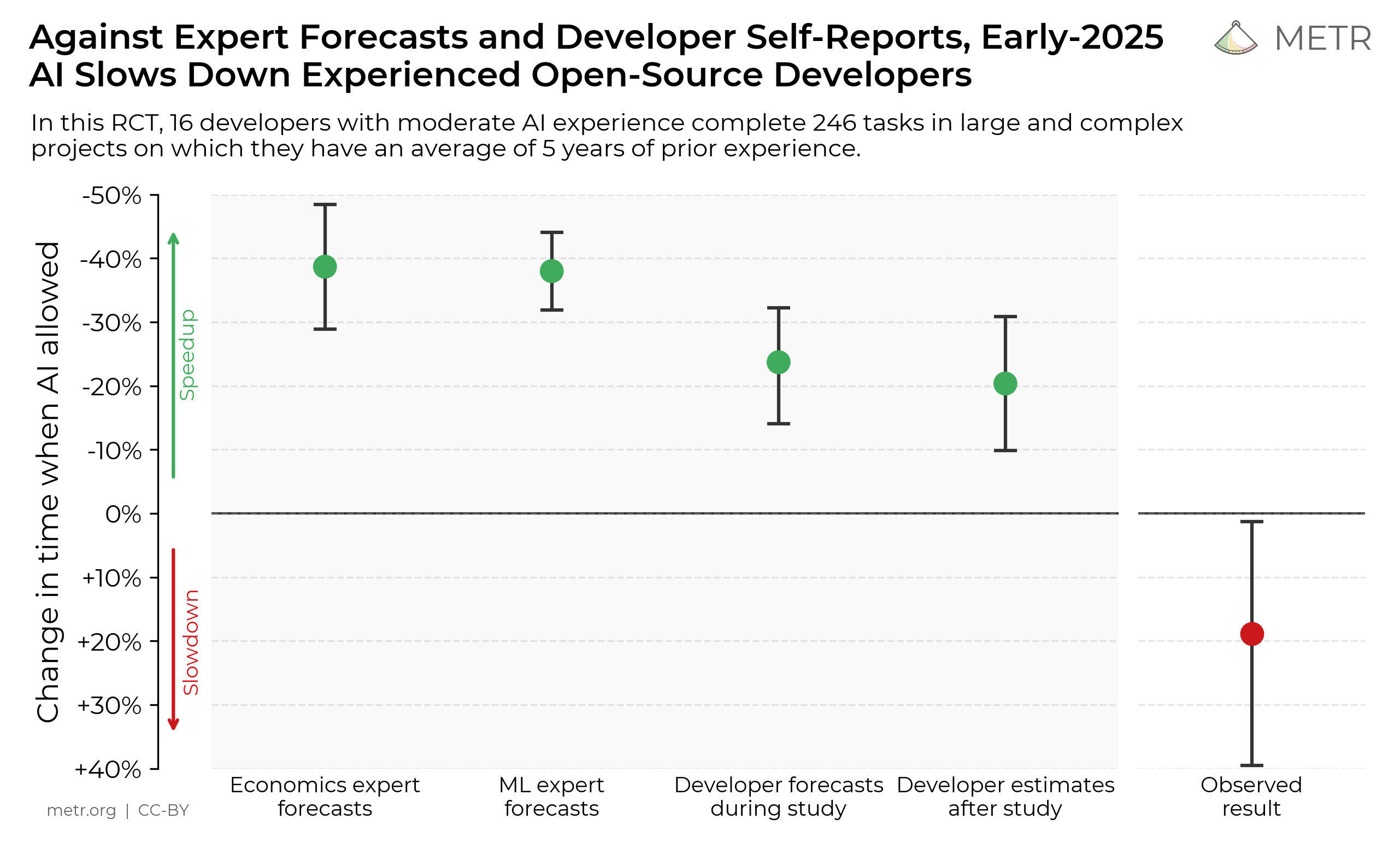
The claim asks whether AI-generated code is sufficiently correct, secure, maintainable, and reliable for production deployment without extraordinary remediation or oversight—not merely whether AI can draft useful code. The central distinction is between capability on bounded tasks and dependable performance across the broader assurance obligations of production software. A balanced assessment must therefore consider functional success alongside security, maintenance, integration, delivery, and the amount of human governance required. The strongest support for the claim is that AI systems can produce functionally correct, nontrivial code under bounded and well-specified conditions. In a controlled GitHub study, developers using Copilot were more likely to pass all unit tests, and their submissions received somewhat better ratings for readability, reliability, maintainability, and approval. AlphaCode likewise attained roughly median human performance in simulated programming competitions by generating, filtering, and clustering many candidate solutions, demonstrating competence beyond trivial autocomplete. Both results concern constrained tasks with explicit evaluation criteria, so they establish useful functional capability more directly than general production readiness. Repository-scale capability has also improved, making AI assistance increasingly plausible for scoped changes backed by executable tests. The original peer-reviewed SWE-bench experiments showed that then-current models solved only a small minority of real repository issues, thereby setting a demanding baseline involving repository context, dependencies, tests, and coordinated edits. Later official leaderboard results report agents solving a meaningfully larger share of verified repository problems, although benchmark completion does not establish compliance with unobserved security, maintenance, or deployment requirements. Evidence from organizational use further supports AI-generated code as a productive input to governed engineering workflows. An Accenture enterprise trial reported substantial acceptance of generated suggestions, high adoption, and more successful builds among participating developers. DORA's observational analysis associated greater AI adoption with better documentation quality, code quality, and review speed. These findings support production use inside ordinary organizational controls, but neither study shows that unreviewed model output is independently deployable or defect-free. The security evidence most directly defeats a presumption that AI-generated code is safe to deploy without heightened verification. A peer-reviewed experiment using security-relevant prompts found vulnerabilities in approximately 40% of programs generated by an early Copilot model. A separate controlled user study found that AI-assisted participants produced less secure solutions on several tasks and were more likely to believe that their answers were secure. Although rates varied by model, programming language, and task, the combined evidence identifies both technical vulnerability and misplaced user confidence as production risks. Benchmark success is an incomplete assurance case because common evaluations emphasize functional correctness while underrepresenting security, efficiency, maintainability, repository context, and realistic workflows. A peer-reviewed critical review found that popular code-generation benchmarks often center on short, self-contained problems and omit substantial portions of real development practice. The coexistence of improving test-based repository scores and experimentally observed vulnerabilities shows why passing available tests cannot by itself establish production readiness. Realistic repository work can also erase or reverse the productivity gains observed in short exercises. In a randomized study, experienced maintainers addressing issues in repositories they knew well took about 19% longer when allowed to use early-2025 AI tools, despite expecting to become faster. That result contrasts with gains on a constrained task and indicates that hidden context, integration, and verification costs can determine whether assistance is beneficial. More generated output does not necessarily translate into better software delivery because downstream coordination and operational burdens may grow at the same time. DORA associated greater AI adoption not only with better documentation, code quality, and review speed, but also with lower delivery throughput and stability. An observational analysis of open-source activity similarly reported increased project contributions alongside greater coordination and integration burdens after Copilot access. These observational studies do not prove causation, but they caution against equating faster local code generation with production-level reliability or delivery performance. The maintainability record is less decisive than the security evidence, but it does not support a default assumption that generated output needs no special scrutiny. GitClear reported rising churn, more copy-pasted code, and less movement or reuse during the period of rapid AI-assistant adoption, but its proprietary analysis could not identify every AI-generated line or establish causation. The 2024 Stack Overflow survey found that more respondents distrusted than trusted the accuracy of AI-generated results, although attitudes are not direct measurements of defect rates (see Figure 1). A peer-reviewed mixed-methods study found developers checking, adapting, or rejecting assistant suggestions, which characterizes generated code as an intermediate artifact rather than presumptively deployable output. The evidence supports a conditional proposition: AI-generated code can become production-ready through a governed engineering process, but raw output is not reliably production-ready by origin alone. Enterprise utility, observed security failures, and practitioner distrust together support treating model output as a contribution subject to review, testing, analysis, security checks, and deployment safeguards. Whether AI adds production value depends strongly on task structure, repository context, test quality, integration burden, and review cost. Controlled gains on a constrained task coexist with early difficulty on repository-scale issues, implying better prospects where specifications and tests are explicit than where requirements are distributed across a complex codebase. Organization-level studies likewise pair improvements in some local practices or contribution measures with poorer delivery outcomes or heavier coordination burdens. Security findings warrant independent validation, but their numerical rates should not be frozen across model generations or workflows. The approximately 40% vulnerability result came from an early model and synthetic prompts, limiting direct extrapolation to newer systems and security-filtered pipelines. The durable inference is not that every generated contribution is insecure, but that plausible-looking output and user confidence cannot substitute for independent security assurance. The main residual gap is not a missing side of the debate, but limited direct evidence spanning the full production lifecycle of current models. Many favorable studies evaluate bounded tasks, benchmark tests, build success, or organization-level associations rather than long-term operation, incident rates, maintenance cost, and behavior under unanticipated inputs. Conversely, prominent adverse results may be model-specific, setting-specific, or observational, leaving uncertainty about how rapidly newer models and stronger controls change absolute risk. Source incentives and unresolved conflict-of-interest classifications also affect how confidently some positive and negative findings should be generalized. Several favorable reports involve vendors or commercial collaborations, while at least one adverse maintainability analysis comes from a company selling code-analysis products. Independent, longitudinal comparisons of accepted AI-generated and human-written changes under equivalent review regimes would narrow the most decision-relevant uncertainty. On the current evidence, the claim is not sustained: AI-generated code is often useful and can be functionally correct, but it is not generally shown to be sufficiently secure, maintainable, reliable, and operationally complete for production deployment without substantial verification and ordinary engineering controls. Confidence in that negative judgment is high because controlled security studies, realistic productivity evidence, benchmark critiques, and workflow research converge on the need for independent assurance, even as capability improves. The dominant uncertainty is how quickly newer models and governed workflows alter the balance, compounded by unresolved source-incentive classifications; this may change where AI is productive, but it does not presently justify treating raw generated code as production-ready by default.
Supporting Arguments
P1AI can produce functionally correct code on bounded tasks
Controlled studies and benchmark results show that AI assistance can generate code that passes tests and can improve completion time or assessed quality on well-specified tasks. AlphaCode and repository-level agents further show that capability is not limited to trivial autocomplete, although neither setting alone proves general production readiness.
71/100 · Direct Evidence
P2Governed enterprise use can improve useful engineering output
Enterprise evidence reports frequent acceptance of generated suggestions and gains in successful builds, while DORA found associations with better documentation, code quality, and review speed. These results support production use when AI code moves through normal organizational controls rather than directly into deployment.
54/100 · Data Analysis
P3Repository-scale capability is improving rapidly
SWE-bench began as evidence that language models struggled with realistic issues, but later leaderboard results show agents solving a substantially larger share of verified tasks. This trajectory makes production assistance increasingly plausible for scoped changes with executable tests and constrained permissions.
75/100 · Data Analysis
Opposing Arguments
C1Generated code can contain exploitable vulnerabilities
Security experiments found vulnerable AI-generated programs and, in a user study, insecure solutions accompanied by excessive user confidence. These findings directly conflict with any claim that generated code is safe to deploy by default, even though model versions and task-specific rates vary.
95/100 · Direct Evidence
C2Real repository work can become slower, not faster
The METR randomized trial found that experienced maintainers took about 19% longer when permitted to use early-2025 AI tools on familiar repositories. This challenges generalization from short greenfield exercises to production codebases with hidden context, review overhead, and integration constraints.
57/100 · Direct Evidence
C3Passing tests does not establish production readiness
Code benchmarks typically measure whether short tasks pass visible or generated tests, while production readiness also entails security, observability, performance, maintainability, licensing, integration, and behavior under unanticipated inputs. Benchmark success therefore provides evidence of functional capability but not a complete deployment assurance case.
72/100 · Logical Inference
C4Local coding gains may not improve delivery outcomes
DORA associated AI adoption with better documentation and review processes but worse delivery throughput and stability. Observational data cannot establish causation, yet it warns that faster code production can create downstream testing, review, coordination, and operational burdens.
66/100 · Data Analysis
C5Maintainability evidence remains uncertain
GitClear reported patterns consistent with more churn and duplication during widespread AI adoption, while developers report limited trust in AI accuracy. Neither source directly identifies all AI-written lines or proves long-term harm, but together they undermine a blanket presumption that generated code is maintainable without review.
74/100 · Data Analysis
All contributions are reviewed for clarity, balance, and evidence. The strongest insights are elevated into the argument graph — with credit to you.
Help improve this analysis on ProConWiki →