TikTok-style short video is degrading attention spans

Updated 2026-07-28 4 supporting · 4 opposing arguments
Aldo's Synthesis high
Based on the strength of the Arguments below
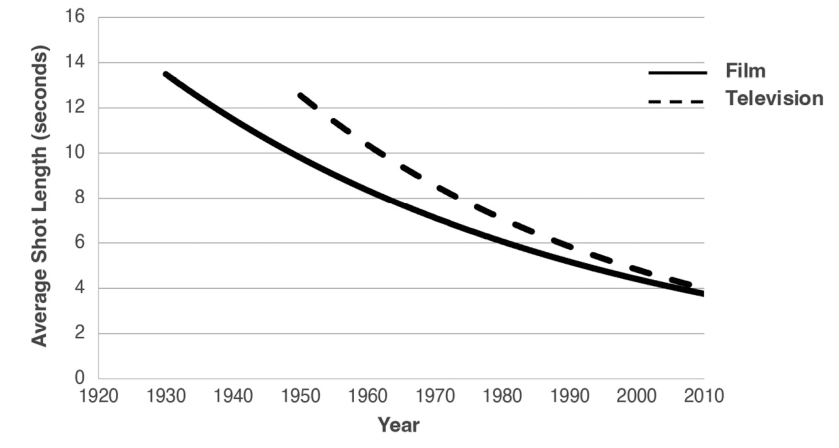
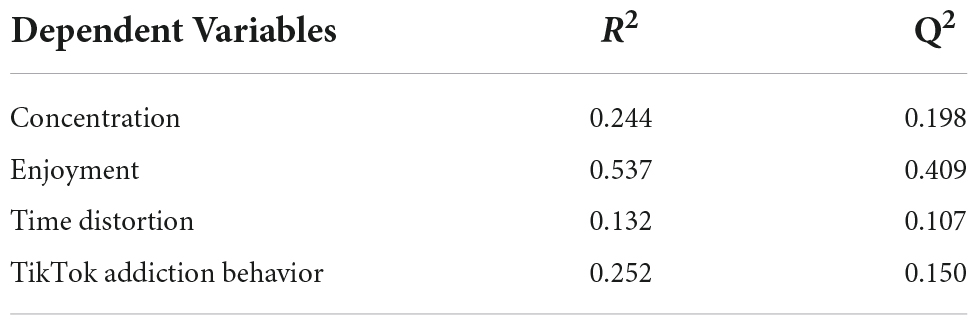
The claim asks whether frequent exposure to rapidly changing, algorithmically delivered short videos causes a lasting deterioration in users’ capacity to sustain and control attention, rather than merely accompanying attention difficulties or causing temporary interference. Resolving it requires separating exposure from compulsive use, causal effects from self-selection, immediate task costs from durable decline, and particular attention functions from the popular idea of a single “attention span.” The practical stakes include how individuals interpret everyday distraction and whether educators, clinicians, platforms, or policymakers should treat short-video design as a cognitive risk in itself. The strongest causal support is experimental evidence that rapid switching among short-form videos can impair performance on a subsequent prospective-memory task. Because these studies manipulate feed-style context switching rather than merely correlate screen time with symptoms, they support a direct, short-term cognitive cost attributable to the mode of interaction. The outcome, however, is retention and execution of intentions after switching, not a direct demonstration that sustained attention has chronically deteriorated. Objective behavioral and electrophysiological findings independently strengthen concern by linking greater short-video addiction tendencies to weaker executive-control attention and altered neural responses during an attention-network task. These measures reduce reliance on participants’ impressions of their own distraction and show that the association extends to measured executive control. Nevertheless, the study is observational, so neural and behavioral differences cannot establish whether short-video use produced weaker control or whether people with weaker control became more addiction-prone. Convergent evidence also associates short-form video use or addiction with poorer prospective memory, attentional control, executive functioning, and self-regulatory outcomes across differing research designs. In undergraduates, short-form video addiction was associated with academic procrastination through attentional-control and related self-regulatory pathways, while another study linked TikTok use with executive-function difficulties partly through problematic social-media use. Because those studies substantially depend on cross-sectional self-report and addiction-related constructs, their convergence supports an adverse relationship more clearly than a causal effect of ordinary exposure. Broader youth research adds temporal plausibility: high-frequency use of multiple digital-media activities preceded a modestly higher likelihood of later self-reported ADHD symptoms, and children’s media-use patterns have been associated with attention and academic outcomes. Temporal ordering is more probative than a one-time correlation, but broad media categories, self-reported exposure or symptoms, and residual confounding prevent these findings from identifying TikTok-style video as the cause. The central challenge is causal identification: much of the literature cannot distinguish harm caused by short videos from selection into intensive use by people who already have attentional or self-regulatory difficulties. Cross-sectional associations among addiction, attentional control, procrastination, and other outcomes are especially vulnerable to reverse causation, common-method bias, and unmeasured personal characteristics. Even longitudinal evidence does not eliminate this problem: a systematic review found that digital-media use and ADHD-related symptoms can predict one another over time, with heterogeneous measures, generally small associations, and limited causal certainty. A second limitation is construct validity: the studies measure prospective memory, executive-control attention, procrastination, ADHD symptoms, media multitasking, or self-reported distraction rather than one universal capacity called “attention span.” Accordingly, impairment on one laboratory task or an association with one symptom scale does not by itself establish generalized deterioration across reading, work, study, and conversation. Research overviews therefore caution against converting distinct measured functions into the broad popular claim that people possess a single, uniformly shrinking attention span. Related media-multitasking research further resists a universal account, finding small, inconsistent, or measurement-dependent relationships between heavy multitasking and cognitive control across samples and reviews. Because rapid feeds plausibly operate through repeated context switching, the sensitivity of multitasking results to tasks, samples, and analytic choices weakens claims that the mechanism produces uniform or permanent loss. Finally, evidence from microlearning shows that short duration itself is not necessarily attention-degrading: brief, focused units can support engagement, retention, and flexible learning under suitable instructional conditions. Educational microlearning is not equivalent to an algorithmic entertainment feed, but this contrast indicates that brevity alone cannot explain any adverse effect; rapid switching, reward structure, content, and usage context must be considered separately. The evidence supports a narrower proposition more strongly than the claim as written: rapid short-video switching can cause immediate, task-specific interference, whereas durable and generalized deterioration remains unestablished. Experimental prospective-memory findings identify a plausible short-term consequence of context switching, but they do not show that routine viewing produces persistent change after exposure ends. They therefore justify concern about transient interference and repeated disruption, not claims of permanent, irreversible, or domain-general cognitive damage. Risk may also be concentrated among compulsive or dysregulated users rather than distributed evenly across everyone who watches short videos. One TikTok study found that executive-function difficulties were accounted for in part by problematic social-media use, suggesting that loss of control over engagement may matter more than exposure in isolation. Because that mediation evidence is cross-sectional and self-reported, it identifies a plausible risk subgroup but does not establish that problematic use lies on a causal pathway from viewing to impairment. Content, context, and displaced activities are plausible boundary conditions because the evidence distinguishes rapid context switching from undifferentiated screen time and shows that outcomes vary with tasks and usage measures. Purposeful microlearning and rapid entertainment-feed switching therefore should not be treated as cognitively equivalent merely because both use brief videos. Claims about effects from bedtime viewing, multitasking, displaced sleep, or reduced practice of sustained activities remain mechanism-sensitive and cannot be inferred from every minute of short-video exposure. The principal evidence gap is the absence of direct, long-term causal tests connecting ordinary TikTok-style exposure to durable, generalized deterioration in attentional capacity. The bundle does not establish long-term randomized exposure, persistence after use ceases, dose-response thresholds, recovery trajectories, or transfer across everyday domains such as reading, work, and conversation. It also leaves unresolved how much apparent risk is attributable to pre-existing attention traits, compulsive use, algorithmic reward design, rapid switching, content, or displacement of sleep and sustained activities. The supplied figures cannot be used as direct evidence for the claim because neither figure is linked to an evidence item in the frozen bundle. Figure 1 concerns a broad historical trend in time spent on a single screen task rather than TikTok-specific causal exposure, while Figure 2’s source and path coefficients are not represented among the admissible evidence records. Accordingly, neither figure is referenced in the evidentiary synthesis, notwithstanding the rendering request to cite each curated figure once. Source-conflict classifications are unresolved, so independence from financial or institutional interests cannot be fully audited from this bundle. This does not negate the findings, but it limits confidence in assessments that depend on unverified source independence. On balance, the evidence supports immediate attention-related interference and an adverse association with intensive or problematic short-video use, but it does not yet establish the claim’s stronger proposition that frequent exposure causes lasting deterioration of a general attention capacity. Confidence in this balanced assessment is high because experimental, objective, longitudinal, and review evidence converge on the distinction between credible short-term concern and unresolved long-term causation. The dominant substantive uncertainty is whether observed difficulties reflect persistent causal change from ordinary exposure or a mixture of transient switching costs, self-selection, problematic use, and context; unresolved conflict-of-interest classifications add a secondary audit limitation.

Supporting Arguments

P1Experiments show immediate costs from rapid video switching
Controlled studies indicate that navigating rapidly changing short videos can impair subsequent prospective-memory performance. This supports a direct, short-term cognitive effect of feed-style context switching, though it does not prove permanent degradation of sustained attention.
84/100 · Direct Evidence
P2Objective neural and behavioral measures implicate attention control
EEG and attention-network testing link stronger short-video addiction tendencies to poorer executive-control attention and altered neural responses. These objective measures make the concern more credible than self-report alone, although the study remains observational.
72/100 · Direct Evidence
P3The overall literature finds a consistent adverse association
A broad meta-analysis reports that heavier short-form video use is associated with poorer cognitive outcomes, including attention and inhibitory control. Convergence across many studies makes a null relationship less likely, even though pooled observational evidence cannot settle causation.
77/100 · Data Analysis
P4Longitudinal digital-media evidence raises causal concern
Broader longitudinal research finds that frequent digital-media use can precede later ADHD-related symptoms in young people. Although it is not specific to short video and effects are generally modest, temporal ordering is more concerning than a one-time correlation.
64/100 · Data Analysis

Opposing Arguments

C1Most studies cannot distinguish cause from self-selection
People with weaker attentional control, impulsivity, or ADHD symptoms may be especially drawn to high-stimulation feeds, producing reverse causation. Systematic and longitudinal reviews find possible bidirectionality and residual confounding, so association should not be described as demonstrated degradation.
75/100 · Logical Inference
C2“Attention span” overstates what the studies measure
The literature measures distinct functions such as prospective memory, inhibition, executive control, ADHD symptoms, or self-reported distraction—not one universal attention-span capacity. Immediate impairment on a laboratory task therefore does not establish lasting deterioration across reading, work, conversation, and other settings.
82/100 · Logical Inference
C3Related multitasking research is inconsistent
Systematic and multi-sample research on media multitasking finds small, heterogeneous, and measurement-dependent associations with cognitive control. Because rapid short-video feeds are often theorized to work through context switching, those inconsistencies weaken claims of a universal effect.
99/100 · Data Analysis
C4Short content is not inherently attention-degrading
Microlearning research shows that brief, focused media can improve engagement and retention when content is purposeful and appropriately designed. This does not vindicate endless-scroll entertainment feeds, but it contradicts the idea that video brevity alone necessarily damages attention.
80/100 · Logical Inference

All contributions are reviewed for clarity, balance, and evidence. The strongest insights are elevated into the argument graph — with credit to you.

Help improve this analysis on ProConWiki →
𝕏 Share Facebook LinkedIn