Open-source AI is more beneficial than dangerous
Aldo's Synthesis high
Based on the strength of the Arguments below
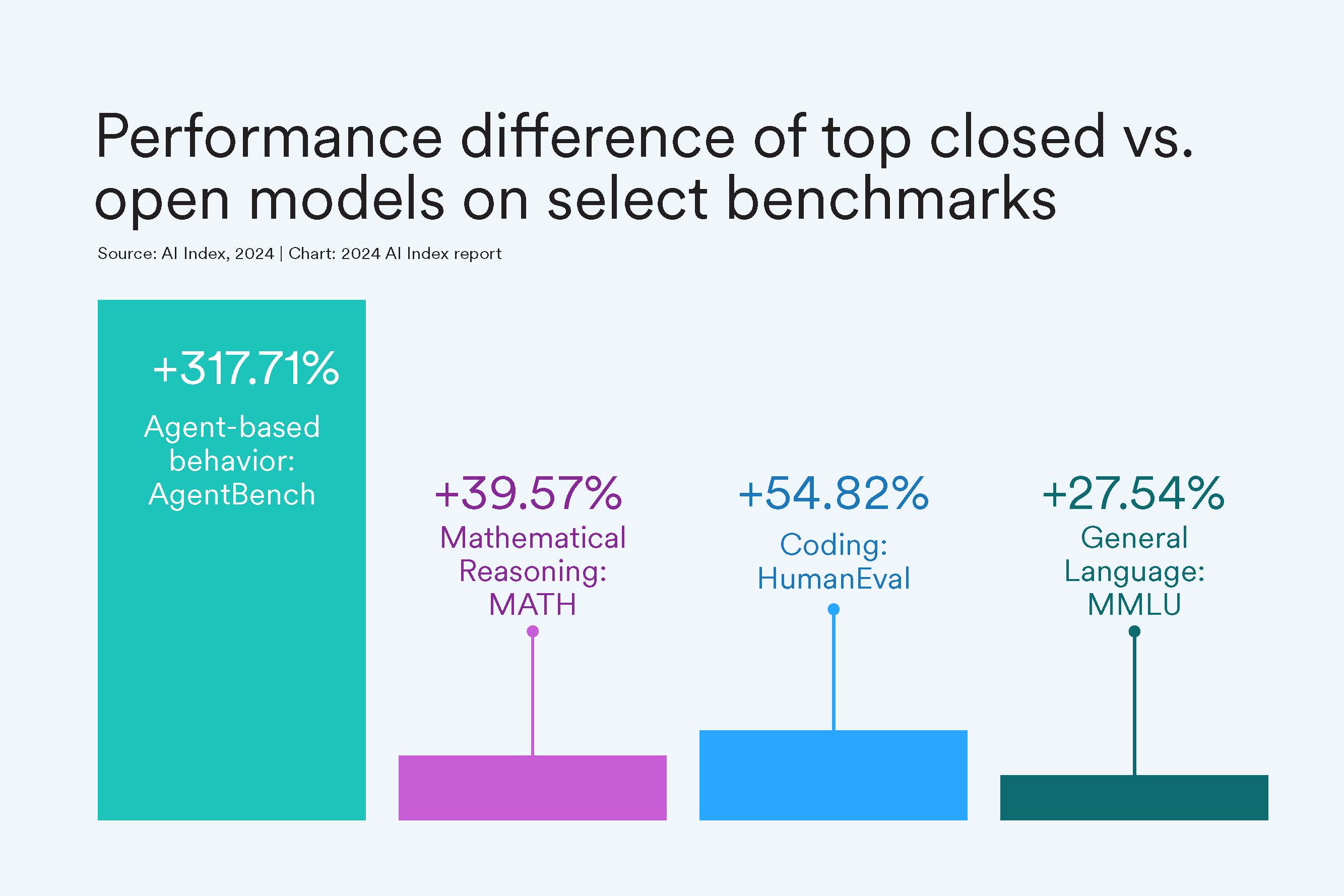
The claim asks whether making AI models and key components openly available creates societal benefits that, in aggregate, exceed the dangers of broad and difficult-to-revoke access. The inquiry requires more than listing desirable uses and plausible abuses: it must compare their magnitude and likelihood, determine which effects are caused specifically by openness rather than AI generally, and account for differences among models and forms of access. The available case is strongest on mechanisms and intermediate outcomes, while the ultimate net-benefit proposition calls for a cautious, conditional judgment. The strongest affirmative case is that downloadable models broaden practical access to AI, reduce dependence on a small set of hosted-service providers, and permit local deployment with greater organizational control over data and continuity. Open availability distributes the ability to develop and scrutinize models among universities, smaller firms, public institutions, and individuals rather than requiring exclusive reliance on a few vendors. Running models on an organization's own infrastructure can keep sensitive inputs local and reduce exposure to unilateral changes in an API provider's price, policy, or availability, although secure implementation remains necessary. Falling inference costs and narrowing performance differences between leading open-weight and closed systems make those access and competition benefits increasingly practicable, even as the same trend increases risk (see Figure 2). Open weights also enable useful customization in settings that major vendors may not prioritize. A peer-reviewed Turkish case study demonstrates that accessible weights can be adapted for a low-resource language outside the original developer, establishing feasibility even though one language cannot establish broad social impact. A separate peer-reviewed study found locally deployable open-weight models competitive with a proprietary service on selected research tasks in limited-resource settings, supporting affordability, data control, reproducibility, and institutional access within that tested scope. Scientific access is another substantial benefit because possession of weights allows independent researchers to rerun, inspect, modify, and evaluate a fixed model without depending on a mutable provider interface. That stable access can advance reproducibility, external evaluation, and security research, while also decentralizing who may investigate model behavior. These gains are incomplete when a release omits training data, preprocessing code, documentation, or meaningful reuse rights, but weight access still supplies forms of experimentation unavailable through ordinary hosted access. At the policy level, the affirmative case supports a presumption against blanket restrictions on currently available model weights rather than an unconditional right to release every model. After reviewing both benefits and dual-use risks, the 2024 NTIA assessment did not find evidence warranting immediate broad restrictions and instead favored continued monitoring and evidence collection. That conclusion is meaningful support for continued present-day access, but it does not itself prove that quantified aggregate benefits exceed harms or settle the treatment of more capable future systems. The strongest challenge is structural: widely copied weights are effectively irreversible, while users can alter the model and remove restrictions that a hosted provider could otherwise update or enforce. Once weights have proliferated, the original developer cannot reliably recall every copy or patch all downstream instances, so a mistaken release can persist after hazards become clearer. Weight holders can fine-tune models, modify inference code, operate them privately, and remove behavioral safeguards, weakening provider oversight and potentially making misuse less visible. This architecture does not demonstrate that severe abuse will occur, but it raises the cost of errors because access control and remediation become materially weaker after release. This irreversibility matters increasingly as open-weight capability approaches the proprietary frontier. UK AI Security Institute evaluations found leading open-weight models approaching proprietary frontier models on some cyber tasks, with substantial variation by model and task. Government and institutional trend reports also document rapid capability improvement and narrowing open-versus-closed performance differences, meaning safety judgments based on weaker earlier releases may not remain valid. Because previously released weights remain available, rising capability can make each prospective release decision more consequential than the last. Empirical evaluations identify credible, though conditional, pathways by which capable models can lower barriers in offensive cyber and biological workflows. RAND found useful assistance in portions of offensive cyber activity but also reliability problems and limitations on complex tasks, supporting a real assistance pathway rather than autonomous end-to-end attack capability. In biological scenarios, models may assist at some stages, while tacit knowledge, material procurement, physical execution, and logistics remain substantial barriers to a successful large-scale attack. The evidence therefore supports concern that unrestricted access may remove informational or technical friction, but not the stronger proposition that current models independently enable sophisticated real-world attacks. A distinct danger arises from the distribution ecosystem itself: downloadable model repositories and dependencies can expose users to malicious artifacts and exploitable loading practices. Empirical security research documents weaknesses involving unsafe serialization and model-loading practices, showing that harm can arise from the artifact and software supply chain independently of the model's learned intelligence. These risks call for safer file formats, scanning, signing, dependency controls, and repository governance rather than necessarily establishing a case against open access as such. The balance is better understood as capability- and context-dependent than as a universal property of the label “open-source.” RAND recommends proportional, capability-based evaluation because downstream modification and irreversibility matter more when a model possesses capabilities relevant to serious harm. Accordingly, small research models and frontier models with strong cyber or biological capabilities need not receive identical treatment; staged or controlled access can preserve some research benefits while imposing stricter scrutiny at higher-risk thresholds. The degree of openness also changes both benefits and risks because weight release is not equivalent to complete open-source disclosure. Openness frameworks distinguish weights from code, data, documentation, and licensing, and many nominally open releases provide only a subset of these components. Weight availability alone therefore cannot support full claims of transparency, reproducibility, or auditability, particularly where training resources, evaluation methods, and known risks remain undisclosed. Modifiability is dual-use: it allows safeguard removal and private misuse, but also supports defensive fine-tuning, vulnerability research, independent evaluation, and specialized local applications. The record does not establish that this symmetry systematically favors attackers or defenders across domains, so the net direction depends on the application, users, and available countermeasures. Finally, benchmark performance and hazard evaluations do not by themselves establish aggregate societal benefit or harm. Observed task assistance must pass through adoption patterns, human competence, operational constraints, defensive responses, and substitution from already available systems before becoming a real-world outcome. Assessing openness therefore requires attention to marginal effects—what additional benefit or danger the open release creates beyond closed models and other accessible tools—rather than attributing all AI effects to the release decision (see Figure 1). The principal gap is not a missing side of the debate but the absence of direct, commensurable measurements of total social gains and total harms attributable specifically to open release. Most of the record identifies mechanisms, capabilities, feasibility demonstrations, or selected task outcomes rather than population-scale welfare effects. Consequently, benefits such as competition, privacy, research access, and language adaptation cannot yet be placed on a common scale with persistent misuse, cyber or biological assistance, and supply-chain compromise. Causal attribution remains a second limitation because harmful actors may substitute closed systems or other tools, while beneficial users may obtain some openness objectives through controlled access rather than unrestricted weights. The evidence also does not resolve whether openness shifts cyber and other dual-use domains toward offense or defense after adaptation, detection, and institutional response. Fast capability change further limits extrapolation from current models to future frontier releases. Some source-level conflict-of-interest classifications remain unresolved, which chiefly affects how much weight to place on interested industry documentation rather than the independently replicated core mechanisms. These gaps do not erase the documented benefits or dangers, but they prevent a confident universal comparison of their aggregate magnitude. On the current evidence, the claim is best judged balanced rather than established universally: present-day open-weight access has substantial demonstrated benefits and does not support a blanket restriction, but increasingly capable and irreversible releases create credible dangers that can outweigh those benefits in higher-risk cases. Confidence is high that the principal mechanisms are real—access, local control, customization, and research benefits on one side; irreversibility, safeguard removal, capability-assisted misuse, and supply-chain exposure on the other—even though their aggregate balance remains unresolved. The dominant uncertainty is the lack of direct evidence comparing marginal real-world benefits and harms across capabilities and deployment contexts, with unresolved conflict-of-interest classifications as a secondary source-weighting concern. The evidence therefore supports a differentiated policy posture: retain access presumptions for lower-risk current models, strengthen artifact and repository security, and apply progressively stricter evaluation or controlled access when demonstrated capabilities make an irreversible release unusually consequential.
Supporting Arguments
P1Open access lowers barriers and weakens provider concentration
Downloadable models let universities, small firms, public agencies, and individuals build without relying exclusively on a handful of API providers. Government and longitudinal industry evidence supports benefits to access and competition, although it does not directly quantify economy-wide welfare gains.
81/100 · Data Analysis
P2Local deployment can improve privacy, control, and resilience
Open weights can be run on an organization's own infrastructure, allowing sensitive data to remain local and reducing dependence on a provider that may change prices, policies, or availability. These are concrete architectural advantages, though actual privacy still depends on secure implementation and trustworthy model artifacts.
68/100 · Logical Inference
P3Open weights enable customization for underserved languages and uses
Researchers can fine-tune available weights for languages and tasks that may not be priorities for major vendors. Turkish adaptation and low-resource laboratory results demonstrate feasibility, but broader evidence is needed to establish the scale and distribution of resulting social benefits.
83/100 · Direct Evidence
P4External researchers gain reproducible access to model behavior
Weight access lets independent researchers inspect, modify, evaluate, and repeatedly run a model without an API changing underneath them. That can improve reproducibility and security research, although full transparency requires more than weights and may also require code, data, documentation, and permissive licensing.
73/100 · Logical Inference
P5Current evidence does not support a blanket restriction
After reviewing benefits and dual-use risks, NTIA concluded in 2024 that the evidence did not warrant immediate broad restrictions on widely available model weights. Its recommendation to monitor capabilities and collect evidence supports a presumption of access for current models, not an unconditional endorsement of every future release.
80/100 · Expert Opinion
Opposing Arguments
C1Weight release is difficult to reverse or meaningfully recall
Once model weights are widely copied, the developer cannot reliably revoke them, patch every copy, or enforce server-side safeguards. This makes errors in release decisions unusually persistent and raises the expected cost of distributing models that later prove highly dangerous.
71/100 · Logical Inference
C2Open models permit safeguard removal and concealed misuse
Users with weights can fine-tune a model, modify inference code, and remove behavioral restrictions without provider oversight. That does not prove severe misuse will occur, but it eliminates several controls available for hosted systems and can make abuse harder to detect.
76/100 · Direct Evidence
C3The open-versus-closed capability gap is narrowing
Stanford and UK government measurements indicate that leading open-weight models are becoming more competitive with proprietary systems, including on some cyber tasks. As capabilities rise, safety conclusions drawn from weaker previous releases may cease to apply, especially because released weights remain available indefinitely.
83/100 · Data Analysis
C4AI can assist parts of cyber and biological attack workflows
Evaluations and operational analyses find that frontier models can provide useful assistance on portions of offensive cyber and biological workflows. Real-world attacks still face reliability, expertise, physical, and logistical barriers, but unrestricted access may lower some informational and technical hurdles for malicious actors.
85/100 · Direct Evidence
C5Public model repositories create supply-chain attack surfaces
Open distribution can expose users to malicious serialized models, vulnerable loading mechanisms, and compromised dependencies. These risks arise from the software artifacts and distribution ecosystem rather than the model's intelligence, so openness requires signing, scanning, safe formats, and repository governance.
80/100 · Direct Evidence
All contributions are reviewed for clarity, balance, and evidence. The strongest insights are elevated into the argument graph — with credit to you.
Help improve this analysis on ProConWiki →