Major bridge projects in remote regions produce sustained local economic gains that exceed their construction and maintenance costs
Bottom line (updated 2026-11-16): Bridges can bring real and lasting gains, but they do not always earn more than they cost. The evidence favors a careful answer: local conditions and full costs matter, and big gains are not sure.
What's this about?
People disagree about whether big bridges in far-off places earn more money than they cost.
The answer depends on local jobs, trade, future repairs, and how well people predict costs.
What supporters say
- Bridges can cut travel time and link families and firms to jobs, shops, and public help.
- A bridge that stays open can prevent long trips, lost work, and harm from sudden road blocks.
- Some bridge studies found that saved time, lower travel costs, more traffic, and new trade could beat costs.
What critics say
- Far-off places may lack enough firms, jobs, workers, or trade to gain much from a bridge.
- Wrong guesses about use, growth, and income can wipe out the gains that plans predict.
- Planners may miss the full cost of repairs, safety work, and making bridges safe during floods or storms.
How to read this
The number of points on each side does not show who is right; check how strong each point’s proof is.
The bottom line
Bridges can bring real and lasting gains, but they do not always earn more than they cost.
The evidence favors a careful answer: local conditions and full costs matter, and big gains are not sure.
The claim is that major bridges in remote regions usually create lasting local economic gains greater than their construction and maintenance costs. The evidence supports a more limited conclusion: bridges can produce important benefits, but whether they deliver positive overall returns depends heavily on local conditions, forecasting and full life-cycle costs.
The case for
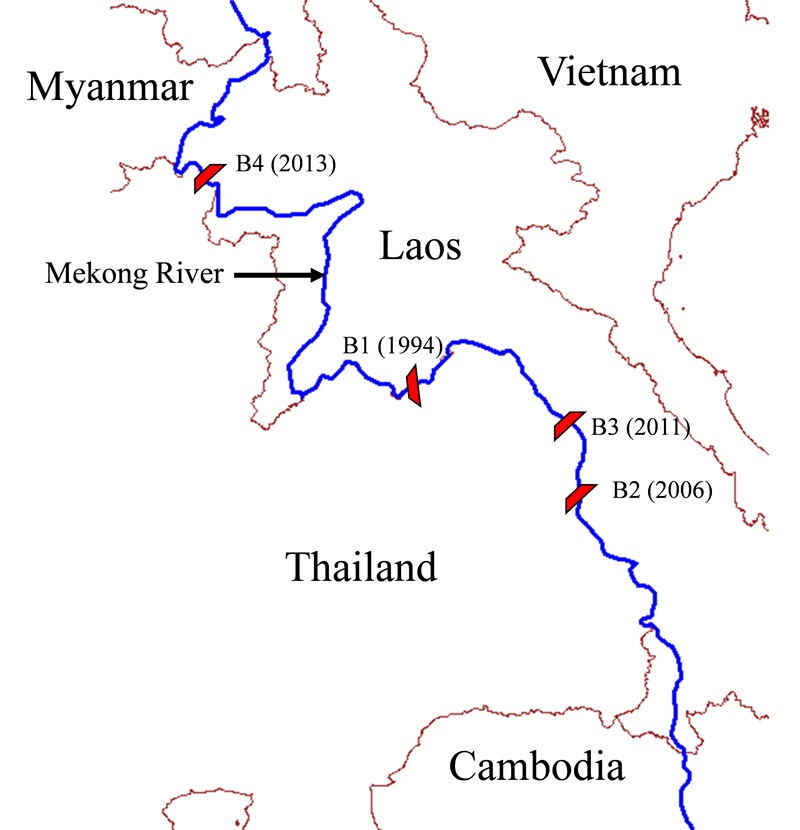
Bridges can reduce travel barriers and connect households and businesses to markets, jobs and public services. When a region already has productive firms, workers and functioning markets, better access can lead to lasting increases in income and economic activity, rather than simply shorter journeys. A study of a bridge linking Thailand and Laos found changes in household behavior and income, including growth in industries on the Thai side. Broader research on rural roads also links improved transport with stronger economic activity and household welfare 1.
Some project assessments have found that these benefits can outweigh costs over a long operating period. Analyses of Bangladesh’s Padma Bridge, for example, counted travel-time savings, vehicle costs, traffic growth and wider economic effects over 30 years and concluded that the project was economically viable. Development-bank assessments of rural transport projects likewise use economic return estimates and sensitivity tests to identify cases in which expected benefits exceed costs 2.
Bridges can also provide value that is not captured by measuring travel time alone. In remote areas, a single crossing may be a vital link. Keeping it open can prevent long detours, business interruptions and losses caused by closures. Standard bridge appraisals can include reliability, safety, resilience and avoided disruption, potentially adding substantial benefits to the calculation 3.
The case against
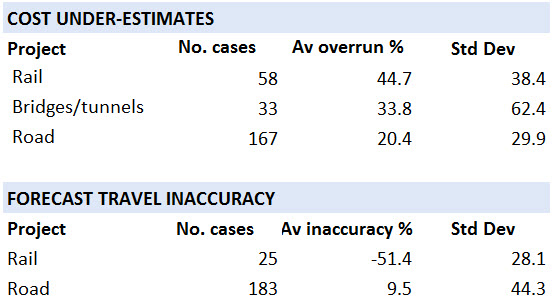
The strongest evidence against the broad claim concerns the gap between forecasts and results. Studies of major infrastructure projects repeatedly find differences between predicted and actual costs, demand and benefits. Optimistic assumptions can turn an apparently profitable project into one with negative overall returns. This does not show that every remote bridge fails, but it means that favorable pre-construction appraisals— including those for projects such as the Padma Bridge—cannot by themselves prove that benefits exceeded costs in practice 4.
Remote regions also may not have the businesses, services, institutions or workforce needed to turn improved access into sustained local income. Better connections can help, but they do not automatically create markets or productive capacity. Reviews of rural transport find improvements in access, income, consumption and business competitiveness, while also stressing that results depend on local circumstances. Benefits may be concentrated in particular industries, communities or junctions rather than spread across the wider region.
The Thailand–Laos evidence illustrates this limitation. The bridge produced positive effects for some sectors and places, but household outcomes varied across economic groups and locations rather than improving uniformly throughout the affected area (see Figure 1). Aggregate growth can therefore coexist with losses for some residents, or with economic activity shifting toward better-connected communities.
A further problem is incomplete cost accounting. Maintenance, rehabilitation, protection against extreme events, closures, disruption and user costs can be underestimated or left out. Life-cycle guidance says these costs should be compared across alternatives, just as avoided closures and detours should be counted as benefits. Construction-cost overruns are another risk that belongs in the original evaluation, not as an afterthought (see Figure 2) 6.
The bottom line
The evidence does not support the stronger claim that major bridges in remote regions generally produce gains greater than their full construction and maintenance costs. It supports the weaker claim that bridges can create substantial and sometimes lasting economic benefits, especially where they connect existing productive activity to reliable markets and services.
This conclusion is high-confidence but conditional. The evidence is strong that connectivity can help, that some projects have favorable projected returns and that reliability adds value. It is also strong that forecast errors, limited local economic capacity and incomplete life-cycle costing can reverse those gains 45. What remains scarce are project-specific, post-construction studies that measure both sustained local benefits and the complete costs of major remote bridges. Without that evidence, the claim is better understood as a possibility under the right conditions—not a general rule.
Figures & data
All contributions are reviewed for clarity, balance, and evidence. The strongest insights are elevated into the argument graph — with credit to you.
Help improve this analysis →