Tipping culture should be abolished

Updated 2026-07-31 6 supporting · 4 opposing arguments
Aldo's Synthesis high
Based on the strength of the Arguments below
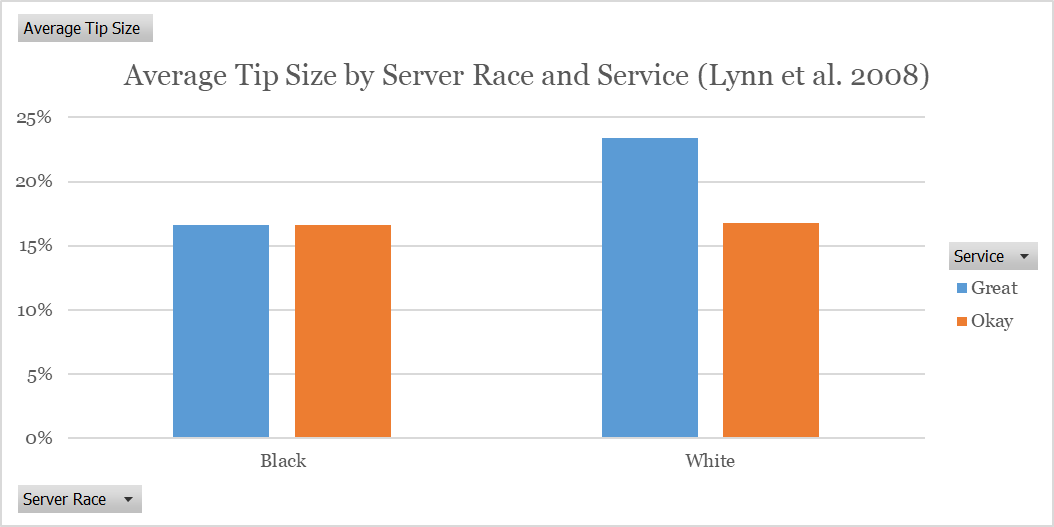
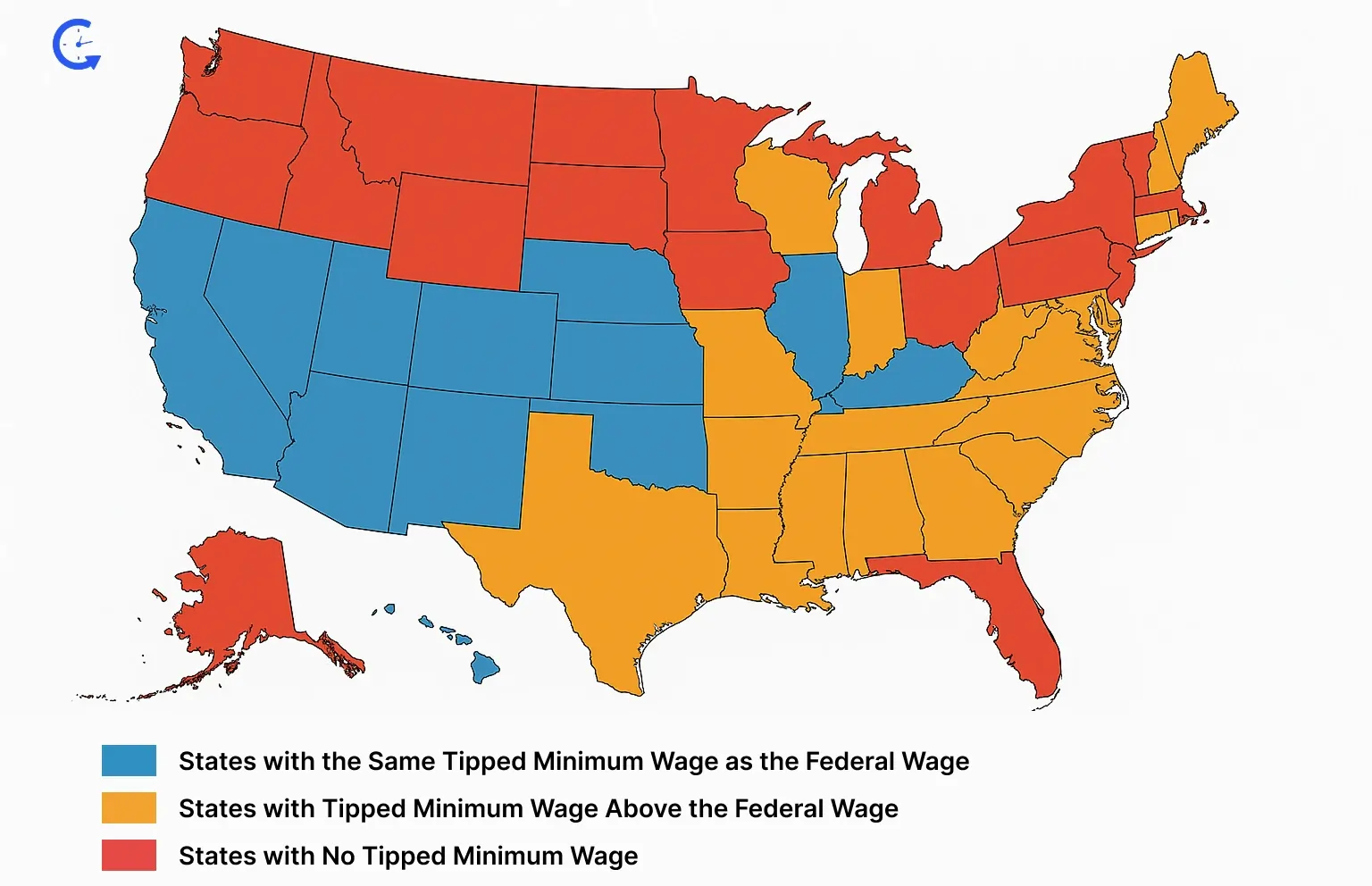
The claim asks whether customary discretionary tipping should be phased out in favor of transparent prices or service charges that finance predictable employer-paid compensation. The central policy question is not simply whether tipping has defects, but whether abolition would correct those defects without reducing workers’ total earnings, weakening useful incentives, or creating substantial implementation costs. The evidence permits a comparatively confident judgment about several weaknesses of customer-controlled pay, but a less confident judgment about the effects of replacing it with any particular compensation model. The strongest case for abolition is that discretionary tips are an unreliable compensation mechanism because they respond to customer habits, social conditions, and service context rather than consistently tracking worker performance. Research characterizes the relationship between measured service and individual tips as generally weak and heterogeneous across customers and settings, meaning that tipping does not operate as a uniform merit-pay system. Two pandemic-era studies likewise found tipping varied with service channel and changing social conditions, illustrating that tip income can fluctuate for reasons unrelated to an individual worker’s effort, although the unusual period limits generalization. Customer discretion also creates a channel through which demographic bias can enter compensation. Field data found lower tips for Black than White restaurant servers after controls that included perceived service quality, while a nationally representative survey also reported demographic differences consistent with discriminatory effects (see Figure 2). Because these studies are observational or survey-based rather than randomized, they do not eliminate all alternative explanations; nevertheless, evidence from more than one design supports concern that customer-controlled pay can reproduce racial disparities. Moving pay-setting to employers could close this particular pathway, though it would not eliminate discrimination in hiring, scheduling, evaluation, or employer wage decisions. Tip dependence may also intensify workers’ vulnerability to customer objectification and harassment. Survey research links reliance on tips and requirements to appear sexually attractive with greater sexual objectification and harassment among bar and restaurant servers. The evidence supports an association and a plausible mechanism—workers dependent on customer approval may bear a financial cost for resisting misconduct—but it does not directly establish how much harassment abolition would prevent. Abolition further offers a clearer allocation of responsibility by requiring businesses to incorporate labor compensation into posted prices or explicit service charges rather than relying on customers to complete payroll. Federal law permits a qualifying employer to pay a tipped employee $2.13 per hour directly when tips bring compensation to at least the federal minimum wage, while making the employer legally responsible for any shortfall and imposing detailed rules governing notice, pooling, and non-tipped duties. State law varies substantially between jurisdictions requiring the full state minimum wage before tips and those allowing a lower tipped cash wage (see Figure 3). Economic-insecurity evidence reinforces the reform case, though it more directly indicts the subminimum tipped wage than tipping itself. Policy analyses using public labor data report lower wages and higher poverty among tipped workers in states permitting a subminimum tipped wage than among relevant comparison groups or workers in states requiring the regular minimum wage before tips (see Figure 1). Those cross-state comparisons remain vulnerable to differences in living costs, industrial composition, and worker demographics, and the analyses are advocacy-oriented rather than controlled tests of abolishing discretionary tips. The strongest objection is that an unreliable incentive is not necessarily a useless one: tipping may still motivate service when workers respond to expected rewards across many customers rather than to the precise tip from any one patron. Economic analysis advances this aggregate-incentive account, and empirical evidence that some customers reward service more than others confirms that the mechanism can operate, albeit unevenly. The cited analysis does not establish that tipping produces better service than wages, commissions, bonuses, or supervision, but it cautions against treating a weak customer-level correlation as proof that abolition has no incentive cost. A second objection is distributional: eliminating tips can harm workers if the replacement fails to preserve their total earnings. Government occupational data identify tips as part of waiter and waitress earnings, so a transition that raises base wages but does not replace lost gratuities cannot be assumed to leave every worker whole. This risk is especially relevant where current tip income is substantial, and it depends on whether higher prices or service-charge revenue actually reaches workers and how that revenue is divided. No-tip systems also face practical coordination and presentation problems that can make unilateral adoption risky. A secondary overview of no-tip restaurants describes customer resistance, unfavorable comparisons between tip-inclusive menu prices and competitors’ lower pre-tip prices, staff concerns, and disputes over distributing revenue between front- and back-of-house employees. Because that evidence is an implementation overview rather than a controlled evaluation, it establishes credible transition hazards but not their average size or inevitability. Abolition would also remove a form of consumer discretion sustained by reciprocity, social norms, strategic behavior, and the desire to reward or punish service. Economic reviews indicate that some consumers value that visible control and that tipping can shift part of service evaluation away from employers, although the practice’s popularity does not by itself establish net social benefit. The evidence most clearly supports separating abolition of the tip credit from abolition of voluntary gratuities. Several states require employers to pay the full state minimum wage before tips while continuing to permit voluntary gratuities, demonstrating that the subminimum cash wage can be removed without prohibiting tipping. Accordingly, evidence associating subminimum-wage regimes with poverty supports ending the tip credit more directly than it supports eliminating all discretionary tips. Whether broader abolition benefits workers depends materially on the replacement architecture rather than on the label “no tipping.” Higher menu prices, mandatory service charges, and fixed wages can produce different outcomes depending on customer sensitivity to norms and prices, firm choices, and the distribution of revenue among employees. The theoretical and implementation evidence therefore supports conditional design judgments, not a prediction that any service-charge or wage model will automatically improve earnings, service, or demand. The scope of the evidence is also narrower than the claim’s broad reference to tipping culture. The identified empirical and legal sources concentrate on U.S. restaurant servers and tipped-wage law, so extending their conclusions to hotels, taxis, salons, delivery platforms, or countries with different wage institutions would exceed the evidence. The principal evidentiary gap is the scarcity of direct, controlled comparisons between otherwise similar workplaces that retain tipping and those that replace it with specified compensation systems. Without such comparisons, the record cannot precisely estimate abolition’s causal effects on total worker pay, income volatility, service quality, harassment, prices, demand, staffing, or business survival. The bundle also lacks systematic evidence on how gains and losses would differ among high-tip and low-tip workers, front- and back-of-house employees, and establishments operating in different market segments. A further limitation is that several economic-security sources are policy analyses with an advocacy orientation, creating unresolved conflict-of-interest and framing concerns even where their underlying public data are relevant. Evidence on implementation problems relies substantially on secondary overview material, while evidence on incentives includes theoretical or assumption-dependent analysis rather than head-to-head policy experiments. These limitations do not erase the documented weaknesses of discretionary pay, but they make the choice and governance of the replacement system the dominant uncertainty in translating diagnosis into policy. On balance, the evidence leans in favor of phasing out customary discretionary tipping in U.S. restaurants, because customer-controlled pay is noisy, can transmit racial disparities, may intensify vulnerability to harassment, and obscures employer responsibility; however, that support is conditional on a replacement that credibly protects total worker compensation and manages service incentives and competitive transition. Confidence in this pro-leaning judgment is high, while confidence in any single replacement design is lower. The dominant uncertainty is not whether tipping has material defects, but whether transparent prices, service charges, or fixed wages will transmit sufficient revenue to workers without avoidable losses in earnings, service, or demand; unresolved source-conflict classifications modestly temper the economic-security component of the case. The evidence therefore justifies coordinated, worker-protective reform more strongly than abrupt unilateral abolition, and it establishes ending the subminimum tipped wage more directly than it establishes prohibiting every voluntary gratuity.

Supporting Arguments

P1Tips are a weak and noisy measure of service quality
A meta-analysis found only a weak relationship between service ratings and tip size, while later work shows that customers differ markedly in whether they reward service through tips. Compensation therefore depends substantially on customer habits and norms rather than being a reliable merit-pay system.
66/100 · Direct Evidence
P2Customer-controlled pay can reproduce bias
Field and survey evidence indicates that tips can vary with server race even after accounting for measured service factors. Replacing discretionary tips with transparent employer-set compensation could reduce this particular channel of customer discrimination, though it would not eliminate workplace bias generally.
76/100 · Direct Evidence
P3Tip dependence may increase exposure to harassment
Servers who depend on customer approval for income may face pressure to tolerate objectification or harassment. Survey evidence supports this association, although its observational nature means abolition's effect on harassment has not been conclusively measured.
75/100 · Direct Evidence
P4Employer-paid wages would clarify responsibility for pay
Federal tip-credit law lets qualifying employers provide only $2.13 per hour directly if tips cover the remainder, with employers responsible for shortfalls. Replacing that structure with wages included in posted prices would make the employer's responsibility more visible and reduce reliance on customers to complete payroll.
78/100 · Logical Inference
P5Tipped-wage systems are associated with economic insecurity
Policy analyses using public data report lower wages and higher poverty among tipped workers where employers may use a subminimum tipped wage. These comparisons support reform, but they are not clean tests of abolishing tips because local costs, industries, and demographics may differ.
53/100 · Data Analysis
P6Tip income responds to shocks unrelated to worker effort
Pandemic evidence shows that tipping changed with service channel and wider social conditions, not only worker performance. A larger fixed wage component could therefore make compensation less dependent on fluctuations in consumer norms and circumstances.
69/100 · Direct Evidence

Opposing Arguments

C1Tips can still create service incentives
Although individual tips are only weakly tied to measured service, workers may respond to the expected average reward from attentive service across many customers. Economic research therefore leaves open the possibility that abolishing tips could weaken an incentive or require firms to replace it with supervision, commissions, or bonuses.
58/100 · Logical Inference
C2Abolition may remove a valued source of worker earnings
Tips are an established component of compensation for waitstaff and bartenders, and some high-volume or high-price establishments can generate substantial tipped income. A poorly designed transition could lower earnings for successful tipped workers unless higher wages or service-charge distributions credibly replace their existing total pay.
42/100 · Logical Inference
C3Customers may prefer discretion and visible reward
Research explains tipping partly through reciprocity, social norms, and the desire to reward or punish service. Eliminating discretion could reduce a form of consumer control that some patrons value, even if that control is inconsistent and susceptible to bias.
62/100 · Expert Opinion
C4No-tip pricing can create competitive and implementation problems
Restaurants that incorporate compensation into menu prices can appear more expensive than competitors advertising lower prices before tips, while service charges may confuse customers or provoke resistance. Secondary evidence also describes difficulties preserving front-of-house earnings and allocating revenue across staff, so unilateral abolition may be riskier than coordinated reform.
34/100 · Logical Inference

All contributions are reviewed for clarity, balance, and evidence. The strongest insights are elevated into the argument graph — with credit to you.

Help improve this analysis on ProConWiki →
𝕏 Share Facebook LinkedIn