Subscription models are exploiting consumers

Updated 2026-07-29 4 supporting · 3 opposing arguments
Aldo's Synthesis high
Based on the strength of the Arguments below
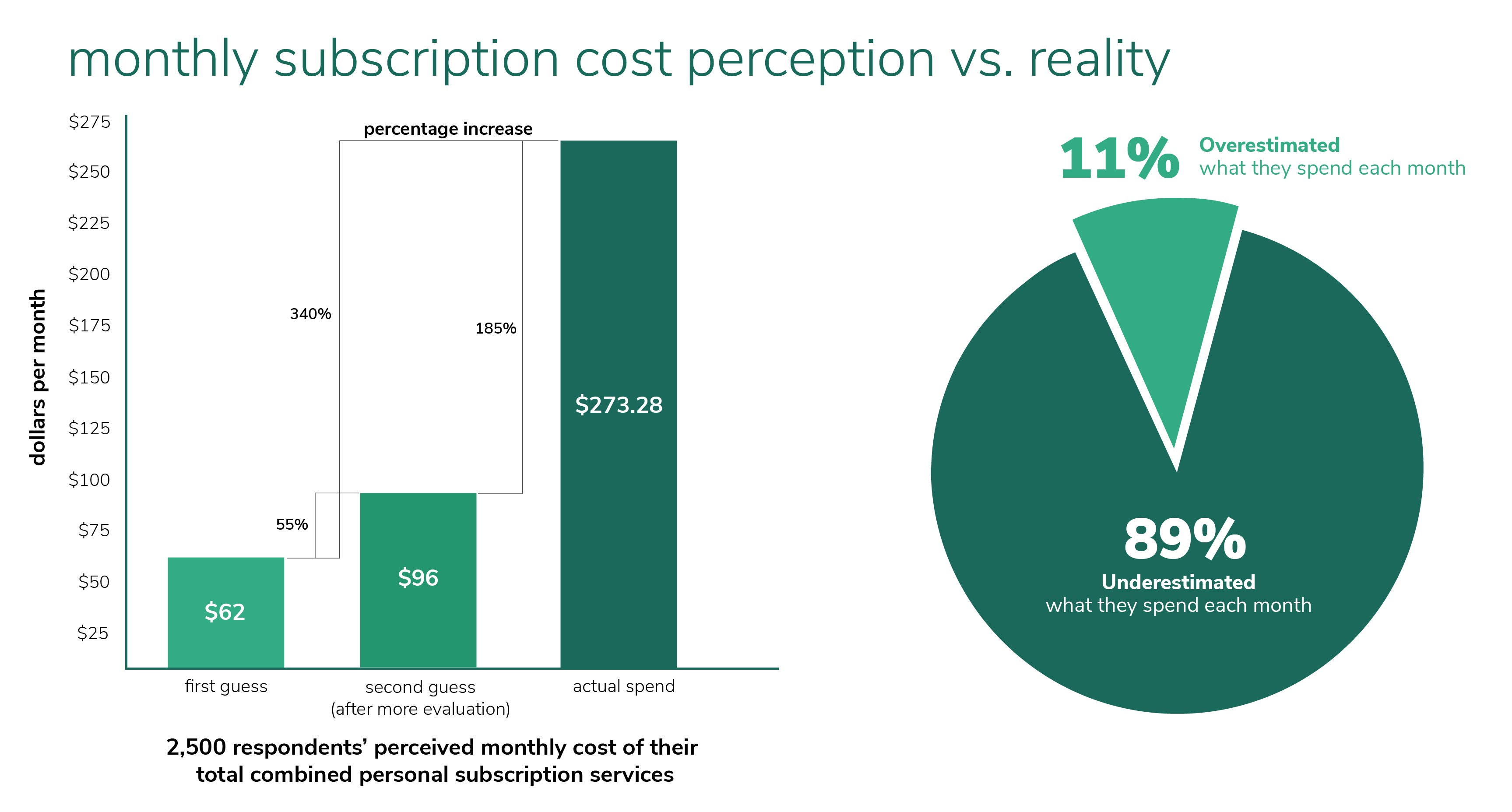
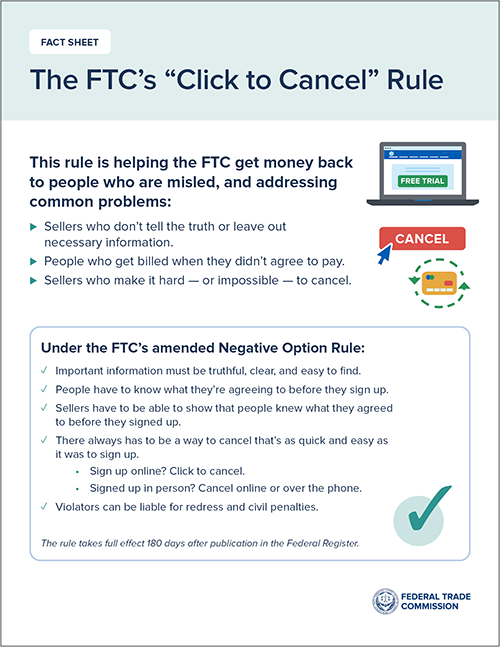
The claim asks whether subscription models systematically exploit consumers by converting recurring billing, automatic renewal, behavioral biases, and cancellation friction into payments that consumers would not actively choose. The decisive distinction is between a recurring contract that delivers knowingly chosen convenience or certainty and one that derives revenue from impaired consent, inattention, or obstruction. Accordingly, evidence that some subscriptions cause avoidable losses supports the existence of exploitation, but evidence about prevalence and net welfare is needed to justify the broader proposition that the business model is systematically exploitative. The strongest support for the claim is that public authorities have repeatedly identified recurring charges, obscured terms, forced continuity, and cancellation obstruction as mechanisms capable of turning limited attention into unwanted payments. The FTC's review describes buried fees and material terms, interfaces that induce recurring charges, and cancellation processes designed to impede exit, thereby identifying concrete pathways through which consent at enrollment can cease to represent consent to later payments. The FTC also reported thousands of annual complaints concerning recurring-subscription and negative-option practices, with complaint volume rising substantially before its rulemaking (see Figure 3). UK policy analysis likewise linked unwanted subscriptions to inadequate information, forgotten renewals, and difficult termination, reinforcing the inference that these are recurring rather than merely hypothetical consumer-protection problems. Behavioral and economic evidence gives the exploitation theory a mechanism: automatic renewal can monetize overoptimism, forgetting, and inertia after the consumer's initial decision. Health-club records showed that many monthly members paid substantially more per visit than users of per-visit plans and delayed cancellation despite low attendance, providing observed market evidence that continued billing can outlast active use. An economic analysis of automatic-renewal contracts further shows that firms can profit because inert consumers continue paying, even though competition for initial enrollment may offset or redistribute some of the resulting welfare effects. Together, the observed gym behavior and the general model make it plausible that consumer underestimation and passivity are commercially valuable features of at least some subscription arrangements (see Figure 1). The alleged harm is financially material rather than purely procedural, although its aggregate magnitude is estimated rather than directly observed. UK government analysis estimated approximately £1.6 billion in annual spending on unwanted subscriptions and attributed part of the problem to forgetting, unclear terms, and cancellation barriers. Because that total depends on surveys and modeling assumptions, it establishes policy-relevant scale more securely than a precise causal loss figure. Subscriptions may also influence spending beyond the recurring fee, so the advertised price need not capture their full behavioral effect. Peer-reviewed research found that joining paid programs can increase subsequent purchases through mechanisms including sunk-cost effects and altered purchasing behavior. That result supports the possibility of behaviorally induced additional spending, but it does not establish exploitation because increased purchases can also reflect greater engagement or value. The strongest challenge is that paying more under a subscription does not by itself show exploitation, because consumers may knowingly purchase convenience, bill certainty, or freedom from monitoring each use. Research on tariff choices found that consumers often selected flat rates costing more than usage-based alternatives for a mixture of reasons that included insurance and convenience as well as overestimation of use. Because some consumers consciously valued price certainty, the difference between a subscription price and the cheapest alternative is not a valid stand-alone measure of consumer harm. Subscriptions also have legitimate operational foundations that do not require deception or consumer error. Theoretical operations research shows that subscription services can improve capacity management and segmentation even when users are fully rational. A software-pricing model similarly indicates that recurring revenue can support continuing access and product improvement, with the preferable licensing structure depending on valuation, pricing, and improvement conditions. These models establish legitimate commercial possibilities rather than typical consumer outcomes, but they rebut the categorical inference that recurring revenue is commercially viable only because consumers are manipulated. Prevalence evidence does not warrant treating every subscription, or necessarily most subscriptions, as exploitative. Regulatory reports and sweeps document plausible mechanisms and potential violations, but they are not representative causal estimates of the entire subscription economy; one European sweep, for example, covered online retail generally rather than subscription sellers alone. The UK government's proposed regime retains subscriptions while requiring better pre-contract information, renewal reminders, cooling-off rights, and easy termination, reflecting a policy distinction between useful recurring services and harmful enrollment or retention practices. The growth or commercial success of subscription companies therefore cannot, without evidence about consent and welfare, establish exploitation (see Figure 2). Consumer welfare depends principally on contract design and user heterogeneity: the same automatic-renewal feature can benefit attentive users seeking continuity while harming users who forget, mispredict use, or encounter barriers to exit. Flat-rate research identifies consciously valued insurance and convenience, whereas automatic-renewal analysis identifies surplus losses among inert consumers and potentially offsetting competition for enrollment. The UK impact assessment similarly recognizes both legitimate subscription benefits and losses associated with forgotten renewals, unclear terms, and cancellation barriers, making aggregate welfare ambiguous without knowing their relative incidence and magnitude. Cancellation symmetry is the most directly supported boundary between legitimate continuity and exploitative retention because it targets obstruction without prohibiting recurring service. The FTC's rulemaking paired clear material terms and informed consent with a requirement that cancellation be as easy as enrollment, responding to increasing complaint volumes while preserving negative-option arrangements subject to safeguards. This remedy aligns with evidence that forced continuity and cancellation obstruction impair autonomy and can cause financial loss, although complaints do not prove each allegation and parts of the rule's regulatory history were contested. The evidence is stronger for the existence of subscription exploitation than for the proposition that the model as a whole systematically leaves consumers worse off. Regulatory materials support the prevalence of potentially manipulative design and identify credible harm mechanisms, but their enforcement matters and screened samples do not supply an economy-wide causal estimate. Conversely, the UK loss estimate and gym records substantiate material harm in particular settings, but the former is model-dependent and the latter may not generalize from health clubs to digital and other subscription markets. The main gap is not the absence of evidence on either side, but the absence of a representative, economy-wide comparison of informed consumer benefits, unwanted payments, and net welfare across subscription sectors. Available studies use different objects of analysis—complaints, enforcement screens, one-market transaction records, surveys, impact-assessment models, and theoretical models—so they cannot be combined into a clean estimate of how often recurring payments contradict consumers' informed preferences. Evidence is also thin on how effects vary by sector, contract duration, reminder design, enrollment channel, consumer vulnerability, and the practical cost of cancellation. Causal evaluation of safeguards is the most important missing evidence for policy design. The bundle does not establish how much clear consent, renewal reminders, cooling-off periods, or cancellation symmetry reduce unwanted charges, nor how much compliance burden or lost convenience they create. Conflict-of-interest classifications also remain unresolved, which limits confidence in weighting industry-adjacent modeling and contextual materials relative to independent empirical work. On balance, the evidence supports with high confidence the narrower conclusion that subscription practices can and do exploit consumers when recurring billing is coupled with obscured terms, reliance on inertia, or asymmetric cancellation, but it does not establish that subscriptions as a commercial category are systematically exploitative. The evidence balance is therefore best described as conditional and balanced: recurring service can confer convenience, certainty, and operational benefits, while design features that weaken informed choice or impede exit create a well-supported risk of avoidable financial harm. The dominant uncertainty is the lack of representative causal evidence measuring net consumer welfare across sectors, compounded by unresolved conflict-of-interest classifications.

Supporting Arguments

P1Dark patterns are widespread in subscription interfaces
The international regulatory sweep found potential dark patterns on a large majority of the 642 subscription sites and apps examined. FTC and OECD reviews describe how obscured terms, forced continuity, and cancellation obstruction can convert limited attention into unwanted recurring payments, although screening flags do not individually prove illegality or monetary harm.
76/100 · Direct Evidence
P2Automatic renewal monetizes forgetting and inertia
Gym records provide concrete evidence that consumers may continue monthly contracts despite low usage and delay cancellation. Economic analysis likewise shows that firms can profit from heterogeneous inertia under automatic renewal, supporting the claim that recurring billing can extract payments that active choice would not sustain.
62/100 · Direct Evidence
P3Unwanted subscriptions impose material financial costs
UK government analysis estimates substantial aggregate spending on unwanted subscriptions and attributes part of it to forgetting, poor disclosure, and cancellation barriers. The exact total is assumption-sensitive, but the scale and recurring nature of the estimated losses support targeted consumer-protection measures.
71/100 · Data Analysis
P4Subscriptions can stimulate spending beyond the advertised fee
Research finds that joining paid programs can change later purchasing behavior through sunk-cost and engagement mechanisms. When combined with manipulative choice architecture, this may make the initial subscription price an incomplete representation of the consumer's likely financial commitment.
50/100 · Logical Inference

Opposing Arguments

C1Flat-rate plans can provide insurance and convenience
Consumers sometimes knowingly accept a higher expected price in exchange for bill certainty, convenience, or freedom from monitoring each use. Therefore, paying more than the cheapest usage-based alternative does not by itself demonstrate exploitation.
72/100 · Direct Evidence
C2Subscriptions can have legitimate operational foundations
Operations research shows that subscriptions may improve capacity management and service design even with rational consumers. Software models also indicate that recurring revenue can support continuing provision and improvement, so deception or inertia is not essential to the model's commercial viability.
51/100 · Logical Inference
C3Evidence of abuse does not condemn every subscription
Regulatory sweeps document potential violations among screened firms, not a representative causal estimate for the whole subscription economy. Government proposals generally preserve subscriptions while regulating disclosure, renewal, reminders, and cancellation, implying that implementation practices—not recurring payment alone—are the central problem.
57/100 · Data Analysis

All contributions are reviewed for clarity, balance, and evidence. The strongest insights are elevated into the argument graph — with credit to you.

Help improve this analysis on ProConWiki →
𝕏 Share Facebook LinkedIn