Increased daily recreational screen time causes higher rates of depression among adolescents
Bottom line (updated 2026-08-25): The evidence points to a small link, but it does not prove that all screen time causes depression. Some screen habits may harm mood, yet we are not sure how much screen time itself causes the problem.
What's this about?
People disagree about whether more daily screen time causes more depression in teens.
The answer may depend on what teens do, when they do it, and how it feels.
What supporters say
- Studies that track teens over time link more screen use with more signs of depression later.
- One test found that using smartphones less helped young people feel better.
- Late-night screens may harm sleep, while screen time may replace sport or time with friends.
What critics say
- Different screen acts may affect teens in very different ways.
- Depression may lead some teens to use screens more, rather than screens causing depression.
- The link between screen time and depression seems small in some studies.
How to read this
The number of points on each side does not show which side wins; stronger proof matters more.
The bottom line
The evidence points to a small link, but it does not prove that all screen time causes depression.
Some screen habits may harm mood, yet we are not sure how much screen time itself causes the problem.
The claim that more daily recreational screen time causes higher rates of depression among adolescents has some meaningful support, but the evidence does not justify such a broad conclusion. Research points instead to a more conditional picture, in which the type, timing and experience of screen use may matter as much as the number of hours.
The case for
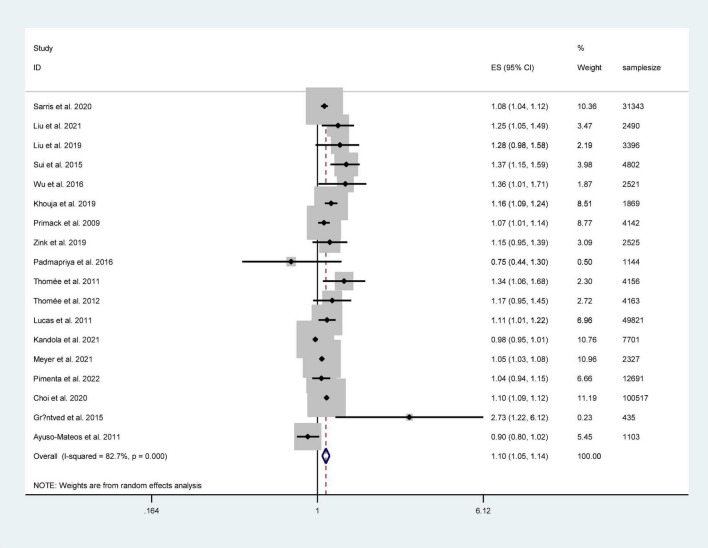
Several studies have found that adolescents who spend more time on screens later report more depressive symptoms. Prospective research, which follows people over time, is more informative than a one-time comparison because the screen use comes before the reported mental-health problems. A meta-analysis of adolescent studies found that greater screen time predicted a higher later risk of depression, and another long-term study reported a similar pattern. This timing supports, but does not prove, a cause-and-effect relationship because other factors and reverse influence may still be involved. 1 (see Figure 1)
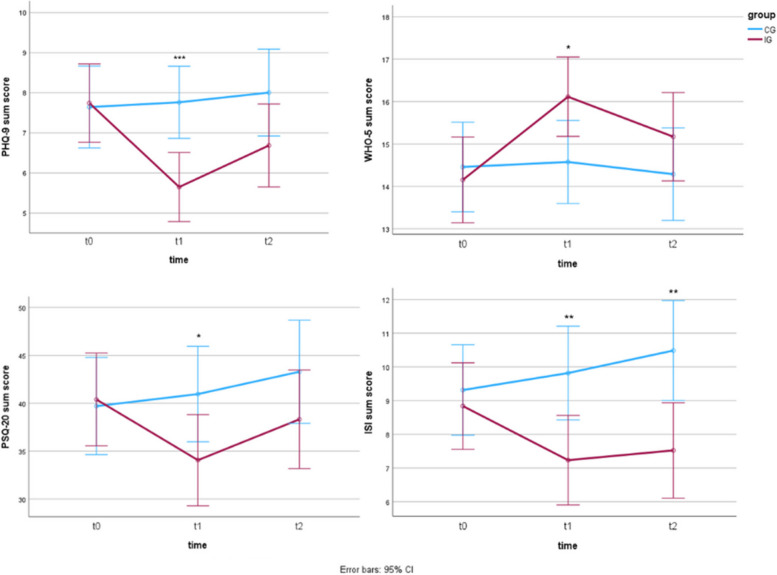
Experimental evidence adds weight to the causal argument, although it applies only to some types of screen use. In a randomized trial involving young people, reducing smartphone screen time improved mental-health outcomes. Because the study tested smartphone reduction—not every form of recreational media—and measured mental health rather than a universal clinical diagnosis of depression, it supports a narrower conclusion: reducing some screen exposure may improve well-being. 2 (see Figure 2)
There are also plausible ways screen use could affect mood. Screen use late at night may disrupt sleep, while long periods of sedentary entertainment may replace exercise or face-to-face activity. Studies connect screen exposure with sleep problems, less physical activity, and depression or anxiety. These pathways make it reasonable to worry about certain patterns of use, although showing that sleep or activity changes occur does not by itself prove that screen time directly causes depression. 3
The case against
The strongest challenge is that depression may also lead teenagers to spend more time on screens. Adolescents who are already distressed may turn to phones or other devices for distraction, social connection or coping. Longitudinal findings can change depending on how researchers account for earlier mental health and other factors, so later depression does not necessarily show that screen use started the problem. 4
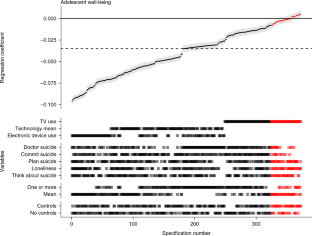
The average link may also be quite small. A large analysis estimated that digital-technology use explained roughly 0.4% of the differences in adolescent well-being. Reviews have found associations between heavier screen exposure and poorer mental health, but they also report major differences in the activities studied, the way screen time was measured, the outcomes examined and the quality of the research. A small average effect could still hide larger risks for especially vulnerable teenagers, but it argues against treating total screen hours as a major general cause. 5 (see Figure 3)
Most importantly, “screen time” is not one uniform activity. Active communication, passive scrolling, gaming, educational use and socially harmful experiences may have very different effects. Reviews find that outcomes vary with content, context, the user’s circumstances and whether use is active or passive. Nighttime, problematic or socially isolating use may matter more than recreational screen time in general. Pandemic-era findings are especially difficult to apply broadly because screen use rose alongside school disruption, isolation, family stress and illness. 6
The bottom line
The evidence strongly supports an association between heavier adolescent screen exposure and poorer mental-health outcomes. It also provides credible evidence that some forms and patterns of use—particularly those that disrupt sleep, replace activity or involve negative social experiences—may contribute to depression risk.
But the evidence is substantially weaker for the universal causal claim that every increase in total daily recreational screen time raises depression rates. Prospective studies remain vulnerable to other explanations, and the available randomized evidence concerns a specific reduction in smartphone use rather than a general screen-time limit. Researchers have not established a broadly applicable dose threshold, nor cleanly separated all screen activities from prior mental health, family stress, social conditions and sleep.
The most defensible conclusion is therefore conditional: some screen-use patterns may increase depression risk, but total daily recreational screen time alone has not been shown to be a universal cause.
Figures & data
All contributions are reviewed for clarity, balance, and evidence. The strongest insights are elevated into the argument graph — with credit to you.
Help improve this analysis →