Banning minors from social media would reduce teenage mental-health harms
Aldo's Synthesis high
Based on the strength of the Arguments below
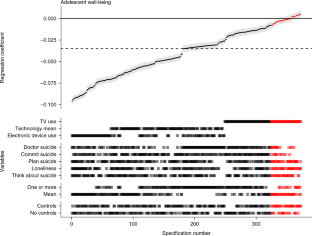
The claim asks whether denying all minors access to social media would reduce measurable teenage mental-health harms, particularly depression and anxiety. The relevant inquiry is not merely whether social media can cause harm, but whether a universal prohibition would produce a net population benefit after accounting for heterogeneous effects, compliance, substitution, and the loss of beneficial uses. That distinction matters because evidence about associations, voluntary reductions, temporary deactivation, and partial restrictions answers different questions from evidence about an enforceable ban applying to every platform and every person under eighteen. The strongest affirmative evidence is experimental: emotionally distressed youth assigned to reduce social-media use experienced short-term decreases in depression, anxiety, and fear of missing out relative to usual use. Because assignment rather than participant preference determined the intervention, this trial supports a causal benefit from limiting use in a selected high-risk population, although limited adherence and follow-up constrain extrapolation to a permanent ban. Its direction is also consistent with a systematic review finding correlations between social-media use and adolescent depression, anxiety, or psychological distress, though the review stressed that most underlying studies were cross-sectional and methodologically moderate or weak. Longitudinal findings provide a second line of support by showing that heavier use can precede later internalizing problems or lower life satisfaction rather than appearing only after distress develops. A longitudinal US youth study found that greater social-media time was associated with later internalizing and combined internalizing-externalizing problems after adjustment for baseline problems, weakening—but not eliminating—a purely reverse-causation account. Separate longitudinal analyses identified age- and sex-specific periods in which greater use predicted later reductions in life satisfaction, although lower satisfaction also predicted later increases in use. A randomized four-week Facebook-deactivation experiment in adults likewise produced small improvements in subjective well-being, offering indirect causal evidence that removing a service can help even though its population and intervention do not match the claim. Plausible mechanisms strengthen the affirmative case because heavier use has been linked to depressive or internalizing outcomes through pathways including disrupted sleep, online harassment, body-image concerns, and diminished self-esteem. In the large UK Millennium Cohort analysis, these pathways statistically mediated substantial portions of the association between heavy use and depressive symptoms, with especially pronounced associations among girls. The US Surgeon General's advisory also reports evidence associating more than three hours of daily social-media use with roughly twice the risk of poor mental-health outcomes, while treating that association as a reason for safeguards rather than proof that a universal ban would work (see Figure 2). The principal objection is that average associations are small and causally ambiguous, so even real harms to some teenagers do not establish a substantial population benefit from banning access for all minors. Specification-curve analyses across three large adolescent datasets found that digital-technology use explained at most about 0.4% of the variation in well-being, with negative associations comparable in magnitude to correlations involving ordinary activities (see Figure 1). An expert research review similarly concluded that average links between digital use and adolescent mental health are generally small and that confounding, measurement weaknesses, heterogeneity, and bidirectionality prevent strong causal inference. If most of the average association is noncausal or concentrated in a small subgroup, a universal ban could yield only modest aggregate improvement while imposing its costs on unaffected users. Direct abstinence evidence also fails to show that removing access reliably improves mental health across outcomes. A fourteen-day experiment found no uniform mental-health or well-being benefit, and incomplete abstinence further complicated interpretation. Read together with the favorable reduction trial in distressed youth, the experiments support subgroup-specific or intervention-specific effects rather than a dependable benefit for every teenager. Implementation can also break the assumed chain from legal restriction to reduced total exposure and then to improved mental health. An English comparison of restrictive and permissive school phone policies found less in-school phone use under restrictive rules but no reduction in total daily phone or social-media use and no better measured mental-health outcomes. A nationwide platform ban would be broader than a school rule, but the study demonstrates that displacement outside a restricted setting can erase an intended exposure reduction. Finally, a ban could remove uses that support connection, identity exploration, information access, or vulnerable adolescents, thereby offsetting some gains from reduced harmful exposure. Both the American Psychological Association and the National Academies recognize beneficial as well as harmful experiences and describe outcomes as dependent on user vulnerabilities, content, platform features, and patterns of engagement. The net effect therefore depends partly on whether equivalent offline or safer online substitutes remain available to adolescents who currently derive support from these services. The most defensible synthesis is conditional: risk and likely benefit from restriction vary by developmental stage, sex, baseline distress, vulnerability, and type of use rather than tracking minor status uniformly. Longitudinal work reports different windows of sensitivity for boys and girls and also finds bidirectional relationships between use and life satisfaction. The APA accordingly emphasizes developmentally appropriate monitoring, literacy, screening for problematic use, and protection from harmful content rather than treating all adolescent use as equivalent. The National Academies likewise frames effects as contingent on individual characteristics, platform design, content, and usage patterns, a structure that weighs against assuming one uniform treatment effect (see Figure 3). The policy claim also outruns the interventions directly studied because causal experiments generally test temporary reduction, abstinence, or deactivation rather than an enforceable, comprehensive prohibition for everyone under eighteen. A favorable individual reduction effect cannot by itself establish a ban's compliance rate, substitution effects, durability, lost benefits, or impact on population prevalence, especially when one deactivation trial involved adults and one abstinence experiment yielded mixed outcomes. Consistent with that evidentiary limit, the Surgeon General and APA call for safety standards, monitoring, literacy, screening, and protections from harmful content while recognizing both risks and benefits. Feature-level safeguards may address demonstrated pathways more precisely than an access ban because implicated mechanisms include sleep displacement, harassment, social comparison, harmful content, and problematic engagement. Authoritative recommendations therefore favor layered measures such as age-appropriate design, transparency, researcher access, education, monitoring, and enhanced protection for vulnerable users. Such alternatives are not automatically effective, however: school restrictions that changed in-school use without changing total exposure did not improve measured mental health. The decisive evidence gap is the absence of a direct study of an enforceable, long-term, cross-platform ban covering all minors and measuring depression or anxiety against an appropriate comparison group. Existing studies leave unresolved how minors would evade restrictions, migrate to other services, replace online support, or adapt over periods longer than the studied interventions. They also do not establish whether any aggregate improvement would be large enough to outweigh losses borne by adolescents whose use is neutral or beneficial. A second limitation is imperfect alignment among exposure definitions, outcomes, and populations. Digital-technology time is broader than social-media access; life satisfaction and subjective well-being are not interchangeable with clinical depression or anxiety; and findings from adults or emotionally distressed volunteers may not generalize to all teenagers. These mismatches make the direction of some causal pathways credible while leaving the magnitude of a universal ban's effect indeterminate. Finally, unresolved conflict-of-interest classifications limit the ability to assess whether sponsorship or institutional interests systematically influence the record. On balance, the evidence supports the narrower proposition that reducing social-media use can lessen short-term mental-health symptoms for some high-risk teenagers, but it does not presently establish that banning access for all minors would reduce teenage depression and anxiety overall. Confidence in this balanced judgment is high because experimental, longitudinal, large-data, and authoritative-review evidence converge on real but heterogeneous risks while also exposing small average associations and mixed intervention effects. The dominant policy uncertainty is external validity: whether effects observed under temporary, selective, or partial reductions would survive the compliance, substitution, lost-benefit, and implementation conditions of a universal ban, with unresolved conflict-of-interest classifications adding a secondary limitation.
Supporting Arguments
P1Experimental reductions can improve symptoms in distressed youth
Randomized evidence shows that reducing social-media use can lower depression, anxiety, and fear of missing out over the short term among emotionally distressed youth. Together with meta-analytic associations, this supplies a plausible causal basis for expecting access restrictions to benefit at least some high-risk teenagers, though it does not directly test a universal ban.
93/100 · Direct Evidence
P2Longitudinal studies support temporal risk pathways
Large cohort studies report that heavier use precedes later internalizing problems or lower life satisfaction after accounting for earlier outcomes. These results weaken a purely reverse-causation explanation and support the possibility that reducing exposure could prevent some harm.
72/100 · Direct Evidence
P3Sleep, harassment, and body image offer plausible mechanisms
The UK Millennium Cohort analysis linked heavy use to depressive symptoms and identified disrupted sleep, online harassment, body image, and self-esteem as important pathways, particularly for girls. A ban could reduce exposure to these mechanisms, although targeted platform and family interventions might achieve similar ends with fewer lost benefits.
62/100 · Logical Inference
Opposing Arguments
C1Average associations are small and do not establish causation
Large-data analyses indicate that digital use explains very little variation in adolescent well-being, while major reviews emphasize confounding, measurement weaknesses, and bidirectionality. A blanket ban could therefore produce only a small population effect if the average association is not predominantly causal.
74/100 · Data Analysis
C2Abstinence does not consistently improve mental health
A 14-day abstinence experiment did not produce uniform benefits across mental-health and well-being outcomes. This mixed experimental record means removing access cannot be assumed to reduce depression or anxiety for all teenagers.
52/100 · Direct Evidence
C3Real-world restrictions may displace rather than reduce use
English schools with restrictive phone policies had lower in-school phone use but not lower total phone or social-media use, and students did not show better mental-health outcomes. Although a nationwide platform ban would be broader, this evidence illustrates how circumvention or displacement can erode the intended effect of access restrictions.
0/100 · Logical Inference
C4A ban could remove valued support and connection
Authoritative reviews recognize that social media can provide social connection, identity exploration, information, and support, including for some marginalized adolescents. Removing those benefits could offset mental-health gains for certain groups, making net effects depend on implementation and available substitutes.
79/100 · Expert Opinion
All contributions are reviewed for clarity, balance, and evidence. The strongest insights are elevated into the argument graph — with credit to you.
Help improve this analysis on ProConWiki →