Screen time limits for children are based on weak evidence
Aldo's Synthesis high
Based on the strength of the Arguments below
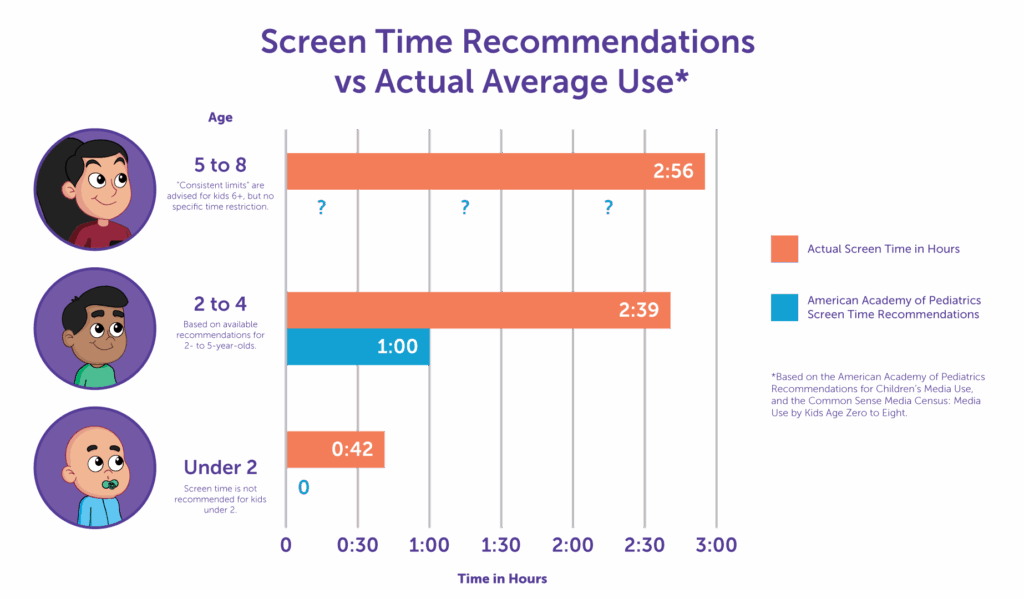
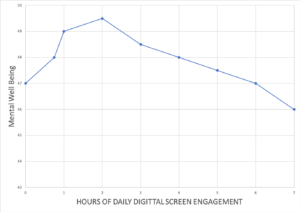
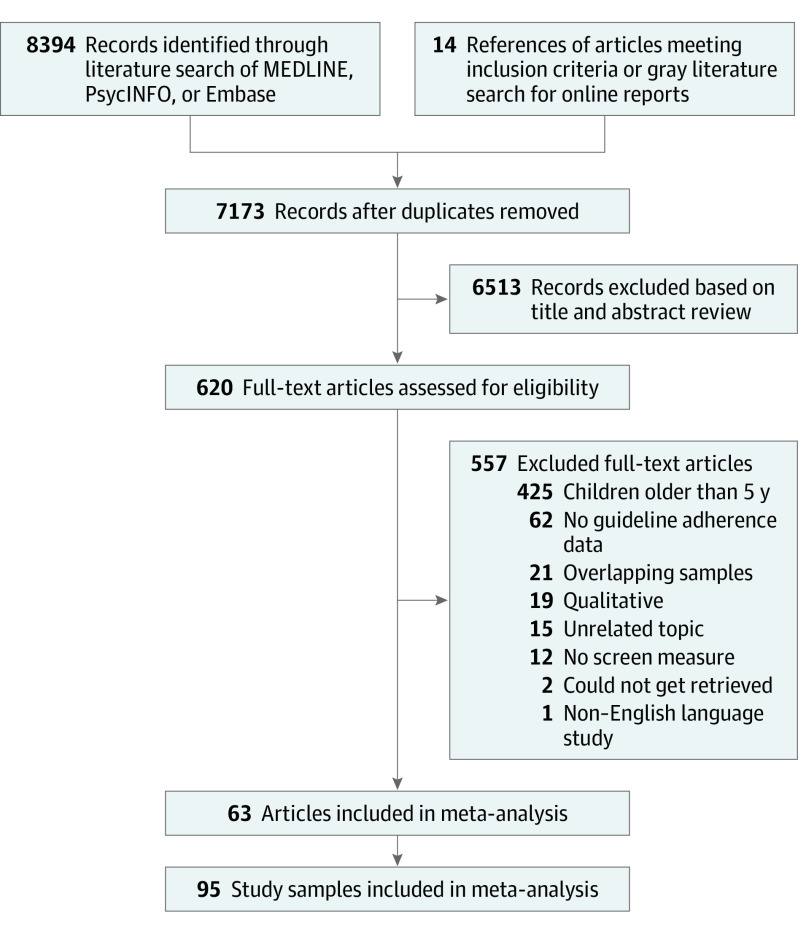
The claim asks a narrower question than whether excessive or poorly situated screen use can harm children: it asks whether universal numerical limits are strongly supported by causal evidence or clearly established exposure thresholds. The distinction matters because evidence sufficient to justify precautionary household boundaries may still be insufficient to identify a biologically meaningful cutoff applicable across ages, activities, and outcomes. Accordingly, the strongest assessment separates criticism of precise hour-based rules from the broader case for managing children's media use. The strongest support for the claim is that major syntheses identify adverse associations but little evidence for an exact exposure point at which harm begins, while the American Academy of Pediatrics now rejects a single limit as suitable for every child. A systematic review of reviews found moderately strong evidence for associations with adiposity and depressive symptoms and moderate evidence for several other outcomes, yet also judged threshold evidence sparse and the underlying literature limited by heterogeneous measurements and observational designs. The AAP's emphasis on content, context, developmental appropriateness, and displaced activities reflects this difficulty in applying one duration threshold across children and digital practices; institutional recommendations themselves also differ in their hour-based formulations (see Figure 1). Causal inference is further weakened because much of the evidence is observational, relies on heterogeneous exposure measures, and cannot fully remove selection or confounding. For example, the synthesis of studies in children under five generally associated greater screen time with shorter or less favorable sleep, but observational designs, inconsistent measures, and limited objective assessment constrained evidentiary quality (see Figure 3). Even longitudinal analyses acknowledge that different screen activities may attract children with different prior characteristics and occur in different family circumstances, leaving causal attribution uncertain. Aggregate duration is also an unstable exposure because it combines activities with materially different associations. A meta-analysis of 58 studies found no consistent association between total screen time and academic performance, although television viewing and video gaming had inverse associations with some academic outcomes and results varied by age and subject. In early childhood, background television, age-inappropriate content, and caregiver screen use during routines were associated with poorer outcomes, whereas caregiver co-use was positively associated with cognitive outcomes. An umbrella review likewise found both harms and benefits depending on the outcome and form of use, with often-small effects and variable certainty. Some prominent population-level associations are too small to establish that modestly crossing a universal limit materially harms an individual child. Across three large adolescent datasets, digital technology use had a negative association with well-being but explained at most about 0.4% of its variation, and estimates shifted with plausible analytical choices (see Figure 2). Intervention and obesity evidence does not close the threshold gap: programs generally achieve small, heterogeneous reductions, while studies commonly using two hours as a dividing line remain predominantly observational and inconsistent in exposure definition. Even where reducing entertainment media improved adiposity in a randomized school intervention, that result establishes the efficacy of changing behavior in one setting rather than the optimality of a specific daily number across ages, devices, and outcomes. The strongest challenge is that uncertain cutoffs do not erase convergent evidence associating heavier or poorly situated screen use with adiposity, depressive symptoms, diet, sleep, quality of life, and some developmental outcomes. Multiple evidence syntheses find adverse associations across several domains, even though certainty and effect size vary by outcome and use pattern. For children under five, greater exposure was generally associated with shorter sleep and less favorable sleep outcomes, supplying a practical reason for caution even without a validated universal boundary. A randomized trial supplies direct evidence that reducing some entertainment media can cause health benefits in a defined population. The school-based intervention reduced television, videotape, and video-game use and produced relative reductions in BMI, skinfold thickness, waist circumference, and waist-to-hip ratio over seven months. Its scope is nevertheless limited: it concerned elementary pupils, older entertainment formats, and an intervention package rather than a test of competing daily thresholds. Longitudinal ordering also strengthens developmental concern beyond a contemporaneous correlation. In a cohort of 2,441 mother-child pairs, higher screen time at 24 and 36 months predicted poorer later developmental-screening performance, whereas poorer scores generally did not predict later exposure. Parent-reported exposure, residual confounding, and reliance on a screening rather than diagnostic measure prevent that temporal pattern from proving causation. Limits may also be justified through displacement rather than a uniform toxic effect of each screen minute. Associations with sleep, adiposity, diet, and well-being are consistent with concern when media use replaces sleep, movement, or other beneficial activities, although the evidence does not isolate displacement as the mechanism in every case. Eye-health evidence adds a dose-related, though still observational, rationale for avoiding prolonged exposure. A dose-response meta-analysis associated increasing daily digital-screen exposure with increasing odds of myopia, but could not fully separate screen exposure from near work, educational intensity, or reduced outdoor time. The evidence therefore supports the claim most strongly when it targets rigid universal numbers, not when it is read to deny the value of all media boundaries. Context-sensitive evidence gives stronger grounds for addressing background television, age-inappropriate content, caregiver use during routines, and patterns that displace essential activities than for treating one or two hours as a biologically precise boundary. The positive association between caregiver co-use and cognitive outcomes further indicates that how media is used can alter the risk-benefit assessment. Age and developmental stage limit the defensibility of a single rule spanning infancy through adolescence. Evidence concerning young children's development and adolescent well-being concerns different outcomes and shows different magnitudes, including very small average associations in large adolescent datasets. This supports a more precautionary posture for very young children while favoring greater attention to content, purpose, autonomy, and timing for older children, rather than implying that the same numeric threshold has equal evidentiary force at every age. An integrated daily-routine framework is more closely aligned with the evidence than duration policing in isolation. Nationally representative Canadian data associated meeting more combined recommendations for sleep, physical activity, and recreational screen time with better health indicators, but could not show that the two-hour component itself caused those differences. The practical inquiry is thus whether media use disrupts sleep, movement, development, or other priorities, while accounting for the type and context of use. The principal gap is not a lack of research, but a shortage of evidence capable of identifying causal, outcome-specific thresholds across ages and forms of screen use. The bundle contains comparatively little randomized evidence, and the available trial does not compare candidate hour cutoffs or establish generalizability to contemporary devices and practices. Long-term objective exposure measurement, stronger control of family and socioeconomic confounding, and direct comparisons of content, timing, co-use, and displacement remain needed to distinguish intrinsic screen effects from correlated routines. Conflict-of-interest classifications are unresolved in the supplied structural assessment, so confidence cannot be adjusted for that consideration. On balance, the evidence supports the claim with high confidence insofar as it concerns universal numerical limits: adverse associations are real enough to warrant attention, but causal evidence and clearly validated hour thresholds remain weak. That conclusion does not establish that limits are useless; it favors targeted boundaries addressing sleep displacement, prolonged exposure, unsuitable content, and developmental context over treating a single daily total as a precise safety line. The dominant uncertainty is whether future causal research can separate duration from content, timing, co-use, near work, outdoor activity, and family circumstances well enough to identify thresholds for particular outcomes. Unresolved conflict-of-interest classifications are an additional, secondary qualification on the confidence assessment.
Supporting Arguments
P1Exact hour cutoffs are not established causal thresholds
Major evidence syntheses find little support for a specific exposure point at which harm begins, even when they find associations between heavier use and adverse outcomes. WHO's numerical limits therefore incorporate precaution, feasibility, and broader movement-behavior goals rather than resting on trials that validate one exact cutoff.
100/100 · Direct Evidence
P2Most supporting studies cannot establish causation
Much of the literature is cross-sectional or observational and uses parent- or self-reported screen exposure. Socioeconomic conditions, parenting, prior health, near work, outdoor activity, and family stress can influence both screen use and outcomes, leaving residual confounding even in longitudinal studies.
79/100 · Direct Evidence
P3Total screen time combines unlike activities
Educational video with a caregiver, background television, gaming, and late-night social media can have different associations with child outcomes. Evidence that activity type, content, and co-use modify results weakens a single daily duration limit as a comprehensive rule.
77/100 · Direct Evidence
P4Some widely discussed associations are very small
Large-scale adolescent data show statistically negative associations between digital use and well-being but extremely small explained variance. Small average associations are a weak foundation for claiming that modestly crossing a universal limit is itself materially harmful to every child.
63/100 · Data Analysis
P5Intervention evidence does not validate universal limits
Programs can reduce screen exposure, but effects are often small and intervention designs heterogeneous. Even a successful obesity trial showed that reducing entertainment media can help in one population, not that a particular daily number is optimal across ages, devices, and outcomes.
62/100 · Logical Inference
Opposing Arguments
C1Weak thresholds do not mean an absence of meaningful evidence
Reviews consistently identify adverse associations for adiposity, depressive symptoms, diet, sleep, and some developmental outcomes. Convergent findings across outcomes provide a reasonable basis for precautionary limits even when the exact safest duration remains uncertain.
100/100 · Direct Evidence
C2A randomized trial found benefits from reducing entertainment media
The Stanford school trial found that an intervention reducing television and video-game exposure improved several adiposity measures relative to controls. Randomization reduces confounding and demonstrates that changing screen behavior can cause health benefits, at least in a defined context.
71/100 · Direct Evidence
C3Longitudinal ordering supports developmental concern
Higher screen exposure at ages two and three predicted poorer performance on later developmental screening in a large cohort, while the reverse pathway was generally unsupported. This does not prove causality, but it is stronger than a purely cross-sectional correlation and supports caution during early development.
60/100 · Direct Evidence
C4Limits can protect sleep and displaced healthy activity
Screen use can matter indirectly by delaying bedtime or replacing sleep, movement, outdoor time, and caregiver interaction. Limits used as household boundaries may therefore be justified through opportunity costs even if screen exposure has no uniform intrinsic effect per minute.
95/100 · Logical Inference
C5Eye-health evidence adds a dose-related rationale
A recent dose-response synthesis associated increasing digital screen exposure with increasing myopia odds. Although near work and reduced outdoor time remain competing explanations, the pattern supports avoiding prolonged exposure rather than assuming all durations are harmless.
0/100 · Direct Evidence
All contributions are reviewed for clarity, balance, and evidence. The strongest insights are elevated into the argument graph — with credit to you.
Help improve this analysis on ProConWiki →