Psychedelic-assisted therapy is an effective treatment for treatment-resistant depression.

Updated 2026-07-31 4 supporting · 5 opposing arguments
Aldo's Synthesis high
Based on the strength of the Arguments below
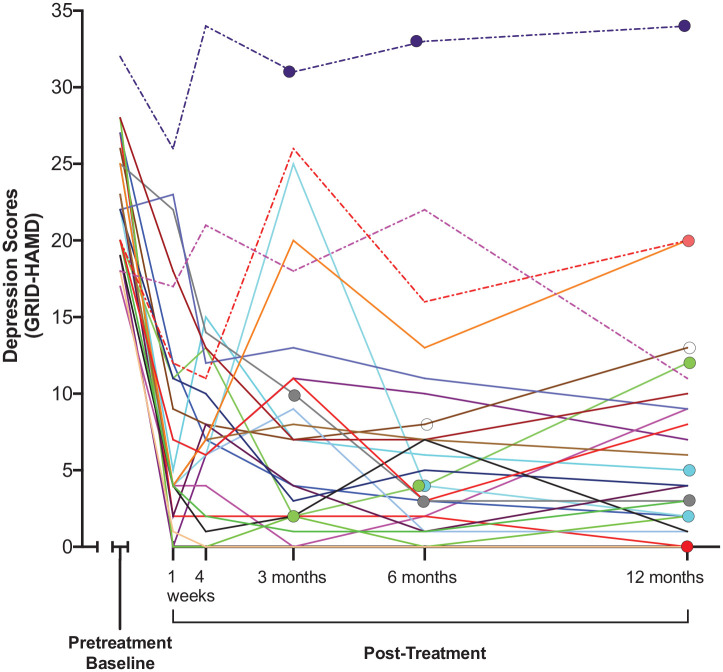
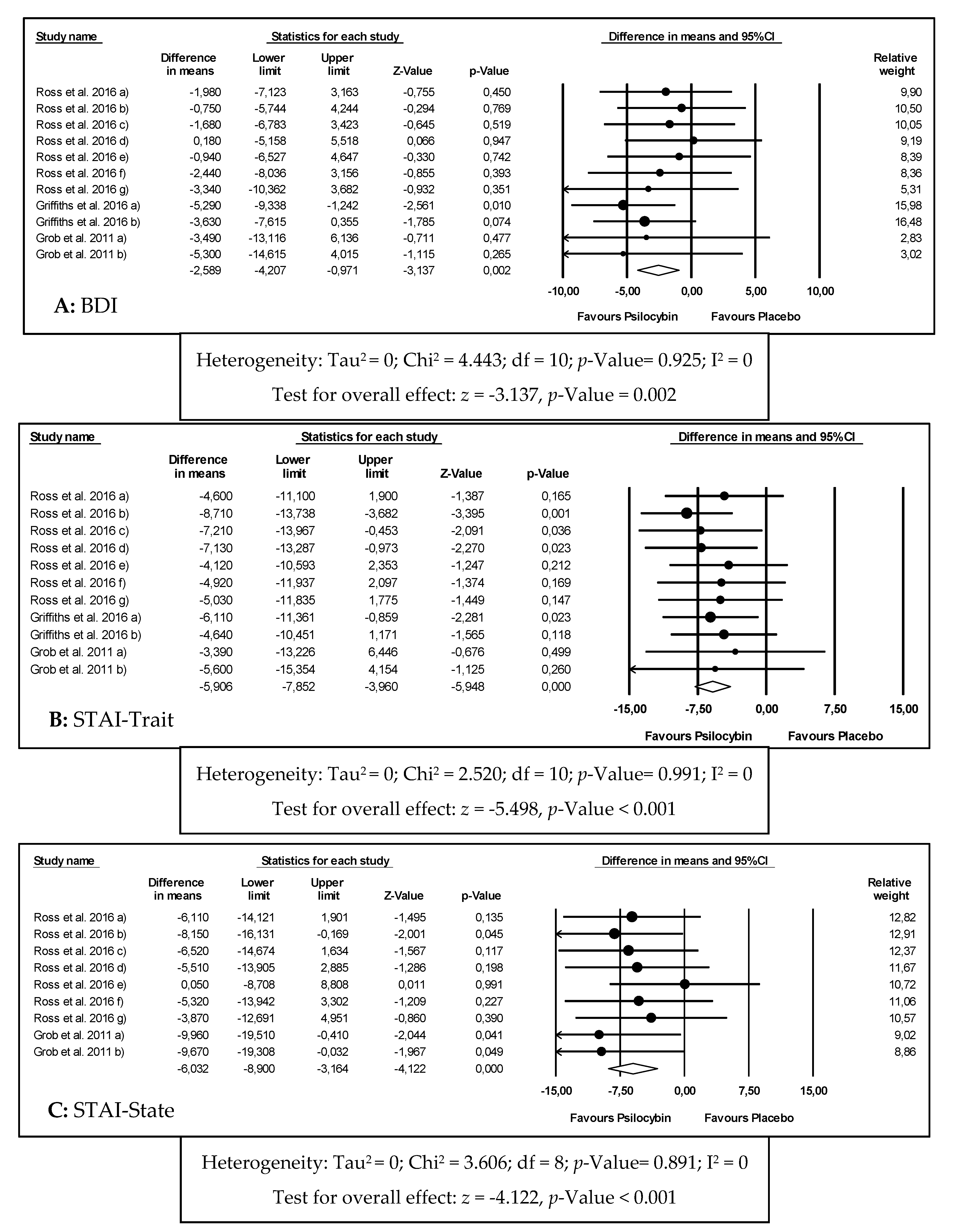
The claim asks whether a clinically structured package—principally psilocybin administered to carefully screened adults under professional supervision and with psychological support—produces meaningful and durable improvement in treatment-resistant depression, rather than whether psychedelic use in general is beneficial. The central distinction is between short-term efficacy under trial conditions and durable effectiveness in routine care; the former asks whether the intervention can reduce symptoms, while the latter also depends on persistence, safety, patient selection, reproducibility, and feasible delivery. What is at stake is therefore not a binary judgment about psychedelics, but how far positive controlled findings justify a treatment claim whose wording includes clinical significance, durability, and comparison with control treatment. The strongest support is that randomized TRD research and a strong meta-analysis both indicate that supervised psilocybin-assisted treatment can reduce depressive symptoms over the short term. The principal direct trial enrolled 233 adults with TRD and found that 25 mg psilocybin given with psychological support reduced depression scores more than a 1 mg control at three weeks, providing the most substantial controlled test of the claim (see Figure 2). A further randomized TRD study evaluating repeated psilocybin-assisted psychotherapy also reported improvement, adding controlled evidence beyond a single dosing model. Together, these trials make a genuine short-term antidepressant effect in selected TRD patients more plausible than an inference drawn solely from uncontrolled improvement. The positive signal is not confined to one trial: multiple meta-analyses report significant or large antidepressant effects across psilocybin-assisted treatment studies, with evidence that outcomes vary by dose (see Figure 3). Convergence across reviews reduces the likelihood that every observed benefit is an isolated statistical accident, even though overlapping studies and heterogeneous populations prevent treating the pooled estimates as independent replications in TRD. The studies also describe improvement after one or two supervised sessions, within days or weeks, rather than only after continuous daily dosing. For patients whose depression has resisted conventional treatment, that rapid onset is a clinically relevant feature of the observed effect, although it does not by itself establish durability or comparative superiority. Some follow-up evidence further suggests that improvement can extend beyond the acute psychoactive period. An early uncontrolled TRD study found rapid symptom reductions after two supported doses, with some improvement persisting for three months. Open-label follow-up found statistically significant reductions through six months in a 20-person TRD sample, and a separate 24-person major-depression cohort retained substantial improvement at 12 months (see Figure 1). These observations do not prove long-term causation, but they rebut the narrower proposition that any benefit necessarily ends when intoxication ends. The strongest challenge is that conspicuous psychoactive effects make functional unblinding and expectancy unusually difficult to control, so nominal randomization and masking may overstate the treatment-specific effect. A comparative analysis found unusually small improvements in psilocybin-trial control groups relative to controls in antidepressant trials, a pattern consistent with inflated drug-control separation, although cross-trial population and design differences could also explain it. The BMJ meta-analysis likewise warned that inadequate masking, expectancy, prior psychedelic use, and weak control responses could inflate pooled estimates. FDA guidance identifies functional unblinding, expectancy, dose-response assessment, durability, therapist monitoring, and characterization of psychotherapy's contribution as central design problems rather than settled details. Durability is also materially less secure than the short-term symptom signal. In the uncontrolled six-month TRD follow-up, fewer participants retained response or remission over time, and the small self-selected sample leaves expectancy, psychotherapy, regression to the mean, and natural fluctuation unresolved. The 12-month cohort supports possible persistence but was no longer controlled during long-term follow-up and did not consist specifically of TRD patients. Reviews consequently identify maintenance strategy, redosing, and limited long-term evidence as unresolved implementation questions. Safety findings are reassuring about common outcomes under supervision but do not eliminate clinically relevant acute harms or uncertainty about rare events. Meta-analyses report increased headache, nausea, anxiety, dizziness, and blood-pressure elevation, while most reported acute effects resolved within 24 to 48 hours and serious adverse events were uncommon in controlled studies. Because trials were small, closely supervised, short in follow-up, and generally excluded medically or psychiatrically higher-risk patients, they are poorly positioned to quantify rare, delayed, or high-risk harms. Active-comparator evidence does not establish that psilocybin-assisted therapy is superior to established antidepressant care. In 59 adults with moderate-to-severe major depression, psilocybin did not significantly outperform escitalopram on the prespecified primary outcome, although several secondary outcomes favored psilocybin. That trial was small, underpowered for definitive superiority or equivalence conclusions, and not TRD-specific, so it cautions against a superiority claim without directly negating efficacy against a weak-dose or placebo-like control. The evidence supports a narrower proposition than an unqualified claim about psychedelic-assisted therapy: supervised psilocybin-assisted treatment is promising and probably efficacious in the short term for some carefully selected adults with TRD, while durable real-world effectiveness remains unproven. Most evidence in the bundle concerns psilocybin, and some informative studies enrolled major-depression rather than specifically TRD populations; those results should not automatically be generalized to every psychedelic compound, diagnosis, dose, or therapeutic model. Likewise, trial findings apply most directly to screened participants receiving preparation, monitored dosing, psychological support, and follow-up, not to unsupervised use or less controlled clinics. The intervention's components also remain causally entangled: trials generally evaluate psilocybin together with preparation, therapeutic rapport, monitored administration, and integration rather than isolating the drug from the surrounding care package. Because control conditions rarely reproduce both the intensive therapeutic context and the unmistakable subjective experience, present evidence cannot precisely allocate benefit among pharmacology, psychotherapy, expectancy, or their interaction. Accordingly, the evidence more directly supports the effectiveness of a supervised package than the independent efficacy of psilocybin stripped of its clinical setting. The apparent tension between positive efficacy findings and methodological caution is resolved largely by time horizon and setting: convergent evidence favors rapid symptom reduction under controlled conditions, whereas small samples, heterogeneous protocols, weak masking, and uncontrolled follow-up limit conclusions about persistence and routine practice. The same boundary applies to safety: uncommon serious events in screened and supervised trials are relevant reassurance for that delivery model, but not proof of equal safety in excluded high-risk groups or unsupervised settings. The principal gaps concern causal separation, long-term controlled outcomes, broader representativeness, and unresolved conflict-of-interest classifications. The bundle does not supply enough information to determine how conflict-of-interest concerns should alter the weight assigned to individual studies, so that issue remains an uncertainty rather than a basis for discounting any named result. Further controlled evidence is needed to distinguish durable treatment effects from expectancy, concurrent psychotherapy, regression to the mean, subsequent care, and natural symptom fluctuation. The evidence also leaves optimal dose, redosing schedule, maintenance psychotherapy, relapse prevention, therapist standardization, rare harms, and effectiveness in excluded or less intensively supported patients insufficiently resolved. These gaps do not erase the short-term controlled signal, but they prevent that signal from carrying the full weight of a broad and durable effectiveness claim. On balance, the evidence supports the claim in a qualified form: professionally supervised psilocybin-assisted therapy probably produces clinically meaningful short-term improvement for some carefully screened adults with TRD, but durable effectiveness compared with control treatment is not yet established. Confidence in this balanced judgment is high because randomized trials and meta-analyses converge on a short-term signal while also consistently identifying the same methodological and implementation limits. The dominant uncertainty driver is whether observed benefits persist under adequately controlled follow-up after accounting for functional unblinding, expectancy, the psychological-support package, and unresolved conflict-of-interest classifications.

Supporting Arguments

P1A large controlled trial found short-term benefit in TRD
The strongest direct evidence is the 233-person phase 2 trial, in which 25 mg psilocybin with psychological support reduced depression scores more than a 1 mg control at three weeks. Smaller randomized research using repeated sessions also reports improvement, making a genuine short-term antidepressant effect plausible in carefully selected TRD patients.
74/100 · Direct Evidence
P2Meta-analyses consistently detect antidepressant effects
Multiple systematic reviews pool randomized evidence and find clinically substantial reductions in depressive symptoms after psilocybin-assisted treatment. Although not every included participant had TRD, consistency across reviews supports efficacy as more than an isolated single-study result.
89/100 · Data Analysis
P3Some patients improve rapidly after one or two sessions
Controlled and early feasibility studies report symptom reductions within days or weeks rather than after continuous daily dosing. This rapid onset could be clinically valuable for patients who have not benefited from conventional antidepressants, provided treatment occurs in an appropriately supervised setting.
63/100 · Direct Evidence
P4Improvement may persist beyond the acute drug effect
Open-label TRD follow-up found some benefits remaining at six months, while a separate major-depression cohort retained substantial improvement at 12 months. These studies cannot prove long-term causation, but they show that benefit is not necessarily confined to the hours of psychedelic intoxication.
58/100 · Direct Evidence

Opposing Arguments

C1Masking and expectancy can exaggerate efficacy estimates
The conspicuous psychoactive effects of a full psilocybin dose often reveal treatment assignment to participants and therapists. FDA guidance and comparative control-group research indicate that functional unblinding and unusually weak control responses may inflate apparent treatment effects, even in nominally double-blind trials.
89/100 · Logical Inference
C2Benefits may fade and maintenance treatment is unresolved
In the major phase 2 TRD trial, the clearest separation from control occurred at three weeks and diminished later, while the uncontrolled six-month study showed declining response and remission over time. Evidence does not yet establish optimal redosing, maintenance psychotherapy, or relapse prevention.
49/100 · Direct Evidence
C3The treatment carries acute and incompletely measured risks
Meta-analyses show increased headache, nausea, anxiety, dizziness, and transient blood-pressure elevation, while the largest TRD trial recorded suicidal ideation or behavior across groups. Serious events appear uncommon under supervision, but small trials and restrictive eligibility are poorly suited to detecting rare, delayed, or high-risk outcomes.
97/100 · Direct Evidence
C4Evidence may not generalize to routine or unsupervised use
Trials generally screen out people with psychotic-spectrum or bipolar risk, unstable medical conditions, and other safety concerns, then provide extensive preparation, monitoring, and integration. Results therefore do not demonstrate that psychedelic use itself—or delivery in less controlled clinics—is effective or safe for the broader TRD population.
83/100 · Logical Inference
C5Active-comparator evidence does not show clear superiority
In a trial of major depression, psilocybin did not significantly outperform escitalopram on the prespecified primary endpoint, despite favorable secondary outcomes. Although that study was small and not TRD-specific, it cautions against claiming that psilocybin-assisted therapy is clearly superior to established antidepressant care.
87/100 · Direct Evidence

All contributions are reviewed for clarity, balance, and evidence. The strongest insights are elevated into the argument graph — with credit to you.

Help improve this analysis on ProConWiki →
𝕏 Share Facebook LinkedIn