Social Media Should Be Banned for Children Under 13

Updated 2026-07-30 5 supporting · 5 opposing arguments
Aldo's Synthesis high
Based on the strength of the Arguments below
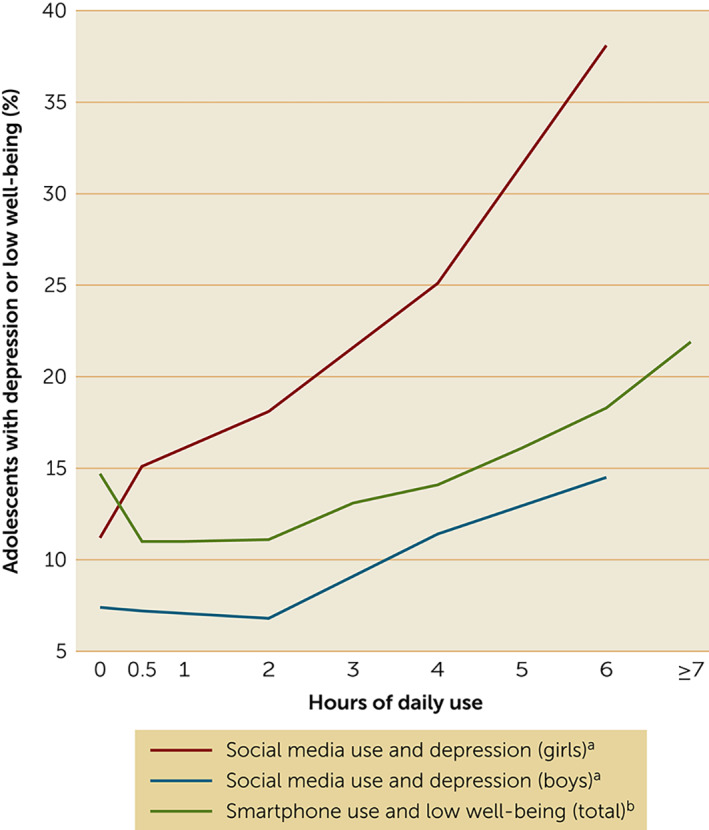
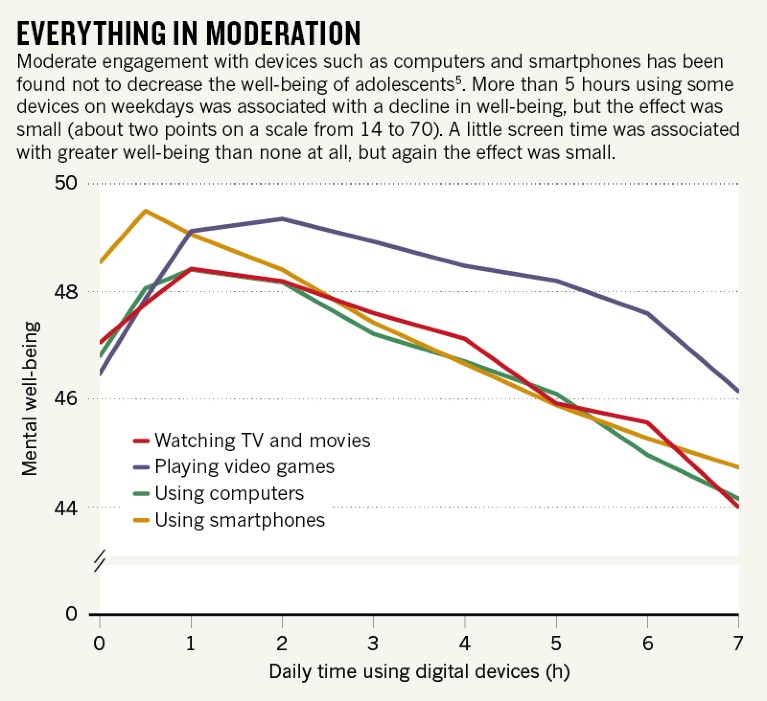
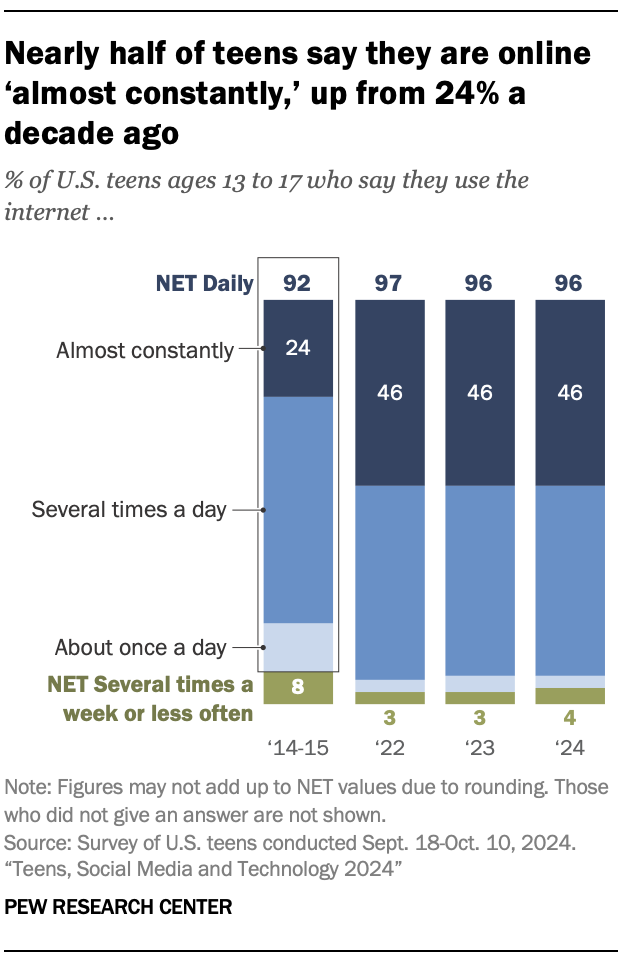
The claim asks whether children younger than 13 should be legally or technologically excluded from social-media platforms, rather than merely supervised or protected by narrower safeguards. The central policy question is not simply whether social media can harm children, but whether the evidence supports a categorical age rule and whether that rule would improve safety enough to justify lost benefits, enforcement burdens, and privacy costs. The evidence presents a genuine balance: identifiable hazards justify precaution, while uncertain causality, heterogeneous effects, and implementation trade-offs weaken the case for treating complete exclusion as the uniquely appropriate response. The strongest case for an under-13 ban is precautionary: multiple forms of evidence repeatedly associate youth social-media exposure and specific online experiences with depression, anxiety, sleep disruption, internalizing problems, cyberbullying, body dissatisfaction, and eating-disorder symptoms. The National Academies concludes that social media can harm adolescent health in some circumstances, even though it does not endorse a population-wide causal conclusion or reliance on a ban alone. In a nationally representative longitudinal cohort of U.S. youths aged 12–15, greater social-media time was associated with later internalizing and combined internalizing-externalizing problems after adjustment for baseline difficulties, although residual confounding prevents a causal interpretation. A study of approximately 11,000 14-year-olds likewise associated heavier use with depressive symptoms, particularly among girls, and identified online harassment, poor sleep, low self-esteem, and poor body image as statistical pathways that could make platform use harmful. These cohort findings are compatible with the prominent temporal argument that youth mental-health indicators worsened during the spread of smartphones and social media (see Figure 1), but the cited observational studies cannot establish that platform adoption caused the broader trend. The case for restriction is strongest when it focuses on identifiable hazards rather than undifferentiated screen time. A scoping review found cyberbullying through social media to be common and consistently associated with depression and other adverse mental-health outcomes, though inconsistent definitions and mainly cross-sectional studies limit prevalence and causal estimates. A systematic review of young adolescents also linked appearance-focused exposure, social comparison, and problematic use with body dissatisfaction and eating-disorder symptoms, while acknowledging that vulnerable users may select or react more strongly to such material. The American Psychological Association accordingly advises matching use to developmental capabilities and giving younger adolescents adult monitoring, coaching, and protection from harmful content and social comparison, although it does not identify a universally safe age or endorse an unconditional ban. Experimental evidence supplies limited causal support for reducing exposure among vulnerable youth. A randomized intervention among emotionally distressed youth found that limiting social-media use reduced depression, anxiety, and fear of missing out during the intervention period. Its policy reach is narrow, however, because the participants were older than the target population and the intervention reduced use rather than prohibiting it. Proponents can further argue that nominal minimum ages are ineffective without enforceable obligations because Ofcom documents widespread platform use and profile ownership among children below existing age thresholds. That survey evidence indicates that self-declared age gates are routinely circumvented, although reporting error remains possible (see Figure 3). COPPA already requires covered services to obtain verifiable parental consent before collecting personal information from children under 13, so an enforceable access rule could be presented as an extension of an established protective boundary, although COPPA itself regulates privacy rather than platform safety. The strongest objection is that the evidence establishes neither a large uniform population effect nor the causal benefit of a universal under-13 prohibition. Longitudinal analyses found social-media use to be a weak predictor of later life satisfaction, with small and sex-dependent effects. Across three large datasets, specification-curve analysis found that digital-technology use explained at most about 0.4% of variation in adolescent well-being, placing the small average association at the center of the proportionality objection to a ban (see Figure 2). Broad exposure measures may conceal high-risk content or vulnerable subgroups, but that possibility does not convert small average associations into proof that all social-media access is harmful. A systematic scoping review likewise reports recurring harms but emphasizes heterogeneous measures and predominantly observational designs, which materially limit causal conclusions. A categorical ban would also remove beneficial uses together with harmful ones. Reviews identify social connection, identity exploration, health information, peer support, and access to otherwise unavailable communities as potential benefits, especially for marginalized young people, while cautioning that much of this evidence concerns adolescents or young adults rather than children under 13. Interviews with young sexual-minority adolescents found that social media enabled self-expression, identity exploration, and supportive peer connection while also exposing users to harassment and isolation. The qualitative design cannot estimate how common these benefits are, but it shows why exclusion can impose concentrated costs on children whose offline support is limited. Enforcement creates an independent objection because stronger age assurance trades greater accuracy against privacy, accessibility, proportionality, security, and circumvention concerns. A peer-reviewed review finds that stronger verification may require identity or biometric data, can exclude legitimate users, and cannot itself make platform content or design safe. UNICEF further warns that age restrictions can push children toward less-regulated services, reduce access to information and support, and encourage intrusive verification. The proposed cutoff is also normatively convenient rather than developmentally demonstrated: COPPA’s under-13 boundary governs parental consent for collection of personal information, not a scientific transition from unsafe use at 12 to safe use at 13. Indirect policy evidence also cautions against assuming that formal restrictions improve outcomes: the cross-sectional SMART Schools study found no better overall mental well-being and little reduction in total phone or social-media use in schools with restrictive phone policies. Because schools were not randomized and the policy concerned phones during school rather than under-13 platform access, this finding cannot directly predict the effect of the proposed ban. The evidence is best understood as conditional: outcomes vary with the child, content, platform design, intensity and timing of use, and the social context in which use occurs. The scoping-review evidence simultaneously identifies recurring associations with depression, anxiety, sleep problems, low self-esteem, cyberbullying, and body-image concerns and possible benefits from connection and support. This heterogeneity is substantively important because supportive communication and identity exploration can coexist with harassment, compulsive use, social comparison, and appearance-focused exposure. Institutional guidance therefore emphasizes developmental readiness, adult monitoring, coaching, and protection from harmful content rather than treating one chronological threshold as a complete safety standard. The evidence more directly supports limitation and targeted protection than universal prohibition. The randomized intervention supports reducing use among emotionally distressed youth, but it does not test exclusion of all children under 13. Expert and institutional guidance instead supports measures such as adult involvement, developmental screening, safeguards against harmful content and social comparison, design standards, transparency, research access, and targeted protections. Any age rule would therefore function, at most, as one layer of a broader safety regime rather than a substitute for safer platform design. UNICEF and the National Academies emphasize safer-by-design services, platform accountability, digital literacy, family support, transparency, and enforcement against harmful practices alongside or instead of age restrictions. That broader approach addresses two limits intrinsic to a ban: some younger children may circumvent it, and age verification does not make the experience safe for users who pass the gate. The principal evidence gap is not the absence of research on youth and social media, but the absence of direct evidence testing the precise policy proposed: an enforceable, population-wide ban for children under 13. Much of the relevant literature concerns adolescents older than the target group, broad digital-technology exposure rather than social-media features, observational associations rather than causal effects, or reduction and school-phone policies rather than complete platform exclusion. The bundle also does not directly compare alternative ban designs, estimate circumvention and migration under different enforcement systems, quantify privacy and exclusion costs, or establish whether targeted design rules outperform age exclusion. The age threshold and subgroup evidence impose further limits on generalization. The record does not establish a developmental discontinuity at age 13, and evidence about benefits for under-13 children—especially marginalized or isolated children—is thinner than evidence about adolescents more generally. Nor does it resolve how effects differ among children by vulnerability, sex, existing distress, family support, type of content, or manner of use. Source-level conflict-of-interest classifications remain unresolved in the supplied structural assessment. That uncertainty does not negate the breadth of the evidence, but it counsels against assigning decisive weight to any single source and reinforces the need to rely on convergence across independent study types. On the present evidence, confidence is high that social media creates meaningful risks for some young users and warrants stronger protection, but the overall balance is even on the narrower claim that every child under 13 should be categorically banned. The case for precaution is substantial, yet small average effects, uncertain causality, beneficial uses, the non-developmental origin of the age-13 line, and privacy and circumvention costs prevent the evidence from clearly favoring a blanket prohibition over targeted safeguards. The dominant uncertainty is policy effectiveness: whether an enforceable ban would produce greater net protection than proportionate limits, safer platform design, adult involvement, and focused controls on harmful content and practices, with unresolved source conflict-of-interest classifications providing an additional reason for caution.

Supporting Arguments

P1Precaution is justified amid credible developmental risks
Multiple reviews and official assessments associate youth social-media use with depression, anxiety, sleep disruption, body-image problems, cyberbullying, and harmful content. Because the Surgeon General concludes that safety has not been established, proponents can reasonably invoke precaution for children under 13, who may have less capacity to manage persuasive design and social pressures.
84/100 · Logical Inference
P2Heavy use predicts later mental-health difficulties
Longitudinal U.S. evidence associates greater social-media time with later internalizing problems after accounting for baseline symptoms, while a large UK study identifies sleep, harassment, self-esteem, and body image as plausible pathways. These findings do not prove causation, but they strengthen the case that unrestricted early access carries nontrivial risks.
63/100 · Direct Evidence
P3Cyberbullying and appearance content create identifiable hazards
Social media can extend bullying beyond school and repeatedly expose children to appearance-focused or eating-disorder-related material. Reviews consistently associate those experiences with depression, body dissatisfaction, and disordered-eating symptoms, supporting restrictions during a vulnerable developmental period.
97/100 · Direct Evidence
P4Voluntary minimum-age rules are poorly enforced
Ofcom documents substantial social-media participation below nominal platform age limits, showing that simple birth-date declarations do not reliably exclude younger users. If society intends under-13 limits to be meaningful, proponents argue that enforceable obligations rather than voluntary terms are necessary.
46/100 · Data Analysis
P5Experimental reduction evidence supports limiting exposure
An experimental intervention found mental-health improvements when emotionally distressed youth reduced social-media use. Although the sample was older and the intervention was a limit rather than a ban, the result provides some causal support for reducing exposure among vulnerable young users.
50/100 · Direct Evidence

Opposing Arguments

C1Average effects are small and causality remains uncertain
Large-scale analyses find only small average relationships between digital or social-media use and well-being, with weak evidence that use consistently predicts later life satisfaction. A categorical ban therefore risks treating heterogeneous and partly correlational findings as proof of universal harm.
100/100 · Data Analysis
C2A ban would remove beneficial connection and support
Social media can provide friendship, identity exploration, creative expression, health information, and support communities, particularly for geographically isolated or marginalized young people. A blanket prohibition could eliminate beneficial uses along with harmful ones, although direct evidence about under-13 children remains limited.
85/100 · Direct Evidence
C3Enforcement can threaten privacy and exclude legitimate users
Reliable age assurance may require identity documents, facial estimation, or other personal data, creating privacy, security, and access concerns for all users. Children may also evade controls or migrate to less-regulated services, so a formal ban need not produce safer real-world behavior.
85/100 · Logical Inference
C4The age of 13 is a privacy-law threshold, not a safety finding
COPPA’s under-13 boundary governs collection of children’s personal information and parental consent. It does not demonstrate that all social media is unsafe at 12 or safe at 13, weakening arguments that treat this particular cutoff as developmentally definitive.
83/100 · Logical Inference
C5Access restrictions do not automatically improve well-being
The SMART Schools study found no better overall mental well-being in schools with restrictive phone policies and little reduction in total use. This is only indirect, nonrandomized evidence, but it cautions that bans may displace use rather than address harmful content, design, or behavior.
0/100 · Direct Evidence

All contributions are reviewed for clarity, balance, and evidence. The strongest insights are elevated into the argument graph — with credit to you.

Help improve this analysis on ProConWiki →
𝕏 Share Facebook LinkedIn