The increase in mental health diagnoses among teens post-pandemic is primarily due to heightened awareness and accessibility of mental health services
What's this about?
People disagree about whether more teen mental-health doctor labels after the pandemic mostly came from greater awareness and easier help.
More help may explain part of the rise, but experts question whether it explains most of it.
What supporters say
- Virtual health visits grew fast and let some teens get help without travel, long trips, or hard schedules.
- Virtual visits may have helped more teens get checks, advice, and doctor labels for mental-health concerns.
- Schools also looked for mental-health concerns and linked more students with support or care.
- School lessons can help students understand mental health and feel more ready to ask for help.
What critics say
- Records of visits and doctor labels cannot tell us if more teens felt unwell or more adults noticed problems.
- Three large checks of many studies found more teen distress beyond doctor offices and health-care records.
- Many teens still could not get needed care, even when virtual visits became more common.
- Service problems and unmet needs make it hard to say easier care caused trends for all teens.
The bottom line
Better awareness, school support, and virtual care likely helped more teens get noticed and diagnosed.
But the facts do not show these changes caused most of the rise in teen mental-health diagnoses.
The claim is that the post-pandemic rise in teen mental-health diagnoses was driven mainly by better awareness and easier access to care. The evidence suggests those changes mattered, but it does not show they were the main reason for the increase.
The case for
The pandemic changed how many teenagers could reach mental-health services. Telehealth expanded sharply, and studies of adolescent outpatient care found major changes in visit patterns, including greater use of virtual appointments. A 2021 survey also found that many adolescents were relying on virtual care. By removing barriers such as travel, scheduling and distance, telehealth likely made it easier for some young people to be screened, referred and diagnosed 1 (see Figure 2).
Schools may also have helped bring more mental-health problems to clinical attention. During the pandemic, schools took on a larger role in spotting concerns, connecting students with support and making referrals. Research on school mental-health education has found that it can improve students’ knowledge and willingness to seek help. That offers a credible explanation for why more teenagers may have entered the treatment system 2.
But these findings show a possible pathway, not a measure of its size. Studies of telehealth, outpatient visits and insurance claims can show changes in service use and recorded diagnoses. They cannot determine whether those changes came mainly from new mental-health problems, more recognition of existing problems, or both.
Access also remained uneven. Surveys found widespread use of treatment and virtual care in 2021, but also treatment disruptions and unmet need. That makes it difficult to argue that expanded services could, on their own, explain trends across the whole teen population.
The case against
The strongest evidence against the claim is that signs of distress rose well beyond the clinical system. Three systematic reviews and meta-analyses found higher levels of depression and anxiety symptoms among children and adolescents during the pandemic compared with commonly reported or directly measured pre-pandemic levels 3 (see Figure 1). The studies used different populations and measures, so they cannot provide a single exact estimate. Still, their broad agreement makes it hard to dismiss the rise in diagnoses as merely an effect of coding, awareness or easier access.
National survey results point in the same direction. The CDC’s 2021 Youth Risk Behavior Survey found high levels of persistent sadness or hopelessness, as well as suicidal thoughts and behaviors, among U.S. high-school students. Because these are self-reports rather than treatment records, they show that distress was present among teenagers whether or not they received a diagnosis or saw a clinician 5.
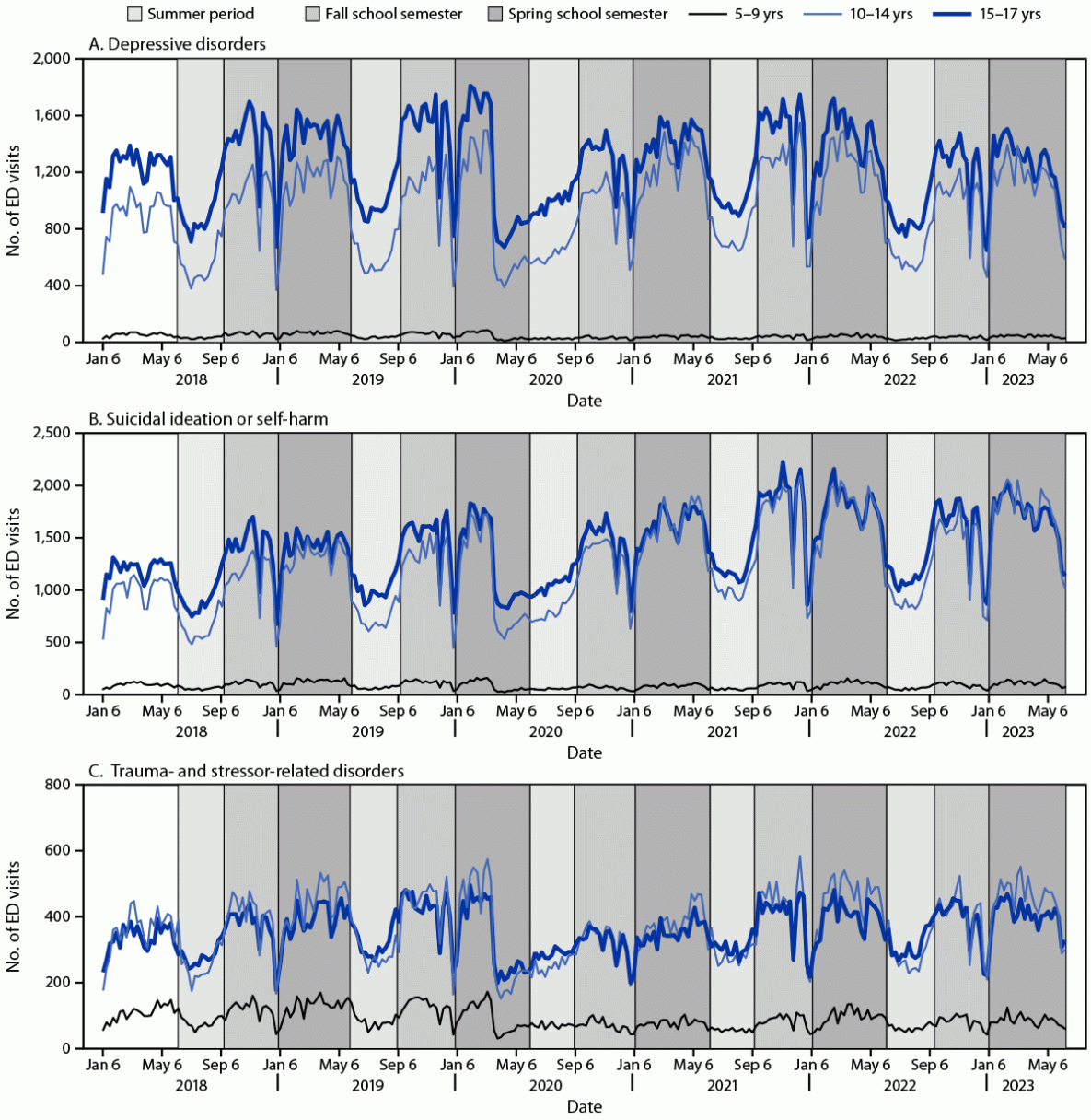
More serious indicators also increased during the pandemic. CDC surveillance found that the share of pediatric emergency-department visits involving mental-health conditions rose, with particularly notable increases among adolescent girls. Emergency visits for suspected suicide attempts also increased during parts of 2020, especially for adolescent females 4 (see Figure 3).
Emergency visits are not a perfect measure of underlying illness. They can be influenced by changes in referral patterns, available services and families’ decisions to seek care. But alongside the symptom studies and national surveys, they add to the evidence that there was real and substantial need, not simply better detection.
The bottom line
The evidence does not support the conclusion that heightened awareness and easier access to services were primarily responsible for the rise in teen mental-health diagnoses after the pandemic.
Telehealth, school-based recognition and public awareness likely helped some adolescents reach care and receive formal diagnoses. But multiple independent sources—including major reviews of depression and anxiety symptoms, national youth surveys and emergency-department surveillance—show that teen distress itself also increased 345.
The most accurate explanation is multifactorial: more awareness and improved service options contributed to rising diagnoses, alongside a genuine rise in symptoms and demand for help. Confidence is high that both pathways mattered. What the research cannot yet show is the precise share of the diagnostic increase caused by access and awareness versus worsening underlying mental health.
Figures & data

All contributions are reviewed for clarity, balance, and evidence. The strongest insights are elevated into the argument graph — with credit to you.
Help improve this analysis →