Homeschooling produces better outcomes than public education
Aldo's Synthesis high
Based on the strength of the Arguments below
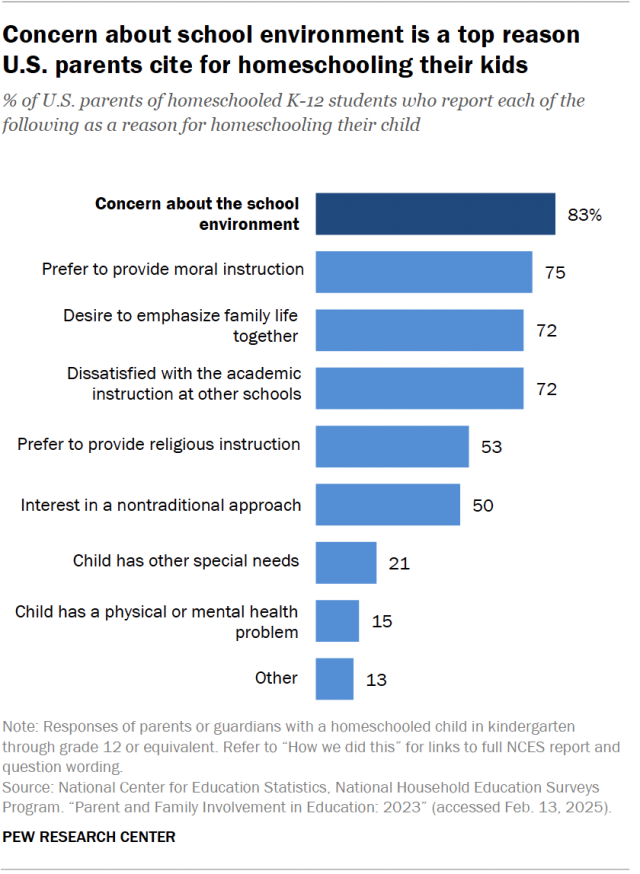
The claim asks whether homeschooling produces better overall outcomes on average than public education for otherwise comparable children, not merely whether some homeschooled children flourish or whether selected homeschool samples post high scores. Answering it requires separating observed differences from effects caused by school setting, defining “overall outcomes” across academic and nonacademic domains, and accounting for variation within both homeschooling and public education. The evidence supports a qualified case that well-structured homeschooling can succeed, but the broader average-superiority proposition demands stronger and more representative comparative evidence. The strongest affirmative evidence is that structured homeschooling can produce high academic achievement, with favorable results appearing in both a matched comparison and a large testing sample. In a small Canadian study that matched children demographically, those receiving structured home education scored higher than public-school students on several standardized measures. A large volunteer sample of homeschooled test takers likewise scored well above national norms across subjects, the kind of reported advantage that anchors prominent homeschool-versus-public-school score comparisons (see Figure 1). That large-sample result demonstrates strong performance among participating families, although nonrandom recruitment, the absence of directly matched public-school controls, and commissioning by a homeschooling advocacy organization prevent attribution of the difference to homeschooling itself. Evidence from higher education also shows that homeschooling can prepare at least some students successfully for college. At one private university, formerly homeschooled students had somewhat higher incoming test scores and first- and fourth-year grade-point averages than traditionally educated students, alongside favorable retention and graduation patterns. Because this was a single-institution observational comparison of students who reached and entered college, admissions processes and family selection sharply limit any inference about all homeschooled children or the causal effect of home education. Nonacademic findings rebut the categorical concern that homeschooling necessarily impairs social development and suggest possible advantages on some adolescent risks. A narrative review found healthy self-concept, social skills, and peer relationships among many homeschooled children who participated in community and group activities. At a Christian university, homeschooled students showed no political-tolerance deficit relative to public-school students and appeared more tolerant under some model specifications. Nationally representative adolescent data also associated homeschooling with lower odds of several substance-use behaviors, although homeschooling was not advantageous on every outcome examined. Volunteer participation, specialized college populations, and differences in religiosity, supervision, and peer exposure mean these findings establish compatibility with healthy development more securely than an average causal advantage. The central objection is methodological: the available literature does not establish that homeschooling causes better average outcomes for children comparable to those in public schools. A comprehensive scholarly review found that homeschoolers often perform well in published studies but identified selection effects, inconsistent definitions, limited representative data, and substantial diversity in homeschooling practices as barriers to a general verdict. Nationally representative government data show that homeschooling is an uncommon, demographically distinctive choice made for varied reasons, including school-environment concerns, instructional dissatisfaction, religion, and special needs. Those different starting circumstances make raw comparisons between opt-in homeschool testing samples and national public-school norms particularly vulnerable to selection bias. Direct comparative evidence also contradicts the proposition that homeschooling as such is academically superior. In the matched Canadian study, the advantage belonged to structured homeschoolers, while children receiving unstructured homeschooling generally scored below the public-school group. Although the study was small, its within-homeschool contrast indicates that instructional organization can reverse the direction of the comparison, weakening any categorical inference from the homeschooling label alone. Long-term evidence is mixed rather than uniformly favorable to former homeschoolers. The Cardus survey reported favorable results on some family, religious, and civic measures but less favorable or subgroup-dependent results on some postsecondary, cultural, and broader social outcomes (see Figure 2). Retrospective reporting, modest homeschool samples, and residual family differences limit the survey's causal force, but its mixed pattern cautions against treating test scores or selected college cohorts as a complete account of overall outcomes. Safeguarding is a plausible downside because home education can remove children from routine contact with school personnel who might otherwise observe signs of maltreatment. A recent review nevertheless found the maltreatment record limited and confounded, so the evidence establishes neither average harm from homeschooling nor confidence that reduced institutional contact is risk-free. The most defensible interpretation is conditional: instructional quality and family context appear more informative than the homeschool label by itself. The structured-versus-unstructured comparison shows that children educated at home can occupy opposite sides of the public-school benchmark depending on how instruction is organized. Large volunteer samples document achievement among participating homeschoolers, while population data show a distinctive homeschool population; taken together, these sources support questions about curriculum, instructor capacity, resources, and child needs rather than a universal ranking. Benefits and risks are also likely to differ across children and families because entry into homeschooling reflects heterogeneous needs and objectives. Parents report reasons including concern about school environments, dissatisfaction with instruction, religious education, and special needs, all of which may influence both the suitability of homeschooling and later outcomes. The mixed adult profile and subgroup variation in the Cardus survey further support subgroup-specific assessment rather than assuming one average effect applies across religious, educational, and family contexts. Neither socialization nor maltreatment can be characterized categorically from the available comparisons. The political-tolerance study offers evidence against an inherent social deficit, but its Christian-university sample cannot represent homeschoolers generally. An observational maltreatment study found demographics more predictive of reported abuse and neglect than school type, yet reporting, measurement, group-selection, and affiliation concerns prevent that result from settling the safeguarding question. The principal gap is not an absence of studies, but an absence of evidence capable of estimating the average causal effect of homeschooling across representative and genuinely comparable children. Few designs adequately separate schooling effects from parental motivation, socioeconomic resources, religiosity, supervision, child characteristics, prior school experience, or willingness to participate in research. Representative evidence that follows children across academic achievement, mental and physical health, social development, safeguarding, postsecondary attainment, employment, and civic life under consistent definitions remains especially important to the claim's broad term “overall outcomes.” Conflict-of-interest and source-affiliation uncertainties further complicate interpretation of parts of the record. Some influential findings come from advocacy-linked work or specialized institutional samples, while affiliation concerns also qualify some evidence offered to reassure on safeguarding. These limitations do not make the findings unusable, but they reduce confidence in extrapolating them to an average causal comparison and make independent replication particularly valuable. On the present evidence, the claim that homeschooling produces better overall outcomes on average than public education is not established, even though structured homeschooling clearly can produce strong academic outcomes. Confidence in this assessment is high because the distinction between demonstrated success and unproved average causal superiority recurs across the evidence, not because every outcome has been measured conclusively. The dominant uncertainty driver is unresolved conflict-of-interest and affiliation classification, operating alongside the more fundamental difficulty of selection into homeschooling; accordingly, the sound conclusion is conditional rather than categorical.
Supporting Arguments
P1Structured homeschooling can yield high academic performance
A matched study found that children in structured homeschool programs outperformed public-school peers on several standardized measures. Large homeschool testing samples also report scores well above national norms, although their volunteer recruitment makes the size and cause of the advantage uncertain.
40/100 · Direct Evidence
P2Some homeschool graduates perform well in college
A single-university study found favorable admissions indicators, GPA, retention, and graduation patterns among formerly homeschooled students. This supports the proposition that homeschooling can prepare students successfully for higher education, but does not prove an average advantage because applicants and admitted students were highly selected.
40/100 · Direct Evidence
P3Homeschooling need not impair social or civic development
Reviews report healthy social development among many homeschoolers who have regular access to peers and community activities. A study at a Christian university likewise found no political-tolerance deficit and some conditional advantages, rebutting a blanket assumption that home education necessarily causes social isolation.
47/100 · Direct Evidence
P4Greater supervision may reduce some adolescent risks
Nationally representative observational data linked homeschooling to lower odds of several substance-use behaviors. More parental supervision and different peer environments are plausible mechanisms, although those family characteristics could be confounders rather than effects of homeschooling itself.
60/100 · Data Analysis
Opposing Arguments
C1The research does not establish average causal superiority
Major reviews consistently warn that homeschool studies frequently rely on volunteers, small samples, unmatched comparisons, and incomplete adjustment for family background. Consequently, favorable associations cannot show that moving an otherwise similar child from public school to homeschooling would improve outcomes.
70/100 · Data Analysis
C2Unstructured homeschooling can produce worse academic results
In the matched Canadian study, the academic advantage appeared among structured homeschoolers, while unstructured homeschoolers generally performed below public-school students. This directly contradicts the categorical claim that homeschooling as such produces better achievement.
38/100 · Direct Evidence
C3Published high scores may reflect family selection
Parents choose homeschooling for distinctive educational, environmental, religious, and child-specific reasons, and participating families differ from the public-school population. Nationally representative NCES demographics therefore make raw comparisons with opt-in homeschool testing samples especially vulnerable to selection bias.
70/100 · Logical Inference
C4Adult outcomes are mixed rather than uniformly better
The Cardus survey found a mixed profile across postsecondary, cultural, civic, family, and religious measures rather than consistent homeschool superiority. Although the survey itself has substantial design limitations, it cautions against treating test scores or isolated college samples as a complete measure of long-run outcomes.
68/100 · Direct Evidence
C5Reduced institutional contact creates a safeguarding concern
School staff are regular outside observers of children's welfare, whereas homeschooling can reduce that contact. A recent review found the direct maltreatment evidence too limited to quantify the risk confidently, so this is a plausible downside and evidence gap rather than a demonstrated average harm.
58/100 · Logical Inference
All contributions are reviewed for clarity, balance, and evidence. The strongest insights are elevated into the argument graph — with credit to you.
Help improve this analysis on ProConWiki →