Arts education is as important as STEM

Updated 2026-07-28 4 supporting · 4 opposing arguments
Aldo's Synthesis high
Based on the strength of the Arguments below
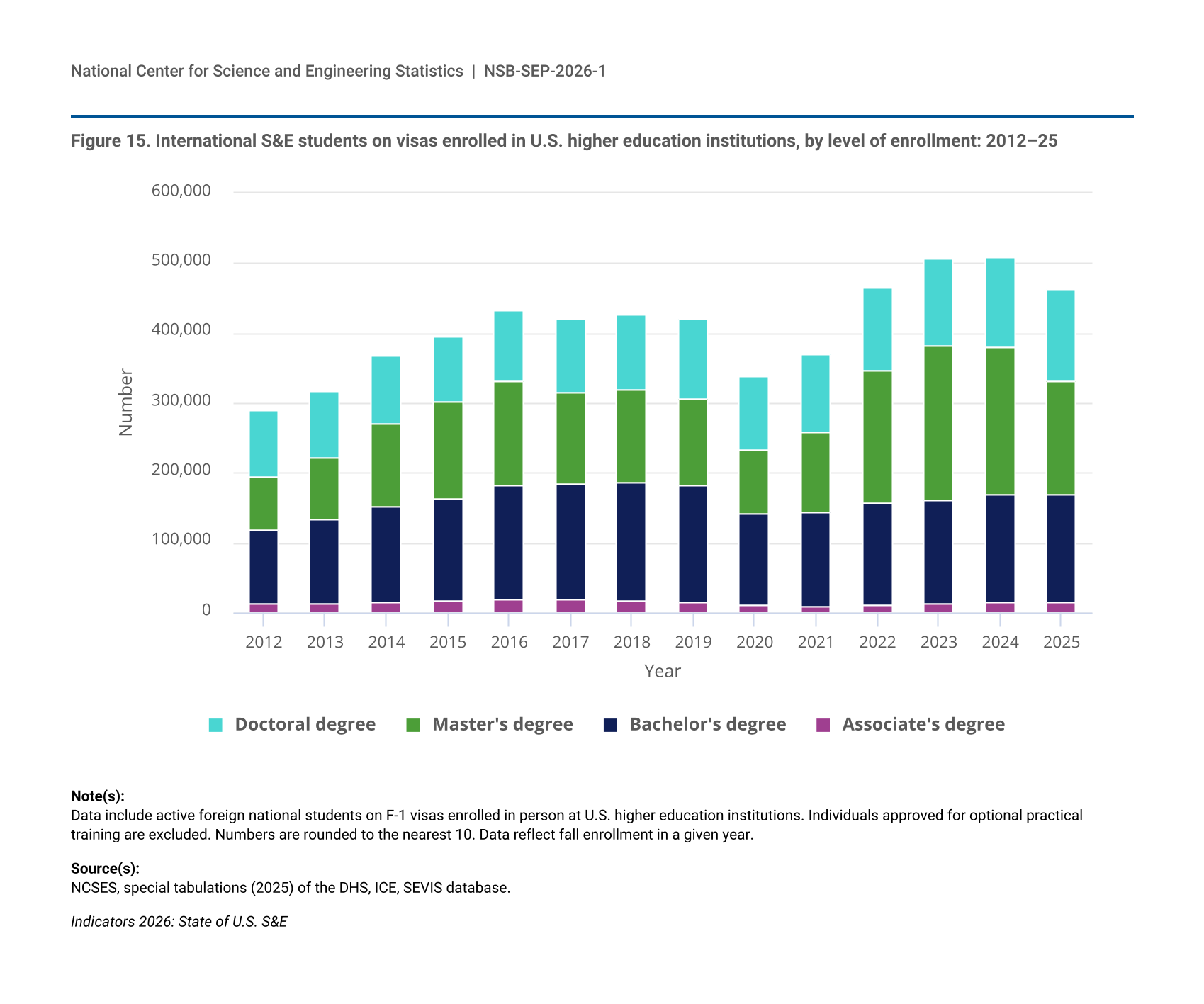
The claim asks whether schools should regard arts education as comparable in importance to STEM rather than as expendable enrichment; the answer depends substantially on whether importance means direct economic preparation, broad human development, intrinsic educational value, or guaranteed curricular standing. The central policy issue is therefore not merely whether arts programs produce measurable benefits, but whether unlike educational purposes can be ranked on a common scale and what practical consequences should follow from a judgment of comparable importance. The strongest affirmative case is that rigorous experiments identify educational benefits from arts access that conventional mathematics and reading metrics do not fully capture. A randomized evaluation of expanded arts-learning opportunities in Houston found fewer disciplinary infractions, improved writing achievement, and greater compassion among elementary students, although it found no statistically significant overall improvement in standardized mathematics or reading scores and some results varied by grade. A separate randomized museum experiment found gains in observation and evidence-based interpretation of unfamiliar art, supporting a narrower claim that arts experiences can cultivate disciplined interpretation even though broad transfer and long-term persistence remain uncertain. The affirmative case does not require arts education to raise scores in unrelated subjects, because artistic learning can be valued for its own discipline-specific and intrinsic ends. The RAND review distinguishes intrinsic benefits—including aesthetic experience, meaning, and expanded capacity for expression—from instrumental claims about test scores or economic growth, and argues that arts policy should not depend exclusively on those uncertain instrumental claims. This position treats making, performing, interpreting, cultural understanding, expression, and aesthetic judgment as legitimate educational purposes even where evidence of far transfer is weak. There is also limited evidence that particular forms of serious arts instruction can contribute to cognition, although the case is modest rather than general. In a randomized study of 144 six-year-olds, children assigned to keyboard or voice lessons experienced larger but modest IQ gains after one year than children assigned to drama or no lessons. Yet a later meta-analysis found only small overall cognitive and academic associations from music training and effects approaching zero in studies using stronger designs, so this evidence supports possible targeted contributions rather than reliable general intellectual enhancement (see Figure 3). An equity argument further supports protecting arts access because participation is unequal and some favorable effects appear pronounced among disadvantaged students. The randomized museum field-trip study reported especially pronounced gains among disadvantaged groups, although its intervention was a single museum visit rather than sustained school arts instruction. Four longitudinal U.S. datasets likewise associated high arts engagement among socially and economically disadvantaged youth with better academic and civic outcomes, but nonrandom participation leaves motivation, family support, and school quality as plausible alternative explanations. Federal descriptive data confirm demographic and socioeconomic variation in arts access and participation, establishing unequal opportunity as a policy concern without resolving the arts' causal effects or comparative importance. The strongest challenge is that evidence does not support the broad proposition that arts education reliably improves unrelated academic or cognitive outcomes. The music-training meta-analysis found that small aggregate associations became negligible under active-control or randomized designs and concluded that reliable far-transfer claims were unsupported. Accordingly, an individual randomized finding of modest IQ growth cannot bear the weight of a general claim that arts instruction raises intelligence or school performance across programs and populations. If importance is defined principally by workforce preparation, research capacity, technological production, or earnings, STEM has the clearer direct empirical rationale. National Science Foundation data describe STEM workers as central to research, innovation, computing, engineering, and technical production, while STEM occupations generally show strong demand and comparatively high earnings (see Figure 1). The same government evidence ties the STEM workforce directly to national research, engineering, computing, and advanced technical capacity (see Figure 2). This economic advantage should not be overstated, however, because Bureau of Labor Statistics analysis finds substantial variation among STEM fields, with shortages and strong demand in some occupations but ample supply or weaker prospects in others. Even credible positive arts experiments do not directly establish parity with STEM because they estimate particular interventions and selected outcomes rather than the comparative value of whole curricular domains. Improved art interpretation, writing, compassion, or discipline rates demonstrate program-specific value but supply no common metric for comparing that value with technical competence, scientific literacy, or economic capacity. Generalization is additionally constrained by inconsistent interventions, outcomes, and implementation contexts across the favorable literature. A review of arts education and social-emotional learning found plausible links and supportive studies but emphasized inconsistent definitions, measures, and research quality that limited causal inference. Reviews of arts integration similarly report promising effects in some domains but too few rigorous studies, substantial program variation, and insufficient evidence for strong claims about replication, scale, or institution-wide effects. The comparison is most defensible when framed as a choice among educational objectives rather than as a single empirical ranking. STEM has especially direct support when the objective is technical capability or many labor-market outcomes, although employment conditions differ materially among STEM occupations. Arts education has evidence of benefits in writing, discipline, compassion, expression, and intrinsic meaning, but those outcomes are not denominated in the same unit as earnings, innovation, or technical production. A complementary model may be better supported than an arts-versus-STEM contest. The National Academies concluded that integrating arts and humanities with science, engineering, and medicine can support learning, communication, critical thinking, teamwork, and engagement, while recommending further experimentation because the evidence is heterogeneous and often inadequate for strong causal or institution-wide conclusions. Neither arts nor STEM is sufficiently uniform for blanket curricular conclusions. Arts findings vary by form and program: stronger designs cast doubt on broad music-transfer effects, while a particular high-school art-based program reported improvements in selected academic and creativity outcomes that do not establish equivalent effects for all arts courses. STEM labor markets likewise range from shortage to surplus depending on occupation, weakening assertions that every STEM subject has the same economic priority. Comparable status need not entail identical instructional time, budgets, staffing, or graduation requirements. The evidence can support meaningful arts access as part of a complete education while still permitting allocation decisions to reflect local needs, program quality, student choice, technical workforce objectives, and the intrinsic purposes assigned to schooling. The principal evidentiary gap is the absence of a common measure that can compare economic, technical, cognitive, civic, cultural, expressive, and intrinsic educational outcomes without first making a normative choice about their relative worth. Program-level causal effects therefore cannot by themselves resolve the system-level proposition that arts and STEM are equally important. The literature also leaves uncertainty about long-term persistence, broad transfer, replication, implementation at scale, and which findings generalize across art forms, ages, schools, and student populations. Some favorable arts materials also have unresolved conflict-of-interest classifications, so confidence should rest more heavily on study design and convergence than on institutional sponsorship alone. On balance, the evidence supports treating arts education as a non-expendable core component of a complete education, but it does not empirically prove that arts and STEM are equal under every definition of importance. Confidence in this balanced assessment is high: STEM has the stronger direct case for technical and many labor-market objectives, while arts have demonstrated selected developmental benefits and defensible intrinsic purposes that workforce measures do not capture. The dominant uncertainty is normative comparability—compounded by unresolved conflict-of-interest classifications—not whether either domain has educational value.

Supporting Arguments

P1Arts deliver educational outcomes that STEM metrics may miss
Randomized evidence links expanded arts access to fewer disciplinary infractions, stronger writing, and greater compassion, while museum experiments show gains in observation and evidence-based interpretation. These outcomes support treating the arts as a core developmental domain rather than judging them solely by mathematics and reading scores.
75/100 · Direct Evidence
P2Intrinsic artistic learning is independently valuable
Arts courses impart discipline-specific abilities in making, interpreting, performing, and understanding culture even when they do not raise unrelated test scores. Reviews warn that reducing their value to instrumental academic transfer ignores aesthetic experience, expression, and meaning as legitimate educational purposes.
61/100 · Expert Opinion
P3Arts can strengthen cognition and communication
A randomized music study found modest additional IQ growth, while broader reviews identify credible links between particular art forms and selected cognitive or verbal skills. The effects are neither universal nor large, but they indicate that serious arts instruction can contribute to intellectual development.
63/100 · Direct Evidence
P4Arts access may especially benefit underserved students
Randomized museum research found particularly pronounced effects among disadvantaged students, and longitudinal national data associate sustained arts engagement among at-risk youth with better academic and civic outcomes. Although the longitudinal findings are vulnerable to selection bias, they strengthen the equity case for ensuring arts access is not limited to affluent families or schools.
63/100 · Data Analysis

Opposing Arguments

C1Broad academic-transfer claims are weak
The OECD review found limited robust evidence that arts education broadly raises achievement in unrelated subjects. A later music meta-analysis found that cognitive and academic effects became negligible in the strongest studies, undermining claims that arts reliably improve general intelligence or school performance.
74/100 · Direct Evidence
C2STEM has a clearer direct connection to economic capacity
STEM education directly supplies technical competencies used in research, engineering, computing, health, and advanced production, and government data show comparatively strong demand and earnings in many STEM occupations. If “importance” is defined mainly by workforce preparation, productivity, or technological capacity, STEM has the clearer empirical case.
45/100 · Data Analysis
C3Positive arts findings do not prove equal importance
Even rigorous arts experiments generally estimate effects of particular programs on selected outcomes, not the comparative value of arts and STEM across an entire curriculum. Modest IQ gains, stronger art interpretation, or lower discipline rates therefore cannot by themselves establish the much broader proposition that the fields are equally important.
68/100 · Logical Inference
C4Much favorable evidence is observational or context-specific
Longitudinal arts participation studies cannot fully rule out family support, prior motivation, or school quality, while individual program studies may not generalize. Reviews also identify inconsistent interventions and outcome measures, making large-scale effects uncertain.
52/100 · Direct Evidence

All contributions are reviewed for clarity, balance, and evidence. The strongest insights are elevated into the argument graph — with credit to you.

Help improve this analysis on ProConWiki →
𝕏 Share Facebook LinkedIn