Arms sales to Saudi Arabia increase regional military capability without reliably improving long-term regional stability
Leaning yes
PRO 55%CON 45%
Pro 36% · Con 30% — Nuanced 34% — evidence mixed
Recent developments
News related to this claim. The analysis itself changes only when the scored evidence does.
U.S. clears potential $24.3B F-35 sale to Saudi Arabia despite security concerns - NBC News — news.google.com, 2026-09-19
What the evidence says Evidence quality: Pending
Graded from the quality of the cited sources · Evidence Protocol
Analysis in progress.
Pros — Supporting Arguments
P1Imports clearly expanded Saudi Arabia’s military inventory
P2Military capacity did not reliably produce durable stability
P3Arms competition can reinforce regional insecurity
Cons — Opposing Arguments
C1Arms sales can strengthen deterrence
C2Capability gains can support defensive regional security
Figures & data
The evidence base behind this claim: 17 distinct cited sources
Every source cited on this claim, counted once at its highest evidence strength and grouped by the side it supports. Generated from this page's own evidence rows — the same records the verdict is computed from — so the chart and the score cannot disagree. Strength labels follow the scoring methodology.
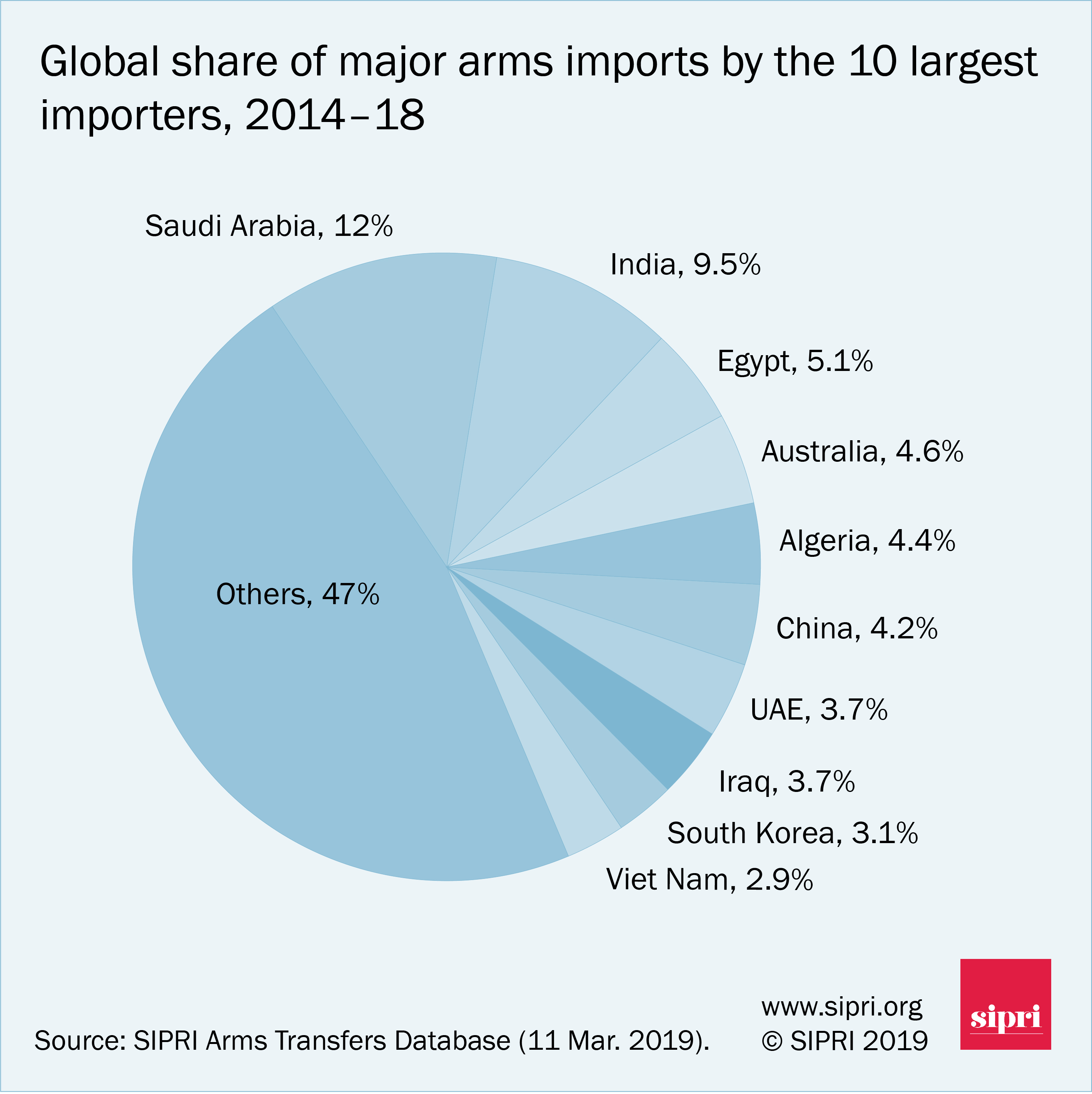
View cited figure at source: Trends in International Arms Transfers, 2018
SIPRI (2019) bar chart showing the main importers of major arms in 2014–18, with Saudi Arabia ranked first and other leading importers including India, Egypt, Australia, and Algeria; bars are measured
The clearest visual evidence that Saudi Arabia had become one of the world’s largest recipients of major conventional weapons, directly illustrating expanded access to military hardware while leaving effectiveness and stability outcomes as separate questions.
View figure at source: Trends in International Arms Transfers, 2018
SIPRI (2019) line chart showing trends in international transfers of major arms from 1989 to 2018, using SIPRI trend-indicator values; the figure places the recent surge in Gulf and Middle Eastern arm
It provides essential historical context: arms transfers are cyclical and regionally concentrated, so Saudi procurement should be understood as part of a broader period of intensified military competition rather than as an isolated bilateral transaction.
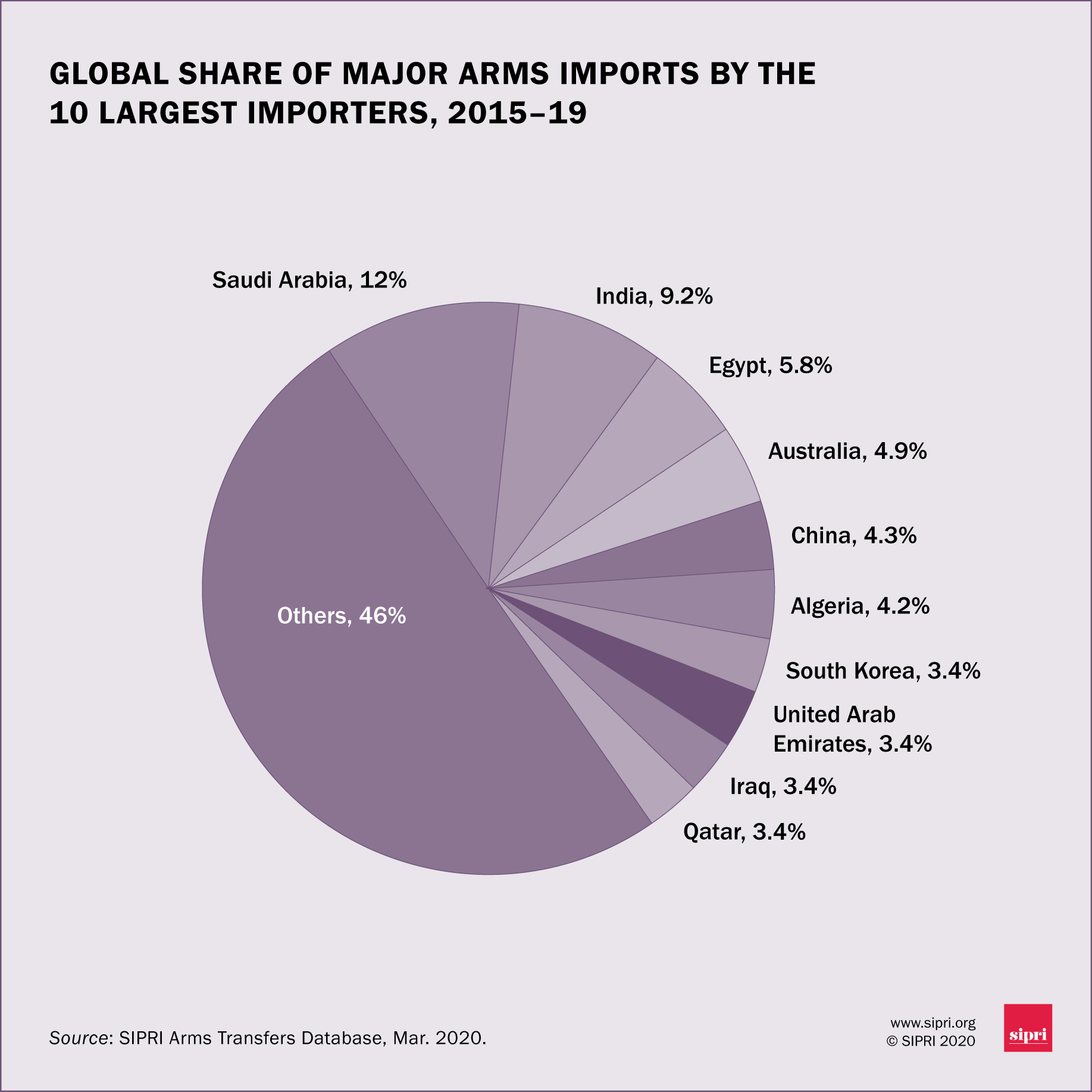
View cited figure at source: Trends in International Arms Transfers, 2019
SIPRI (2020) bar chart showing the main importers of major arms in 2015–19, with Saudi Arabia ranked as the world’s largest importer and other Gulf states such as Qatar and the United Arab Emirates al
This follow-up figure shows that Saudi Arabia’s exceptional import position persisted and that arms accumulation was regional, supporting the claim that procurement increased military resources while potentially reinforcing a competitive security environment rather than reliably producing stability.
All contributions are reviewed for clarity, balance, and evidence. The strongest insights are elevated into the argument graph — with credit to you.
Help improve this analysis →