North Korea will deploy military personnel to support Russia’s war in Ukraine
What's this about?
People disagree about whether North Korea sent troops to help Russia fight Ukraine.
The record now strongly supports that claim, but key details remain unclear.
What supporters say
- South Korea, the United States, Britain, and Ukraine all warned that North Korean troops were moving toward the war.
- North Korean and Russian officials later spoke about the troops, and Ukraine said it caught two North Korean soldiers.
- A treaty between Russia and North Korea gave both sides a reason and a way to work together.
What critics say
- Early public proof seemed weak because much of it came from spy reports and was not yet complete.
How to read this
The number of points on each side does not show who is right; strong proof matters more than a long list.
The bottom line
The evidence strongly shows that North Korea sent military personnel to help Russia.
We are still not sure how many came, who led them, or how much they changed the fighting.
The claim that North Korea would send military personnel to support Russia’s war in Ukraine is now strongly supported by the available record. The evidence is much clearer about the fact of deployment than about its size, command structure or battlefield impact.
The case for
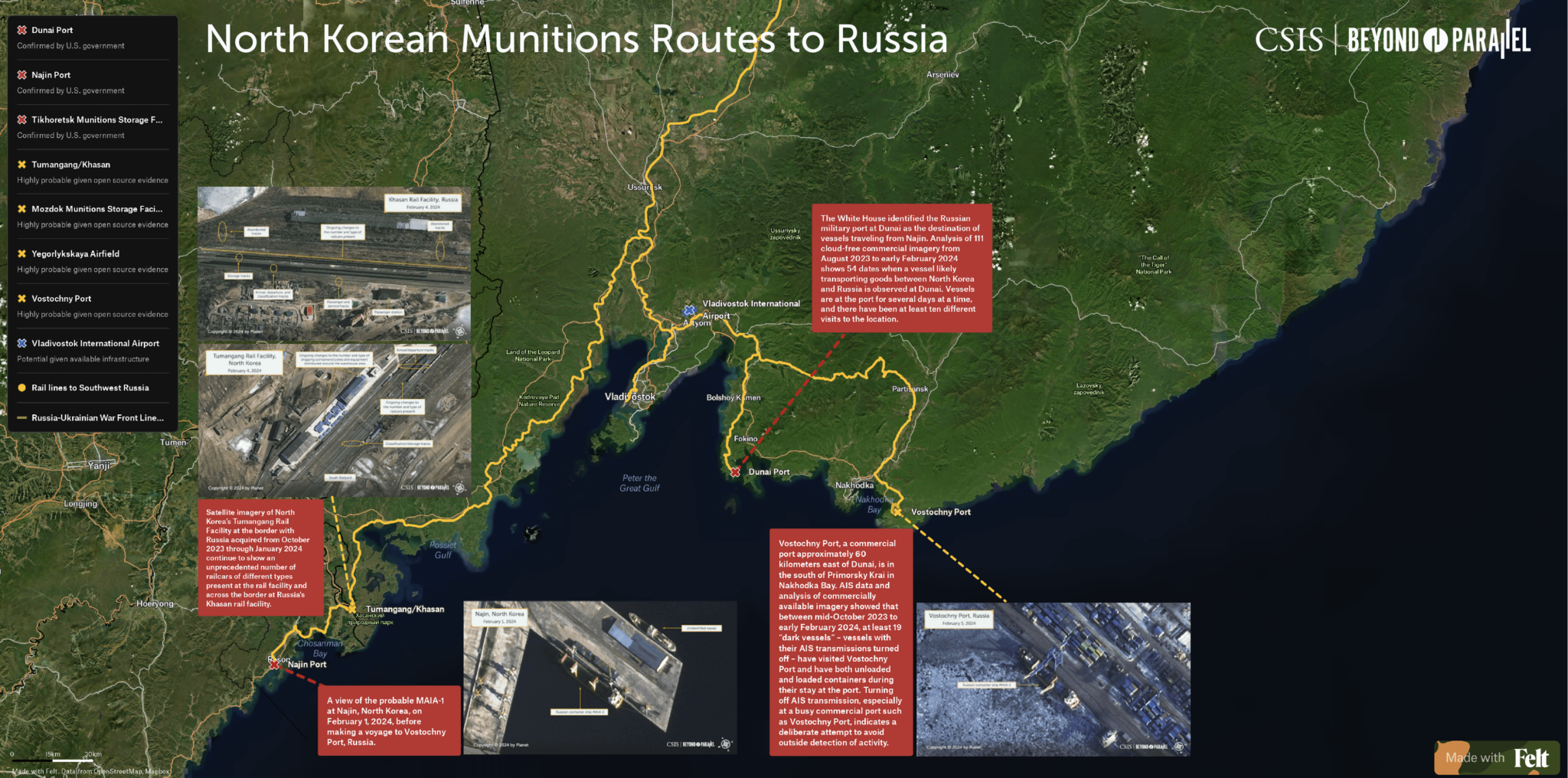
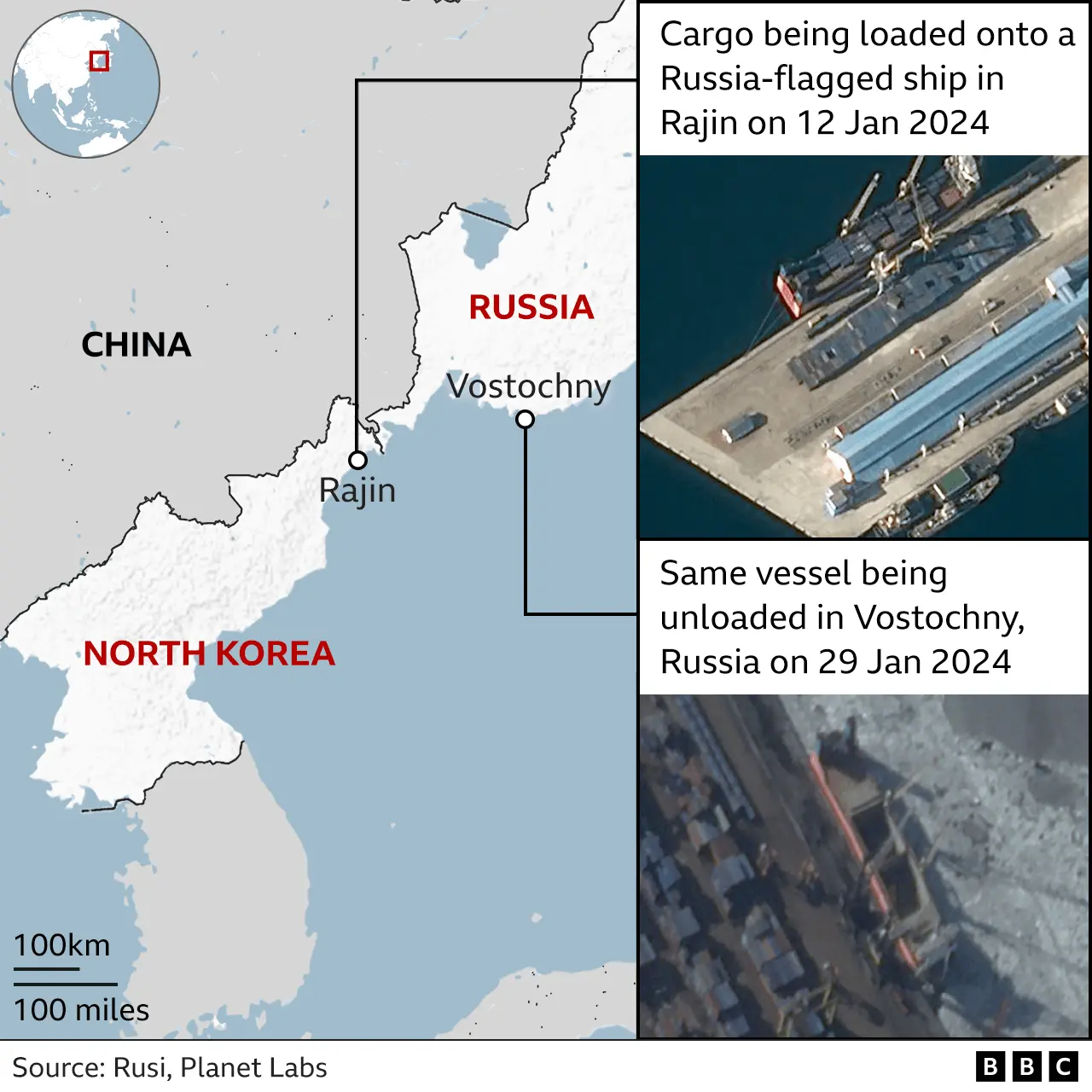
Before direct confirmation, several governments reported that North Korean personnel were moving to Russia or being prepared for involvement in the war. South Korean, U.S., British and Ukrainian assessments differed over the numbers and timing, but their broad agreement pointed to a deployment that was imminent or already under way. Open-source images and other logistical signs were also consistent with the movement and training of North Korean personnel in Russia. 1
Later evidence went further. North Korean state media and Russian officials acknowledged military participation, while Ukraine said it had captured two North Korean soldiers in the Kursk region. Independent reports described photographs, medical examinations and accounts suggesting that the men had been fighting for Russia. These admissions and apparent prisoners of war provide stronger evidence of actual military participation than intelligence statements or satellite images alone, although some details still require independent verification. 2
Institutional analyses have combined those official statements, open-source material and battlefield reporting to place North Korean forces in the Kursk region and in offensive operations (see Figure 2). Peer-reviewed and other expert assessments now generally treat the contribution as an established development, while continuing to debate its exact scale and military value.
The Russia–North Korea comprehensive strategic partnership treaty also created a plausible framework and incentive for military cooperation. It helps explain why such a deployment might occur, but the treaty itself was not proof that troops had been sent. 3
The case against
The main challenge concerns what could reasonably have been known when the claim was first made. Early reports relied heavily on classified intelligence, satellite interpretation and statements from governments directly involved in the conflict. North Korea and Russia disputed or avoided confirming the reports, and some officials initially said they had no confirmation.
Satellite images could show unusual troop activity or logistical movements, but they could not by themselves prove combat deployment or establish the nationality of everyone pictured. Government intelligence assessments also disclosed only a small part of the evidence behind their conclusions. The early public record therefore supported a high-probability forecast, not certainty. 4
Important questions remain unresolved. The public evidence does not settle the exact number of personnel, their routes into the region, their relationship with Russian commanders, how many took part in combat, casualties or their measurable effect on the battlefield. Those gaps weaken broader claims about the deployment’s scale, legal status or military consequences. They do not, however, seriously challenge the narrower claim that North Korean personnel were sent to support Russia.
The bottom line
The evidence strongly favours the claim’s core proposition: North Korea deployed military personnel to support Russia’s war in Ukraine. Confidence is high that a deployment occurred and that at least some North Korean personnel took part in combat, based on mutually reinforcing government reports, institutional analyses, official acknowledgments and reported captured soldiers.
Confidence is much lower about the operation’s full scope. The original future-tense claim should be judged as a well-supported prediction at the time, rather than as something publicly proven in advance. In hindsight, later admissions and direct battlefield evidence provide substantial confirmation. The remaining uncertainty concerns numbers, command arrangements, the proportion of troops involved in fighting and the deployment’s effects—not the basic fact of deployment.
Pros — Supporting Arguments
Cons — Opposing Arguments
Figures & data

All contributions are reviewed for clarity, balance, and evidence. The strongest insights are elevated into the argument graph — with credit to you.
Help improve this analysis →