Would banning social media under 13 improve wellbeing more than supervised access?
What's this about?
People disagree about whether banning social media for children under 13 helps more than adult-guided use.
Early use has real risks, but we need to compare both choices fairly.
What supporters say
- A ban could cut cyberbullying, harmful posts, poor sleep, and less time for play or sport.
- Social media links with low mood, worry, body-image fears, and bullying, though links do not prove the cause.
- Younger children may struggle to spot tricks, guard personal facts, or handle mean messages safely.
- A clear age rule could help families when adults lack time or skill to watch online use closely.
What critics say
- No direct proof shows that a workable under-13 ban helps more than good adult-guided access.
- Much of the research looks at teens, not children under 13.
- Studies can show two things happen together, but cannot prove social media caused poor wellbeing.
- Age checks may get ages wrong, risk private data, block some children, or fail when children dodge rules.
The bottom line
Early social media use can bring real harm, especially without support.
But we do not yet know if a full ban helps more than careful adult guidance.
Would banning children under 13 from social media improve their wellbeing more than allowing them to use it with adult supervision? The evidence points to real risks from early use, but it does not show that a blanket ban works better than carefully managed access.
The case for
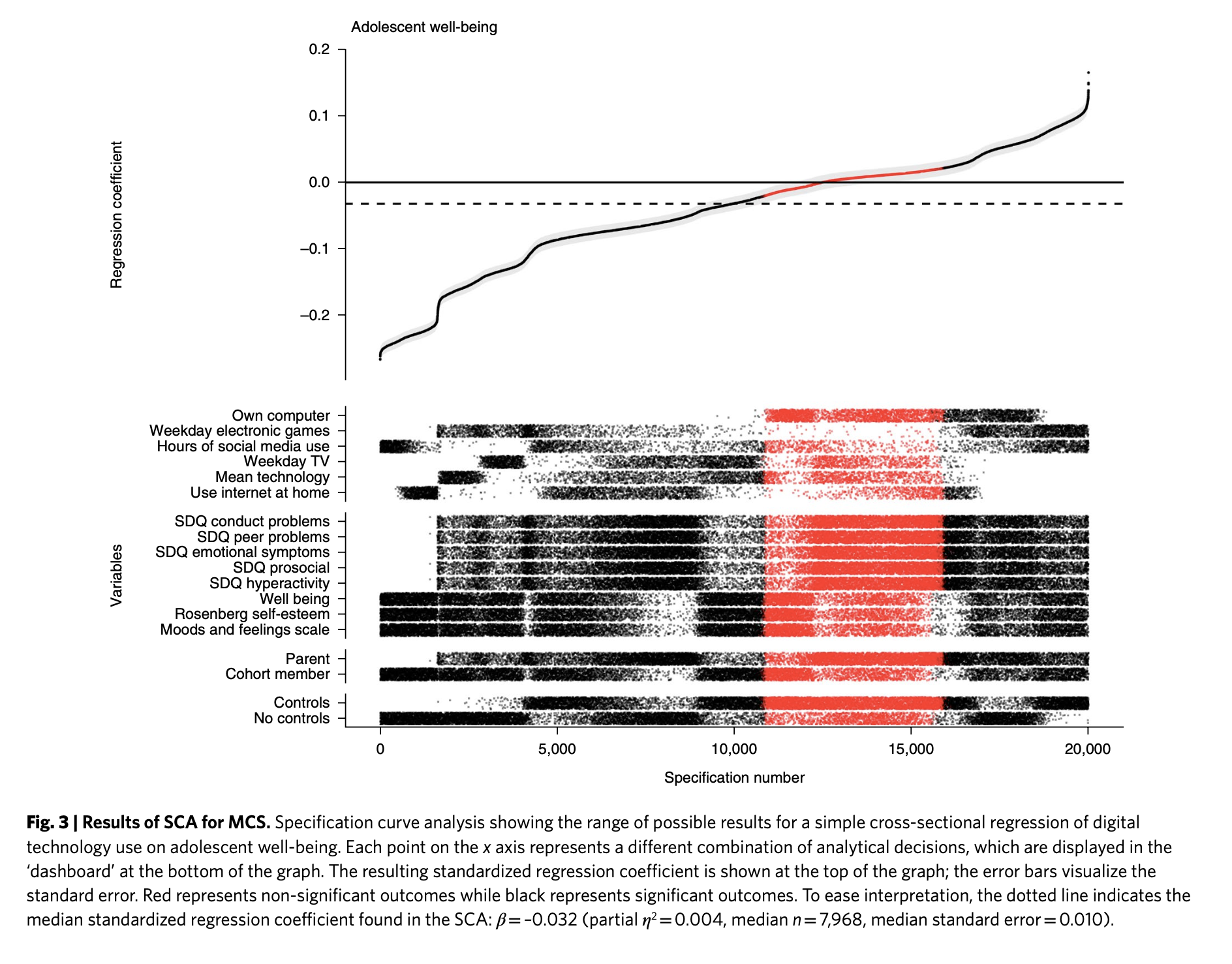
A ban could reduce children’s routine exposure to several online experiences linked with poorer wellbeing. These include cyberbullying, harmful material, social comparison, disrupted sleep and less time spent on physical or offline activities. Reviews have linked social-media use with anxiety, depression, sleep difficulties, body-image worries and bullying, although those links do not by themselves prove cause and effect 1.
The argument is especially strong for younger children, who may be less able to spot manipulation, protect their privacy, resist features designed to keep them scrolling, or deal safely with harassment. Advisories and research reviews support protections suited to children’s developmental stage. Delaying independent use could therefore plausibly limit harmful exposure when self-regulation is still developing 2.
A simple age rule could also help children whose parents cannot consistently provide the time, digital knowledge or close communication that effective supervision demands. In that sense, a universal restriction may appear fairer and easier to apply than relying on highly uneven family supervision 3.
But that advantage depends on whether platforms can enforce an age limit effectively. Age-checking systems can create problems involving accuracy, privacy and exclusion, while children may find ways around them.
The case against
The central problem is that there is no direct evidence showing that an enforceable under-13 ban improves wellbeing more than well-designed supervised access 4. Much of the available research concerns teenagers rather than younger children, and is based on observational studies. Such studies can show that social-media use and later distress are associated, but cannot fully rule out other explanations, including the possibility that children already struggling seek out social media more often.
Supervision is also not one single approach. It can include parents discussing online experiences, setting rules, monitoring activity, using restrictions or sharing use with a child. Evidence suggests that active, communicative guidance may help children use online spaces more safely and constructively, though results vary by family and by the kind of supervision involved. Restrictive approaches may work differently and can be evaded 5.
A ban could also fail to remove the underlying risks. Children may bypass age checks or move to less visible services, potentially reducing parental oversight without ending their exposure. Early policy experience suggests restrictions may not fully prevent access, while technical and privacy problems make enforcement uncertain 6.
There is a further cost to blanket restrictions. Social media can provide connection, information, identity exploration and peer support—benefits that may matter particularly for isolated or vulnerable children. A universal ban could remove those supports alongside harmful content 7.
The bottom line
The claim is not established. There is a credible case for limiting harmful online exposure among younger children, and delaying independent access may be sensible during a period of limited self-regulation. But current evidence does not show that a blanket under-13 ban improves wellbeing more than active, carefully designed adult supervision.
The stronger policy approach is to focus on the quality of children’s online experiences: reduce harmful content and exploitation, protect sleep and offline life, support active parental discussion and monitoring, and require safer platform design. Age limits may be part of that package, but the evidence does not support relying on them alone—or treating 13 as a proven universal threshold.
Figures & data
All contributions are reviewed for clarity, balance, and evidence. The strongest insights are elevated into the argument graph — with credit to you.
Help improve this analysis →