Wealth taxes are the most effective way to reduce inequality
Aldo's Synthesis high
Based on the strength of the Arguments below
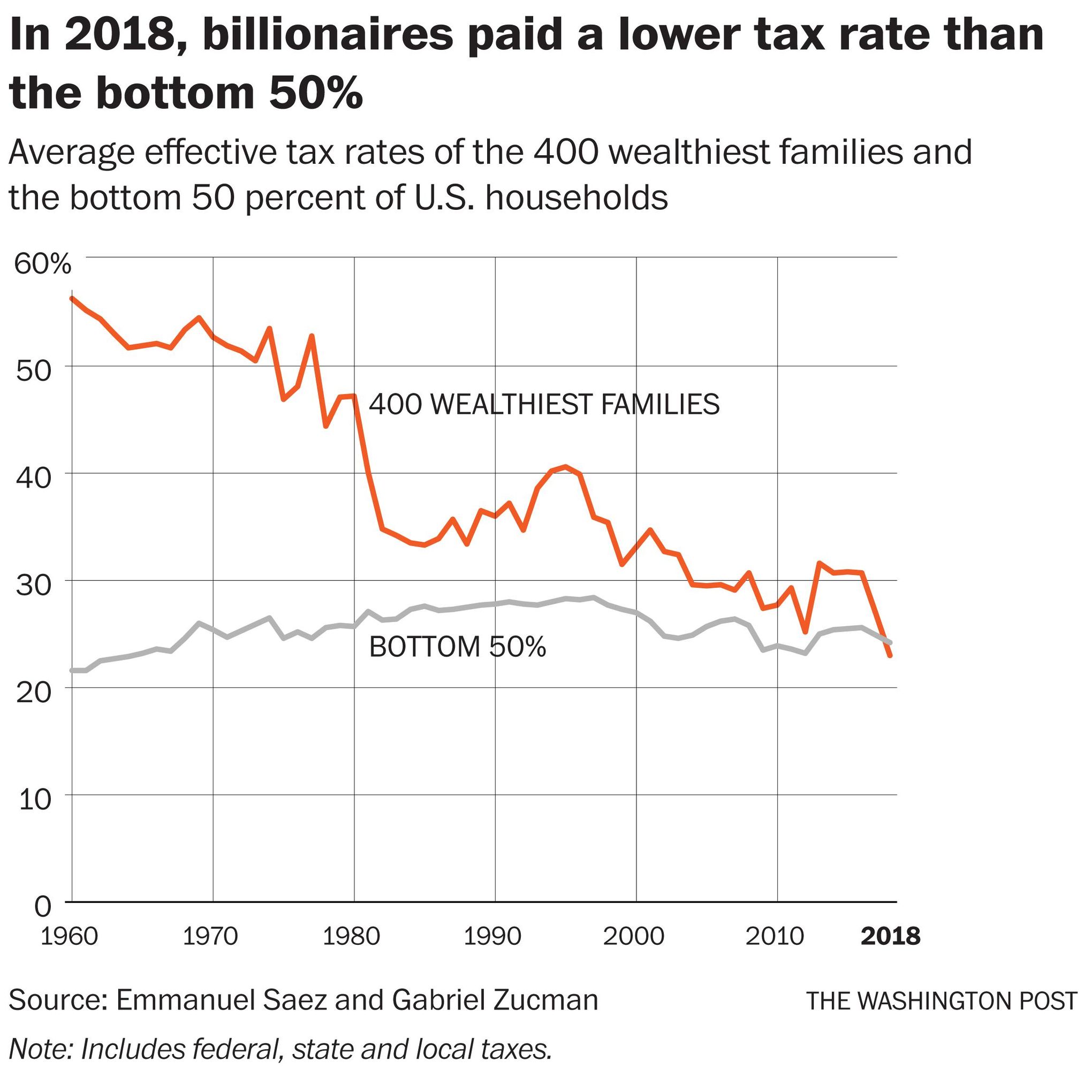
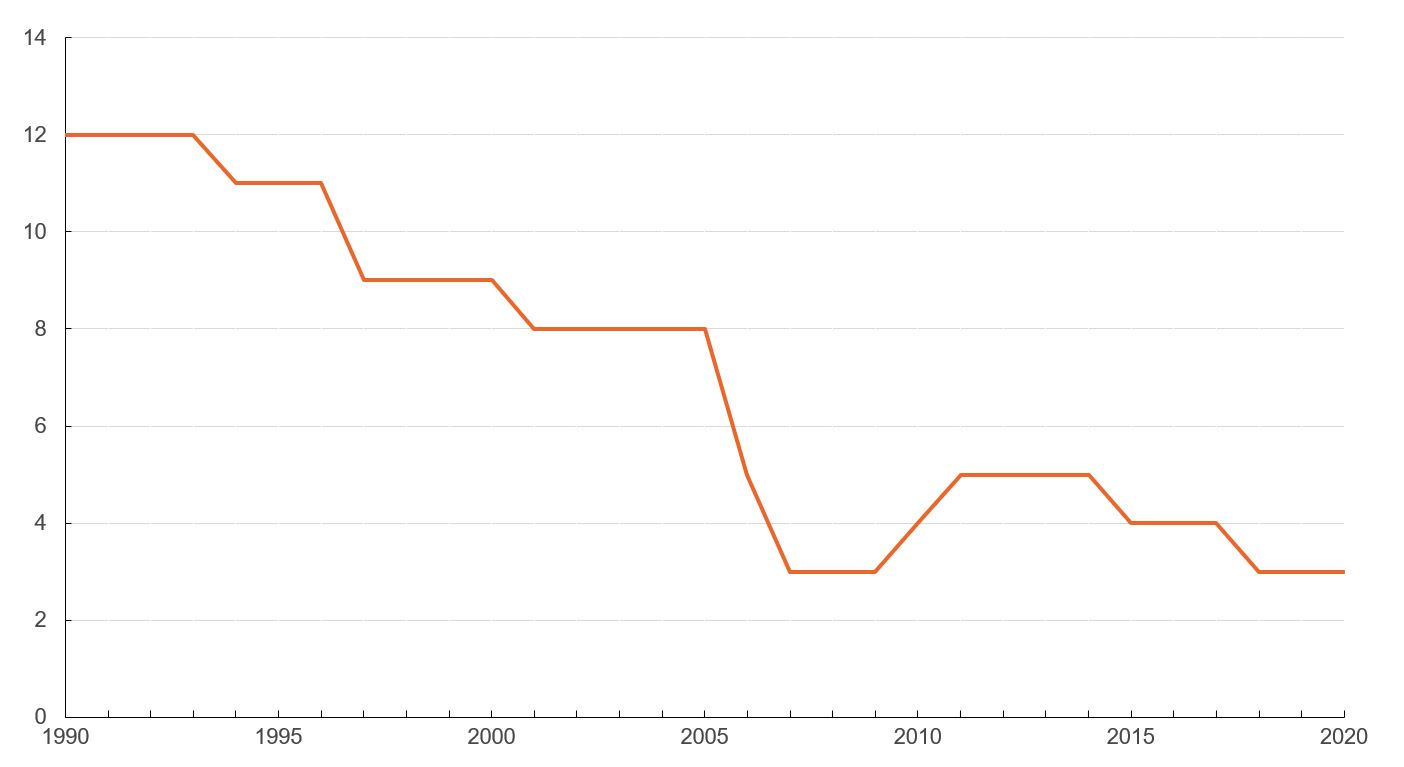
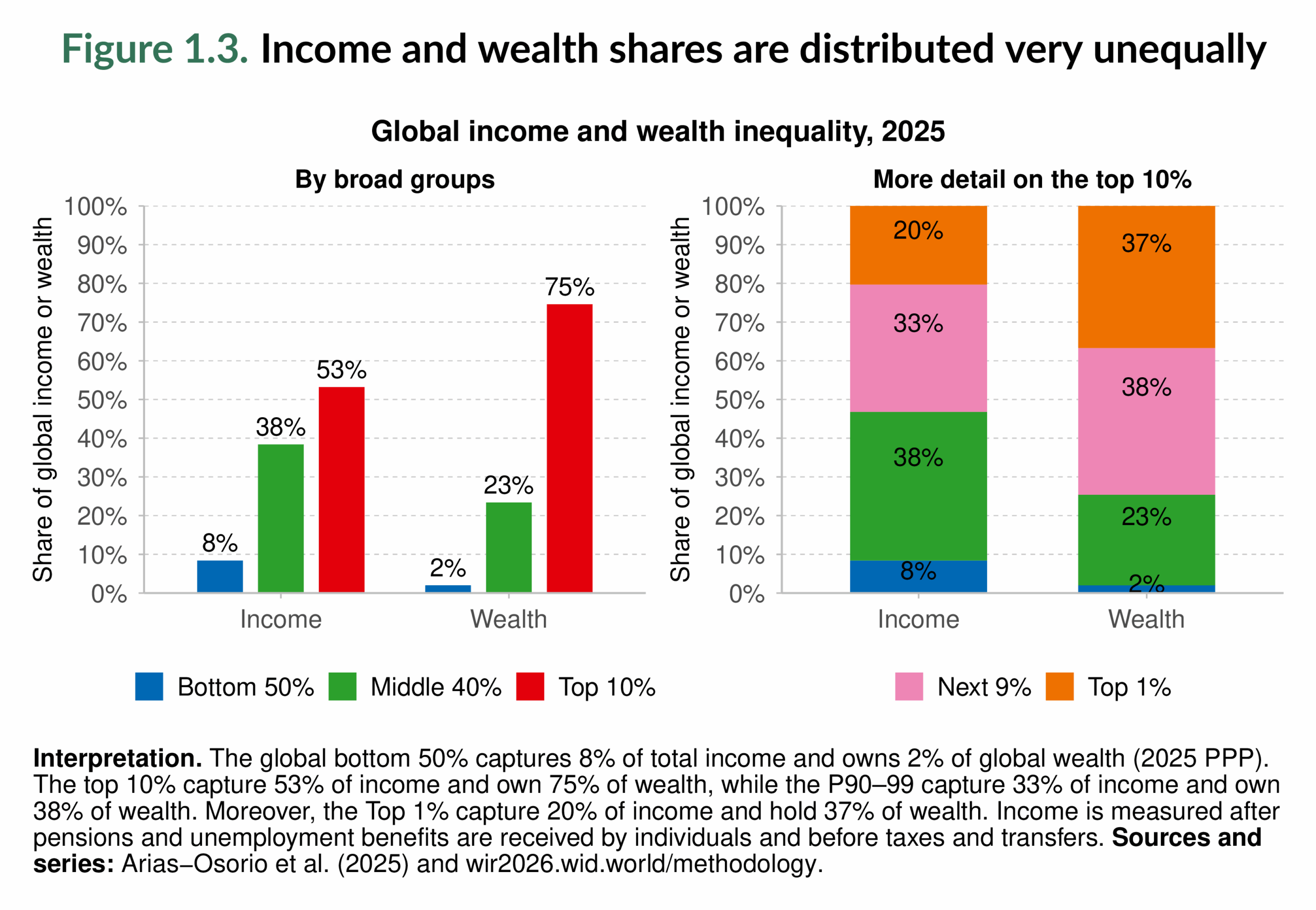
The claim asks whether recurrent taxes on individuals’ net wealth outperform progressive income and capital-income taxes, inheritance taxes, transfers, and public services in reducing economic inequality. That comparison requires a defined outcome—such as net-worth concentration, disposable-income inequality, or inequality of opportunity—as well as a time horizon and a common standard for assessing behavioral responses, administrative feasibility, and the use of revenue. The evidence permits a relatively confident assessment of several mechanisms and observed effects, but the superlative “most effective” demands comparative proof that is more exacting than showing that wealth taxes can reduce inequality. The strongest affirmative case is that a recurrent net wealth tax directly reaches the highly concentrated stock whose unequal distribution it is intended to change. Comparable OECD household data indicate that wealth is substantially more concentrated than income, although incomplete coverage of the richest households makes the precise top shares uncertain (see Figure 3). Because liability recurs on the stock of net wealth rather than depending on the realization of income or an eventual transfer, the tax can affect saving and reported wealth continuously. Affirmative design analyses therefore contend that a progressive levy with a high threshold and broad base can curb extreme concentration and raise revenue from a small, wealthy group, particularly where existing taxes fail to reach returns retained or sheltered within accumulated fortunes (see Figure 1). Administrative evidence from Denmark supports the central mechanism: recurrent wealth taxation reduced the accumulation of taxable wealth, with larger estimated long-run effects among the very wealthy. This result is stronger than a purely static incidence calculation because it indicates that the tax can alter the path of top wealth accumulation rather than merely impose a one-time transfer. The Danish finding establishes that recurrent taxation can materially affect taxable wealth, but evidence from Switzerland and Norway cautions that reported-wealth changes combine real saving or portfolio responses with avoidance, evasion, valuation effects, and mobility. The affirmative case also depends on the proposition that avoidance is responsive to policy design rather than an immutable feature of taxing wealth. The literature identifies broad coverage, consistent valuation, third-party information reporting, strong enforcement, and expatriation safeguards as measures capable of limiting behavioral erosion. UK microsimulation and affirmative modeling further show that a broad-based tax with appropriately chosen thresholds could raise substantial revenue concentrated on wealthier households, though estimates are sensitive to exemptions, valuation, top-tail data, and assumed avoidance. Evidence on closely held Norwegian firms also weakens the categorical objection that taxing business wealth necessarily destroys employment. That study found no average employment contraction in exposed firms and increases in some cases, although the result is specific to Norway’s tax and institutional setting. The strongest objection to the superlative claim is that alternative fiscal instruments have a more substantial demonstrated record when inequality is measured by current disposable income. OECD cross-country analysis and the IMF review find that cash transfers account for most directly measured fiscal redistribution of household income in advanced economies, with personal income taxes also contributing. Accordingly, the comparative evidence does not identify a standalone recurrent wealth tax as the leading instrument for reducing disposable-income inequality. Even where policymakers seek to tax wealth more effectively, recurrent net wealth taxation is not necessarily the preferred first reform. The IMF recommends strengthening capital-income taxation, closing avoidance channels, and taxing inheritances effectively, while treating recurrent net wealth taxes as potentially useful but generally less attractive because of valuation and enforcement difficulties. Institutional reviews likewise conclude that the case for an annual wealth tax depends substantially on defects in existing taxes and often recommend repairing taxes on wealth-related income and transfers before adding a recurrent levy (see Figure 2). Behavioral responses can materially weaken both the revenue yield and effective progressivity of recurrent wealth taxes. Swiss cantonal variation shows substantial responsiveness of reported taxable wealth to tax rates, reflecting a mixture of real behavior, avoidance or evasion, and mobility. International reviews also identify exemptions, favorable valuation, concealment, compliance costs, and liquidity constraints as channels through which statutory liabilities may overstate effective burdens on the intended base or shift burdens toward more transparent and less mobile assets. Mobility presents an additional constraint, particularly for small jurisdictions imposing high rates without exit taxation or international coordination. Scandinavian evidence finds that wealthy taxpayers migrate in response to wealth taxation, reducing revenue, although estimated aggregate economic effects are smaller than individual migration responses because top-wealth taxpayers constitute a small share of the population. This evidence does not show that mobility makes wealth taxation infeasible, but it does undermine comparisons that treat the statutory tax base as fixed. Effectiveness depends first on the dimension of inequality selected: recurrent wealth taxes target net-worth concentration directly, transfers target disposable income more immediately, and education and health spending can affect inequality of opportunity and market income over time. A policy can therefore rank highly for slowing top wealth accumulation yet rank below transfers for reducing current disposable-income inequality. Without a specified outcome and horizon, a single cross-policy ranking conflates distinct distributive objectives. The case for a genuinely one-off wealth levy differs materially from the case for permanent annual taxation. The UK Wealth Tax Commission found a stronger economic case for an unanticipated one-off levy in exceptional fiscal circumstances, because it could raise revenue with fewer forward-looking distortions, while expressing greater skepticism about an annual tax. Conversely, only a recurrent levy continuously slows wealth accumulation, as the Danish evidence illustrates, but that recurring exposure also creates continuing incentives to alter saving, reporting, portfolios, or residence. Tax-base elasticity is not equivalent to an equal change in true economic wealth or inequality. Observed declines in reported taxable wealth may reflect lower saving or changed portfolios, which can alter actual accumulation, but may also reflect valuation choices, concealment, avoidance, or migration, which can chiefly alter what tax records capture. Consequently, studies of reported wealth strongly establish behavioral response but do not by themselves quantify the net reduction in underlying wealth inequality. The disposition of revenue can be as important to wider distributional outcomes as the choice of tax base. Transfers and social spending have demonstrated effects on income inequality and inequality of opportunity, so wealth-tax revenue used for those purposes could produce a different result from identical revenue used for debt reduction or offsetting tax cuts. A combined tax-and-spending package may therefore outperform either a wealth tax or spending intervention considered in isolation, but that would not establish the standalone tax as uniquely superior. The principal evidentiary gap is not the absence of either supporting or opposing research, but the lack of a single like-for-like comparison of recurrent wealth taxes with all named alternatives across common inequality outcomes and time horizons. Evidence that a wealth tax reduces taxable wealth does not alone establish superiority over capital-income or inheritance taxation, just as evidence that transfers reduce disposable-income inequality does not settle which policy best reduces net-worth concentration. Generalizability remains limited by the dependence of observed effects on national institutions, tax design, valuation practices, enforcement capacity, liquidity, portfolio composition, and mobility safeguards. Top-tail undermeasurement and the imperfect correspondence between reported and true wealth further complicate estimates of both incidence and inequality effects. The bundle also flags unresolved conflict-of-interest classifications, which warrants caution when weighing prominent design advocacy and institutional recommendations even though the underlying evidence spans peer-reviewed studies, government data, and institutional reports. On the current evidence, the categorical claim is not established: recurrent net wealth taxes are a direct and potentially effective instrument for reducing top wealth accumulation, but transfers have the stronger demonstrated record for disposable-income redistribution, while authoritative reviews often prefer improved taxation of capital income and inheritances to an annual net wealth tax. Confidence in that balanced rejection of the superlative is high, rather than confidence that wealth taxes are generally ineffective. The dominant substantive uncertainty is the absence of like-for-like comparative evidence across different definitions of inequality; unresolved conflict-of-interest classifications add a secondary caution in weighting some policy recommendations.
Supporting Arguments
P1A wealth tax directly targets the most concentrated tax base
Wealth is substantially more concentrated than income, so a progressive wealth tax can focus liabilities near the top of the distribution. Unlike taxes triggered only when assets yield realized income or are transferred, it reaches accumulated fortunes annually and can therefore slow their relative growth.
75/100 · Direct Evidence
P2Observed reforms show lower long-run wealth accumulation at the top
Danish administrative evidence finds that recurrent wealth taxation reduced taxable wealth accumulation, with larger long-run effects among the very wealthy. This supports the mechanism required to reduce wealth concentration, although Denmark alone cannot prove global superiority over every alternative policy.
72/100 · Direct Evidence
P3Broad bases and enforcement can preserve redistributive power
Avoidance is not fixed: third-party reporting, few exemptions, consistent valuation, exit taxes, and international information exchange can constrain it. Modeling indicates that a broad tax with high thresholds could raise meaningful revenue from a small, wealthy group, which could fund additional redistribution.
74/100 · Logical Inference
P4Predicted business damage is not universal
Norwegian evidence does not show an average employment decline in closely held firms exposed to the wealth tax and finds increases in some cases. This weakens a common argument that taxing illiquid business wealth must necessarily destroy jobs, though the finding is context-specific.
52/100 · Direct Evidence
Opposing Arguments
C1Transfers have a stronger record on disposable-income inequality
Across OECD countries, cash transfers account for most directly measured redistribution, with personal income taxes also contributing. If the objective is current disposable-income inequality rather than ownership concentration, the comparative evidence does not identify wealth taxes as the most effective instrument.
55/100 · Data Analysis
C2Better capital-income and inheritance taxes may dominate
The IMF and OECD emphasize taxing capital returns, capital gains, and inheritances effectively before adding a recurrent net wealth tax. These instruments can target income or transfers arising from wealth while avoiding some recurring valuation and liquidity problems, so wealth taxes cannot be presumed superior in well-designed tax systems.
70/100 · Expert Opinion
C3Avoidance and valuation weaken effective progressivity
Swiss evidence finds substantial responses of reported wealth to tax rates, arising from real behavior, avoidance or evasion, and mobility. Exemptions and favorable valuations can also shift burdens toward transparent, less-mobile assets, reducing both revenue and fairness relative to statutory schedules.
74/100 · Direct Evidence
C4The richest can relocate, shrinking the intended tax base
Scandinavian evidence shows migration responses among wealthy taxpayers. Aggregate effects may be limited, but mobility still reduces revenue and can constrain unilateral high rates, especially in small jurisdictions without exit taxes or international coordination.
75/100 · Direct Evidence
All contributions are reviewed for clarity, balance, and evidence. The strongest insights are elevated into the argument graph — with credit to you.
Help improve this analysis on ProConWiki →