Government intervention is necessary to address the housing affordability crisis in major U.S. cities.

Updated 2026-07-31 5 supporting · 4 opposing arguments
Aldo's Synthesis high
Based on the strength of the Arguments below
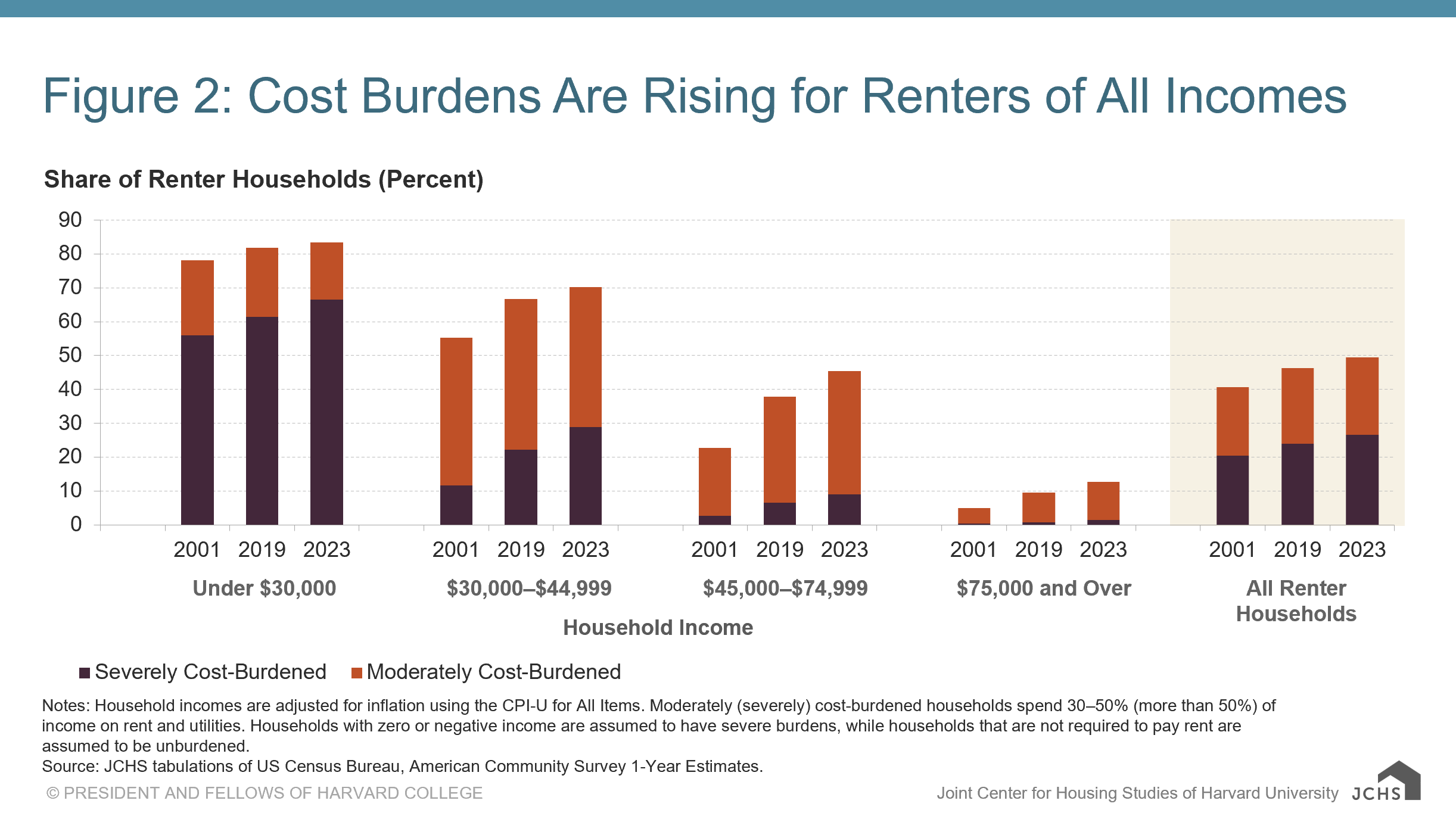
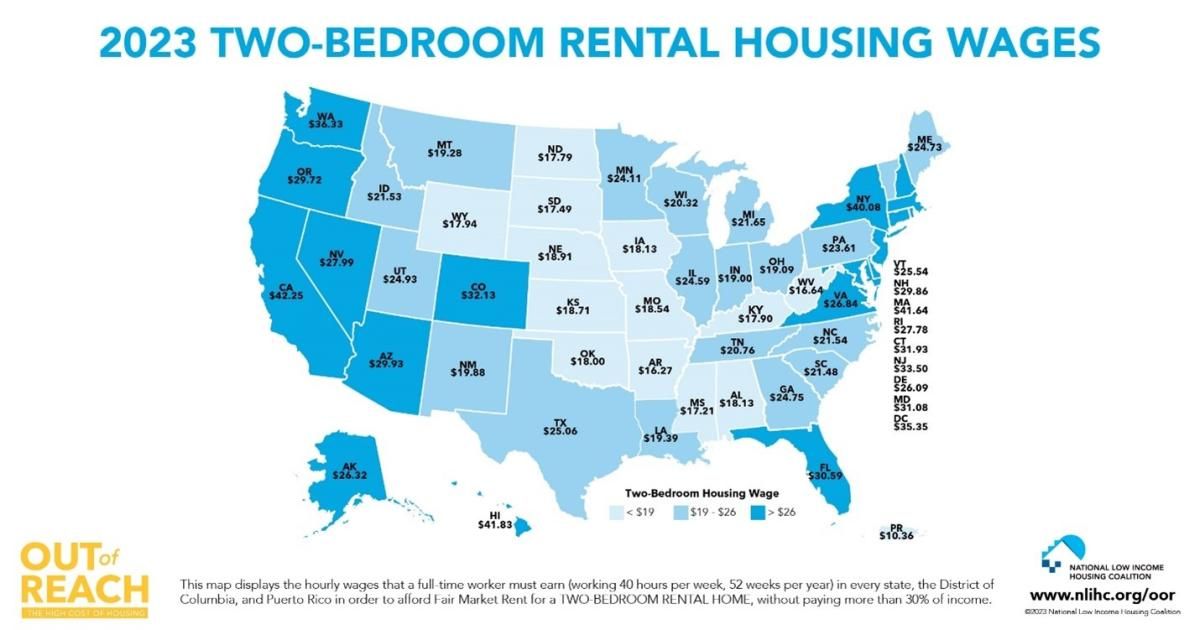
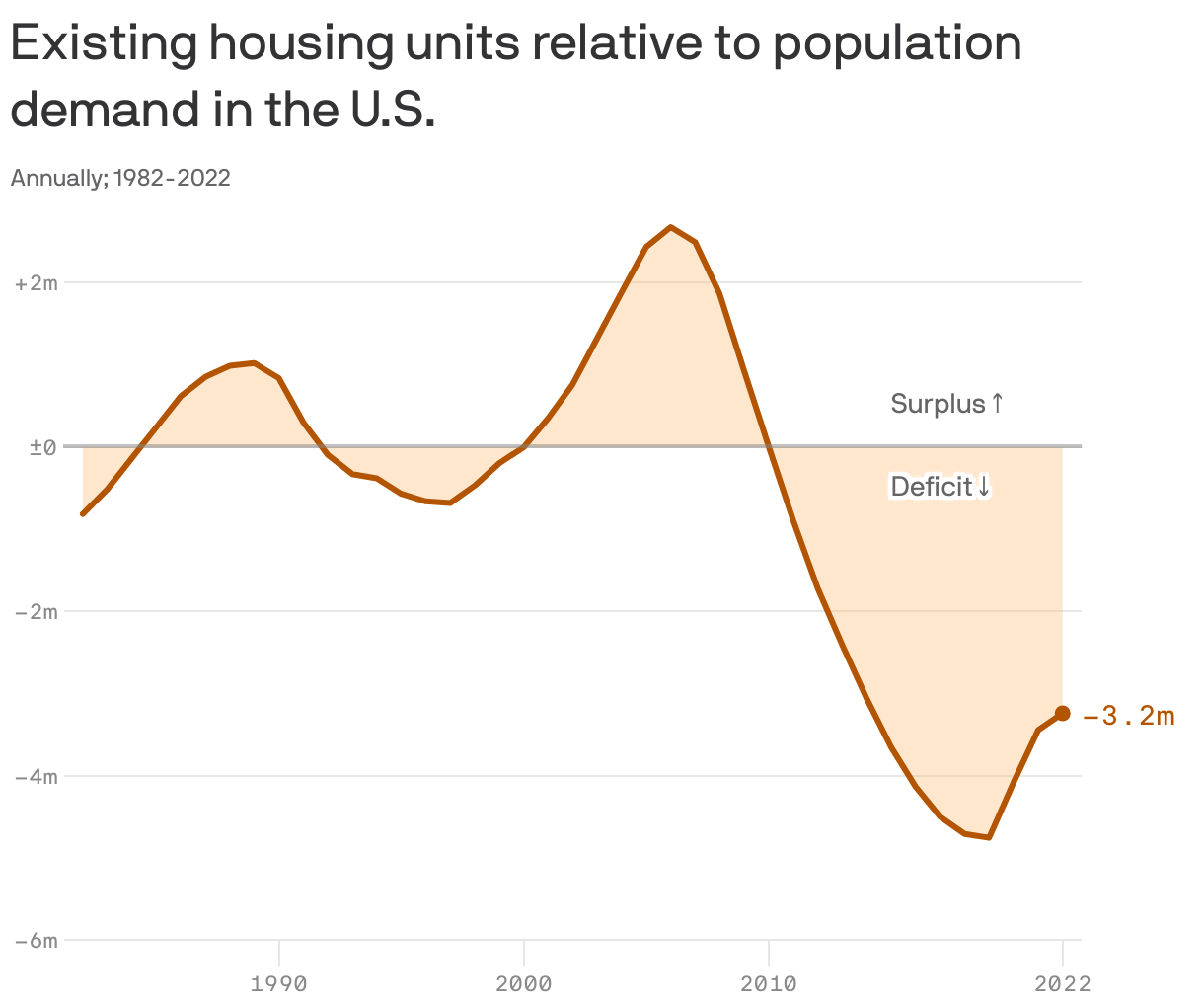
The claim asks whether government action is indispensable to resolving housing unaffordability in major U.S. cities, rather than merely whether particular public programs can help. That distinction matters because “intervention” includes both removing government-created barriers to private construction and using subsidies, vouchers, supportive housing, or tenant protections to serve people whom additional market supply may not reach promptly. The strongest case for the claim is therefore narrower than an endorsement of intervention generally: public action may be necessary, while the affordability effects of any particular measure remain contingent on design, implementation, and local market conditions. The strongest support for intervention is that targeted public assistance has directly improved housing stability among populations whose needs are not reliably met by ordinary market transactions. In the randomized Family Options Study, offers of long-term housing subsidies substantially reduced homelessness and housing instability among homeless families and generally outperformed the tested service-intensive alternatives on housing outcomes, albeit at greater program cost (see Figure 1). A systematic review likewise concluded that Housing First programs increase housing stability and reduce homelessness among people experiencing homelessness with disabilities, although effects on broader health outcomes were less consistent. The broader supply literature finds that adding housing generally improves affordability but may not make homes immediately affordable to the poorest households, while federal housing funds specifically support development and preservation for low- and extremely-low-income renters (see Figure 2). A separate rationale for necessity is institutional: where public land-use rules suppress supply, only governmental change can remove those legal constraints. A review of urban-economics research reports substantial evidence that land-use regulation constrains housing supply and is associated with higher prices, especially in high-demand metropolitan areas, though causal measurement is complicated by differences between restrictive and permissive jurisdictions (see Figure 3). A research synthesis also concludes that supply expansion generally improves affordability, while emphasizing that results vary with location, regulation, construction costs, and market conditions. Together, these findings support two distinct forms of necessary public action: regulatory reform to permit more private supply and targeted assistance for households that broad supply growth does not serve adequately or quickly. Government housing interventions may also generate benefits beyond immediate shelter and rent relief, although those benefits are less uniform. Reanalysis of the randomized Moving to Opportunity experiment found higher adult earnings and college attendance among children who moved to lower-poverty neighborhoods before age 13, whereas moves during adolescence had weaker or adverse effects. A systematic review found that affordability and stability interventions were often associated with improved health or health-related outcomes, but heterogeneous study quality and findings limit causal and program-wide generalization. The strongest challenge is not that government can do nothing useful, but that prominent interventions can protect selected households while reducing supply, shifting costs to others, or failing to produce housing efficiently. A natural experiment concerning San Francisco’s rent-control expansion found that covered tenants were more likely to remain in their homes, but landlords reduced rental supply and the authors estimated that citywide rents increased. A broad empirical review similarly reports that rent control usually lowers rents and improves tenure stability for covered tenants, while tending to reduce mobility, rental supply, maintenance, and housing quality and to increase pressure on uncontrolled rents. These results rebut any inference that intervention is inherently affordability-enhancing and identify a distributional conflict between incumbent tenants and newcomers or unprotected renters. Private market-rate construction can transmit benefits beyond the occupants of new buildings, weakening the premise that every affordable outcome requires direct subsidy or price control. Research tracing address histories found that moves into new market-rate buildings initiated vacancy chains reaching lower-income neighborhoods within several rounds. That method demonstrates migration links rather than directly estimating every city’s long-run rent response, so it supports supply transmission without establishing that private construction alone resolves affordability for all income groups. Direct production subsidies also face governance and cost-efficiency risks that can reduce the amount of housing delivered per public dollar. The Government Accountability Office found wide variation in Low-Income Housing Tax Credit development costs and concluded that incomplete federal data and fragmented oversight hindered cost assessment and fraud-risk management. A related GAO review found inconsistent agency procedures and insufficient federal data for evaluating compliance and outcomes; these findings weaken confidence in least-cost delivery but do not establish that the program is ineffective. Even deregulatory government action may create legal capacity without quickly producing homes. A study of targeted Chicago upzonings detected higher property values but no additional housing-unit construction during the following five years. The study’s limited geography and follow-up period constrain generalization, but its result shows why reform of zoning rules cannot be assumed to generate rapid construction by itself. The evidence most strongly supports a mixed and conditional proposition: government involvement is warranted, but the appropriate instrument depends on whether the binding problem is inadequate supply, insufficient household income, homelessness with intensive service needs, or displacement risk. Supply reforms can improve affordability generally, yet their effects vary with market and regulatory conditions, and the Chicago evidence cautions that legal capacity need not convert rapidly into completed units. Conversely, supply growth may not immediately reach the poorest households, whereas randomized evidence shows that long-term subsidies can materially reduce instability among homeless families. Voucher effectiveness depends not only on the statutory benefit but also on whether recipients can lease qualifying units. Research exploiting randomized voucher offers found incomplete lease-up and behavioral responses, so authorized subsidy amounts did not translate one-for-one into housing gains. Matched-pair testing across several metropolitan areas found substantial landlord denial of voucher holders, with acceptance varying sharply by city and neighborhood. Voucher expansion is consequently more likely to translate into practical access when accompanied by adequate unit availability, effective administration, and measures addressing landlord participation. Rent stabilization presents a genuine protection-supply tradeoff whose magnitude varies with policy design. The empirical review finds benefits for covered tenants alongside adverse effects on supply, mobility, maintenance, and uncontrolled rents, while noting that newer stabilization systems may be less distortionary than strict first-generation controls. Accordingly, the evidence supports distinguishing moderate stabilization from strict controls, but it does not show that design refinements eliminate the underlying tradeoff. Broader health effects provide a supplementary rather than universal justification for housing policy. Because the systematic-review evidence was heterogeneous in methods, quality, and results, health benefits should not be presumed for every program or substituted for direct evaluation of housing outcomes and implementation. The principal gap is not the absence of evidence on whether selected interventions can work, but the lack of a single comparative record establishing which portfolio best resolves affordability across diverse major cities. The bundle combines randomized trials for particular vulnerable populations, reviews of supply and rent regulation, one-city or limited-area natural experiments, and federal program audits; those designs answer different questions and cannot by themselves identify a universally optimal urban policy mix. Evidence is also thinner on long-run, citywide interactions among simultaneous zoning reform, construction, subsidies, vouchers, and tenant protections than on the isolated effects of individual measures. A further uncertainty concerns transferability and implementation quality. Findings from San Francisco and Chicago may not generalize to every major city, and audits revealing weak data or oversight identify governance risks without measuring the net effectiveness of every subsidized project. The unresolved conflict-of-interest classifications in the structural assessment add uncertainty about source independence, even though the bundle spans peer-reviewed research, randomized studies, systematic reviews, and government reports. On balance, the evidence supports the claim with high confidence if “necessary” means that government must both reform public constraints on supply and provide targeted assistance for needs that market-rate construction does not adequately or promptly meet; it does not support the broader proposition that every intervention improves affordability. The contrary evidence is decisive against indiscriminate policy: strict rent controls can shift burdens and reduce supply, subsidized development can suffer weak oversight, and upzoning alone may not yield rapid construction. The dominant uncertainty is therefore policy composition and implementation across heterogeneous cities, compounded by unresolved conflict-of-interest classifications, rather than whether carefully targeted government action can produce meaningful housing benefits.

Supporting Arguments

P1Severe affordability gaps persist without public assistance
Federal data show that extremely-low-income renters face a structural shortage of homes they can afford and widespread severe rent burdens. Because new unsubsidized units generally require rents sufficient to cover land and construction costs, supply expansion alone may not reach the poorest urban households; targeted subsidies or publicly supported units address this purchasing-power gap directly.
74/100 · Data Analysis
P2Rental subsidies causally reduce homelessness and instability
The randomized Family Options Study found that long-term subsidies markedly improved housing stability for homeless families compared with usual care and other interventions. This is strong direct evidence that government assistance can achieve outcomes that vulnerable families often cannot secure through the market alone.
68/100 · Direct Evidence
P3Housing assistance can produce long-term benefits for children
Moving to Opportunity evidence indicates that children who moved to lower-poverty areas at younger ages later had higher earnings and college attendance. Government intervention may therefore improve economic mobility as well as immediate affordability, although benefits depend on timing and successful access to higher-opportunity neighborhoods.
87/100 · Direct Evidence
P4Housing First reliably improves housing stability
Systematic-review evidence finds that permanent supportive housing using Housing First substantially reduces homelessness and increases housing stability among high-need populations. These individuals face disabilities and service needs that ordinary market supply is unlikely to address on its own.
60/100 · Direct Evidence
P5Government-created land-use rules are part of the problem
Research links restrictive zoning and permitting systems to lower housing supply and higher prices in high-demand metropolitan areas. Because these constraints are created and enforced by government, public action to legalize denser construction and streamline approval is necessary to remove them.
83/100 · Logical Inference

Opposing Arguments

C1Some intervention protects insiders while raising overall rents
San Francisco's rent-control expansion protected covered tenants from displacement, but landlords reduced rental supply and citywide rents rose. This shows that intervention is not inherently affordability-enhancing: a policy can benefit incumbent tenants while worsening access for newcomers and unprotected renters.
100/100 · Direct Evidence
C2Market-rate construction can transmit benefits down the market
Migration-chain evidence indicates that residents moving into new market-rate buildings leave vacancies that generate moves reaching lower-income neighborhoods. This supports a case that allowing private construction can ease housing pressure without requiring every new unit to be publicly subsidized or price-controlled.
51/100 · Direct Evidence
C3Subsidized development can be costly and poorly monitored
GAO found large variation in LIHTC development costs, fragmented oversight, and inadequate data for evaluating cost efficiency and compliance. These weaknesses imply that direct production subsidies may deliver less housing per public dollar than intended and require substantial governance reform.
59/100 · Data Analysis
C4Legalizing density does not guarantee rapid construction
Chicago upzoning raised affected property values but did not produce detectable additional construction within five years. Reform may be necessary in constrained markets, but financing, parcel assembly, construction costs, and demand can prevent added legal capacity from becoming actual homes quickly.
56/100 · Direct Evidence

All contributions are reviewed for clarity, balance, and evidence. The strongest insights are elevated into the argument graph — with credit to you.

Help improve this analysis on ProConWiki →
𝕏 Share Facebook LinkedIn