Voter-approved abortion-rights amendments leave state courts to define permissible restrictions
Bottom line (updated 2026-10-15): Voters can create strong abortion rights through an amendment, but the words may not answer every case. State courts usually must decide whether each rule fits those rights. The evidence clearly supports this view, though some amendments spell out key limits more clearly than others.
What's this about?
People disagree about whether voter-approved abortion-rights changes answer every question about abortion rules. These changes protect rights, but state judges may still decide which limits lawmakers can make.
What supporters say
- State judges have struck down some limits after checking them against the state’s top law.
- Amendment words often protect broad ideas, so judges must decide how they apply to waiting times, parent permission, clinic rules, and urgent care.
- The same broad right can lead to different results because each state has different words, past rulings, and lawmaking rules.
What critics say
- Some amendments clearly set major limits, such as when a state may restrict abortion.
- Judges cannot decide freely; the amendment’s words and earlier court rulings limit their power.
How to read this
The number of points on each side does not show which side is right; the strength of the proof matters more.
The bottom line
Voters can create strong abortion rights through an amendment, but the words may not answer every case. State courts usually must decide whether each rule fits those rights.
The evidence clearly supports this view, though some amendments spell out key limits more clearly than others.
Voter-approved abortion-rights amendments often create enforceable constitutional protections without answering every question about regulation. Their broad language can settle major principles, but state courts usually still must decide whether specific restrictions are allowed.
The case for
Many amendments protect ideas such as reproductive autonomy, viability or a patient’s health rather than listing every rule lawmakers may enact. That leaves courts to decide how the amendment applies to issues such as parental-consent laws, waiting periods, clinic licensing, emergency exceptions and enforcement. A constitutional amendment outranks ordinary legislation, but it may still require a judge to determine whether a particular law fits within—or violates—the new protection. 1
State courts have already exercised that authority. In Montana, the state Supreme Court struck down a parental-consent requirement after reviewing it under state constitutional privacy and equal-protection provisions. The court concluded that the government’s stated interest did not justify the law. In Kansas, the Supreme Court reaffirmed constitutional protection for abortion and rejected a request to overturn its earlier ruling. Together, the cases show that courts can define the reach of abortion rights even when the constitutional text does not expressly mention abortion. 2
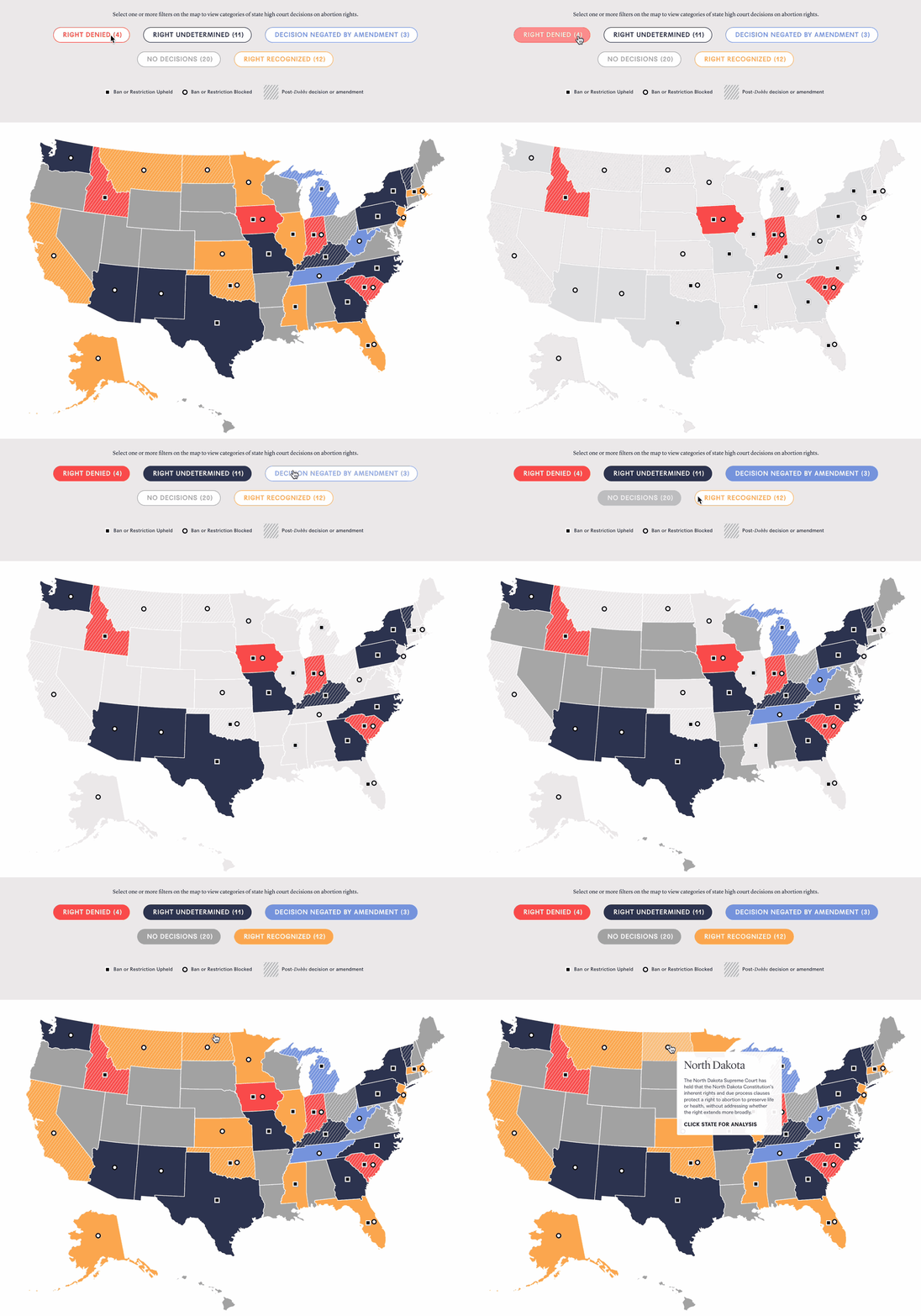
The outcomes also differ from state to state. Similar amendments can produce different results because their wording, constitutional histories, existing precedents and rules about legislative power vary. Measures approved in California, Michigan, Ohio and Vermont have operated within different legal settings, while other measures have failed. The Center for Reproductive Rights has likewise cataloged state-court decisions recognizing, rejecting or limiting constitutional abortion protections. This patchwork is consistent with the view that voter approval supplies an important legal foundation but does not determine the result of every future dispute. (see Figure 1) (see Figure 2) 3
The case against
The claim can overstate how much freedom courts have. Some amendments expressly establish major boundaries. Florida’s Amendment 4, for example, would prohibit laws restricting abortion before viability or when necessary to protect a patient’s health, while preserving legislative authority over parental notification. Such language can answer central questions about timing and medical exceptions directly, rather than leaving them entirely to judges. 4
Courts also are not free to replace the adopted constitutional rule with their own policy preferences. Their decisions remain limited by the amendment’s wording, the state’s constitutional structure, earlier court rulings and ordinary legal standards. Those limits mean judicial authority is substantial, but not unlimited. 5
Ohio illustrates both points. Reporting described Issue 1 as making many existing restrictions unenforceable, yet lawsuits were still needed to determine how the amendment applied to particular statutes. The amendment could settle broad principles while leaving narrower questions for litigation.
The bottom line
The evidence favours the claim, but only in a qualified and low-confidence sense. Voter-approved amendments commonly establish enforceable rights without specifying the outcome of every dispute over abortion restrictions, giving state courts substantial—but bounded—power to interpret them.
The strongest evidence shows both that amendment language often leaves application questions open and that courts have invalidated specific restrictions. The opposing evidence is also important: some amendments expressly settle major boundaries, and courts must follow the text and existing constitutional law. The main uncertainty is not whether courts have a role, but how each amendment’s wording, precedent and retained legislative authority will shape future cases.
Figures & data

All contributions are reviewed for clarity, balance, and evidence. The strongest insights are elevated into the argument graph — with credit to you.
Help improve this analysis →