The SAVE America Act creates barriers that make it harder for people to vote
What's this about?
People disagree about whether the SAVE America Act would make voting harder for some U.S. citizens.
The bill would ask new voters to show proof that they are U.S. citizens before they sign up.
What supporters say
- The bill adds new steps because people now usually swear they are citizens when they sign up.
- People would need to show accepted papers or use another check process.
- About 21.3 million voting-age citizens may not have proof papers ready to use.
- Name changes, lost birth papers, and long trips to offices could make the process harder.
What critics say
- Not having proof papers does not mean a person is not a U.S. citizen.
- The evidence does not show how many people across the country would fail to sign up.
- Some people could use accepted papers or the bill’s other check process.
- Kansas had sign-up problems under a like rule, but Kansas cannot show the exact U.S. result.
The bottom line
The bill would create extra steps that could make voting sign-up harder for some allowed voters.
We do not know yet how many people would end up unable to sign up.
The SAVE America Act would require people registering to vote in federal elections to prove they are U.S. citizens with documents or through a verification process. The evidence indicates that this would create new hurdles for some eligible voters, though it does not show how many people nationwide would ultimately be unable to register.
The case for
The strongest evidence is in the bill’s basic design. The SAVE Act adds a documentary proof-of-citizenship requirement to federal voter registration, beyond the current system in which applicants generally attest under oath that they are citizens. People would need to present an accepted document or go through a separate verification process. That means more steps, paperwork and potential delays for registration. 1
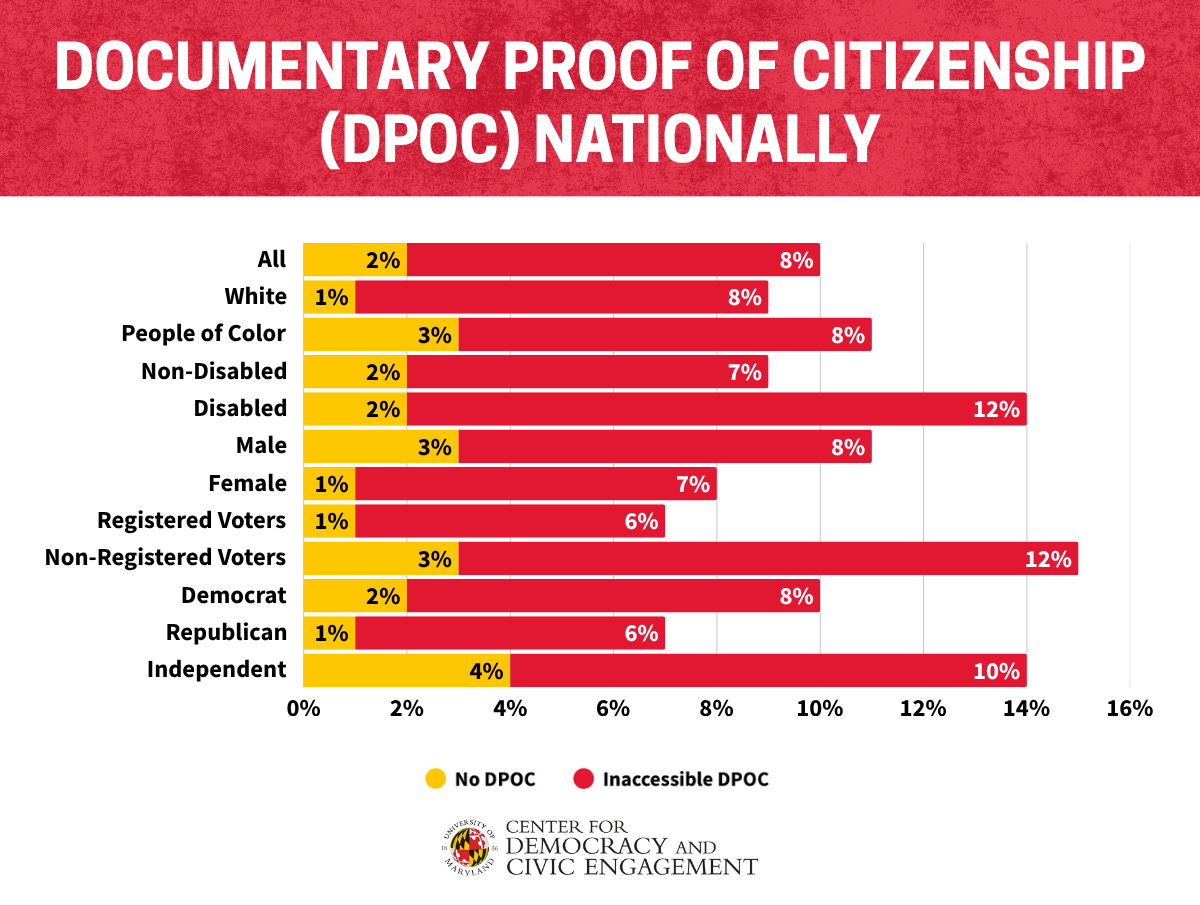
Those steps matter because not every eligible citizen has citizenship documents readily available. Survey-based analysis estimates that 21.3 million voting-age citizens lack ready access to documentary proof of citizenship. This does not mean they are not citizens, or that all would fail to register. But it suggests many people could face added costs, travel, paperwork or delays to obtain and submit records (see Figure 1). 2
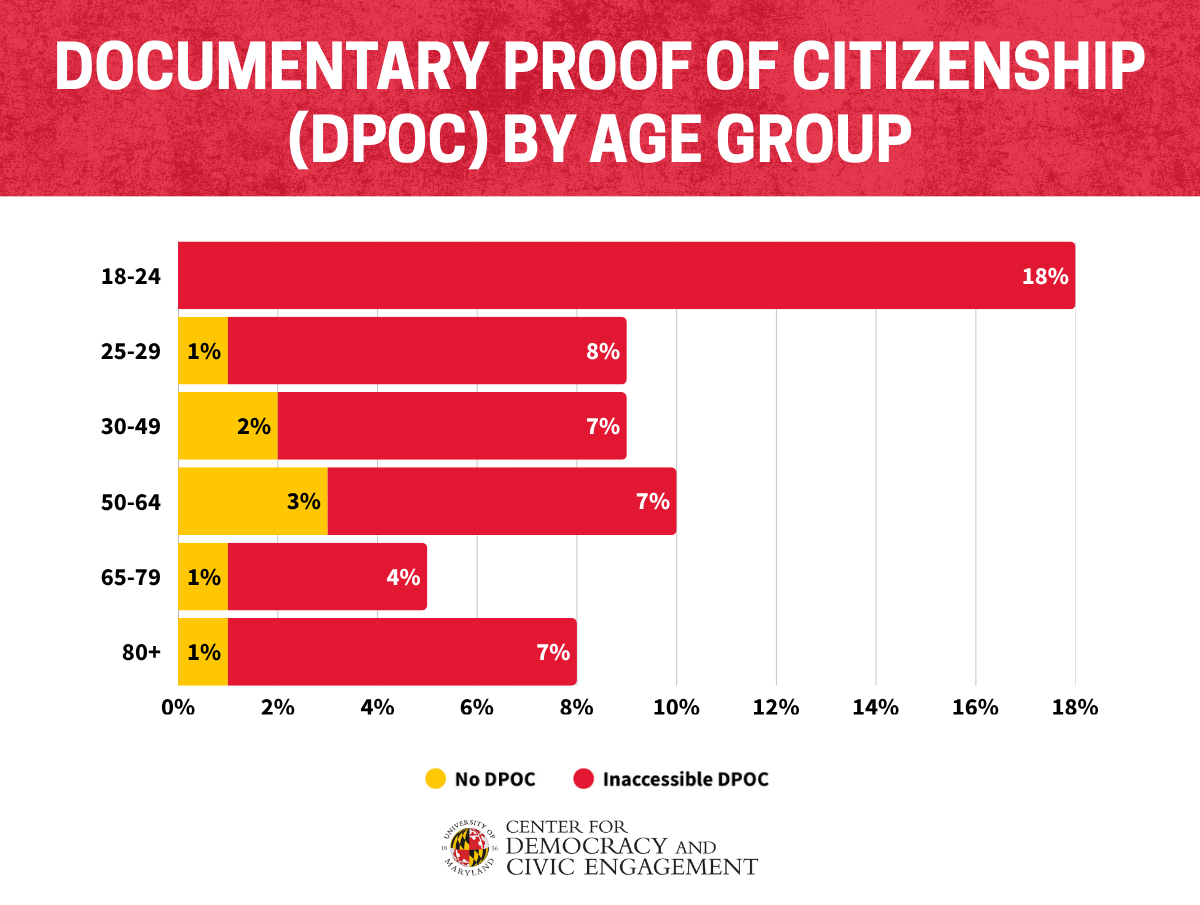
The burden may be particularly serious for people who have changed their names, need replacement birth records, live far from government offices, or have complicated birth documentation. Access to records also differs across groups, meaning the effects would not necessarily be shared evenly (see Figure 2).
Experience in states with similar rules shows how these requirements can disrupt registration. In Kansas, for example, documentary-proof rules led to some applications being put on hold or left unresolved when people could not quickly provide accepted documents. That does not predict the exact outcome of a national federal program, but it is concrete evidence that such rules can create registration problems. 3
Database checks could introduce another source of trouble. Records can be incomplete, unavailable or inconsistent, and an eligible applicant whose information does not match may have to produce more evidence or resolve an error. Reviews by the Congressional Research Service and the National Conference of State Legislatures identify coordination among election offices, federal databases and procedures for unresolved cases as major practical questions. Verification systems can therefore create administrative friction even for eligible citizens. 4
The Supreme Court’s decision in *Arizona v. Inter Tribal Council* also showed that documentary requirements can materially affect the handling of federal voter-registration forms and can create conflicts between federal and state rules. The case does not settle whether the SAVE Act would be lawful, since Congress could alter federal requirements directly. But it underscores that added documentation rules have real operational consequences.
The case against
Supporters can point to a straightforward principle: U.S. citizenship is a legal requirement for voting in federal elections. The bill’s backers may view documentation and verification not as an effort to exclude citizens, but as a way to enforce that rule. States already use a mix of approaches—including documents, database matching and sworn statements—to pursue citizen-only voting. 5
Additional checks could also deter or detect attempts by ineligible people to register. The available record does not measure how often that would happen, however. Reviews cited in the analysis describe documented noncitizen voting as rare, weakening the argument for a sweeping response to a widespread problem without proving that verification would have no preventive value. 6
It is also inaccurate to describe the proposal as a universal passport requirement. The bill allows multiple forms of documentary proof, which could ease the process for some applicants. Still, alternatives do not remove the problem for people who lack, or cannot easily get, any accepted document. 7
Much would depend on implementation: which documents are accepted, whether officials help people obtain records, how exceptions and appeals work, and what happens when databases return mismatched information.
The bottom line
The evidence strongly supports the narrower claim that the SAVE America Act would add documentary and administrative hurdles that could make registering—and therefore voting—harder for some eligible citizens. There is high confidence that the bill would impose additional procedures and that document access is uneven.
But the available evidence does not establish how many eligible citizens would actually be delayed, discouraged or prevented from registering under a final federal system. Nor does it quantify how many ineligible registrations the new checks would stop. The policy therefore presents a real risk of added barriers, alongside a legitimate goal of verifying citizenship, with the national scale of both costs and benefits still uncertain.
Figures & data
All contributions are reviewed for clarity, balance, and evidence. The strongest insights are elevated into the argument graph — with credit to you.
Help improve this analysis →