Quicker and more convenient abortion access increases the number of abortions
Bottom line (updated 2026-09-03): The proof supports part of the claim, mostly because easier care removes roadblocks for people already seeking abortions. It does not clearly show that ease changes unsure people’s minds, and the critics’ second point has weaker proof.
What's this about?
People disagree about whether faster, easier abortion care leads to more abortions.
The main question is whether ease changes minds or helps people act on plans they already had.
What supporters say
- Easier care can help people who already want an abortion finish getting one.
- Some delayed abortions may happen sooner, before the pregnancy leads to a birth.
What critics say
- Strong studies do not show that ease persuades unsure people to choose abortion.
- Preventing unplanned pregnancy may lower abortions, even when abortion care gets easier.
How to read this
The number of points on each side does not show who is right; strong proof matters more.
The bottom line
The proof supports part of the claim, mostly because easier care removes roadblocks for people already seeking abortions.
It does not clearly show that ease changes unsure people’s minds, and the critics’ second point has weaker proof.
The claim is that faster, easier abortion access leads to more abortions. The evidence supports part of that idea—but mainly because easier services help people who already want an abortion complete it, not because convenience persuades people who would otherwise continue their pregnancies.
The case for
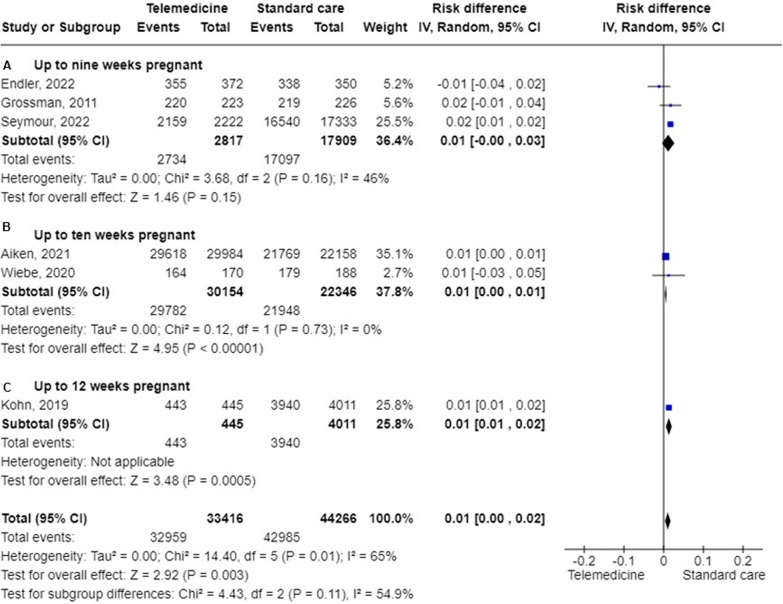
Removing practical barriers can turn an intended abortion into a completed one. A systematic review found that telemedicine can reduce travel, scheduling and other obstacles while providing effective medication abortion. Easier remote access was more closely linked to completion among people already seeking abortions than to a change in their decision to terminate. Provider accounts also describe administrative and institutional barriers that can delay or disrupt care. Removing those barriers can therefore increase the number recorded by providers, even if nobody changes their original preference. 1
Access can also affect whether a pregnancy continues. Research on abortion restrictions has found effects on pregnancy, birth, prenatal care and other later outcomes, suggesting that some abortions may be delayed or denied when services are unavailable. In those cases, pregnancies that might otherwise have ended in abortion can continue to birth. (see Figure 2) This supports the view that access can affect abortion numbers, although the studies do not show exactly how much comes from persuasion, removal of obstacles, people switching providers or other changes in behavior. 2
The case against
The strongest evidence does not show that convenience persuades people who are unsure about abortion. The telemedicine review mainly examined safety, availability and completion among people who were already seeking care. A pilot study similarly found that remote services expanded practical access but did not establish that they changed people’s pregnancy intentions.
A survey showing that abortion patients are interested in over-the-counter medication points in the same direction. It demonstrates demand for convenience among people already pursuing abortions—not that easier access attracts people who would otherwise carry a pregnancy to term. The available evidence therefore does not directly test the claim’s key mechanism: whether convenience changes the underlying decision to have an abortion. 3
Convenience in reproductive healthcare can also reduce abortions through a different route: preventing unintended pregnancies. The Contraceptive CHOICE Project review found that removing cost and access barriers to contraception reduced unintended pregnancy and abortion rates among participants. That finding challenges the idea that making reproductive healthcare easier necessarily increases abortions. 4
There is also a measurement problem. Official abortion totals may miss self-managed or clandestine abortions, and figures can be affected by delays, reporting practices and assumptions about methods. Evidence from Sierra Leone and Nigeria shows that abortions can take place outside formal medical systems, making simple comparisons based only on provider records unreliable.
The bottom line
The evidence favors a narrower version of the claim, with high confidence: quicker and more convenient abortion care increases feasibility, earlier treatment and completion among people who already intend to have an abortion. It does not establish that convenience causes abortion-ambivalent people to choose abortion instead of continuing a pregnancy.
In other words, easier access may increase recorded abortions by converting unmet demand into completed procedures or by preventing some intended abortions from being delayed or abandoned. But the evidence is much weaker for a population-wide rise in the willingness to have an abortion. Any change in abortion counts could also reflect timing, prevention of unintended pregnancy, hidden abortions or changes in reporting.
Figures & data

All contributions are reviewed for clarity, balance, and evidence. The strongest insights are elevated into the argument graph — with credit to you.
Help improve this analysis →