Ultra-processed foods should be regulated like tobacco

Updated 2026-07-29 5 supporting · 5 opposing arguments
Aldo's Synthesis high
Based on the strength of the Arguments below
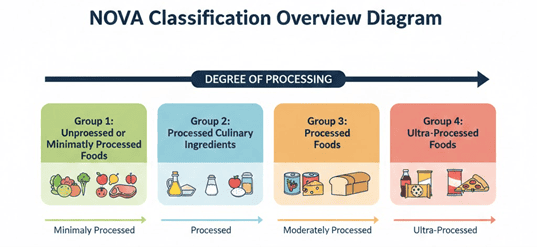
The claim asks whether governments should regulate ultra-processed foods through a package comparable to tobacco control—taxes, warnings, advertising and child-sales restrictions, and safeguards against industry influence—rather than merely offer dietary guidance. The decisive questions are whether the health evidence warrants precautionary intervention, whether tobacco-derived instruments can improve purchasing and health, and whether ultra-processed foods form a sufficiently coherent category to bear uniform legal burdens. The analogy need not imply that food and cigarettes are identical: it may instead concern the selective transfer of regulatory tools, with the breadth and targeting of those tools remaining contested. The strongest case for regulation is that convergent observational and experimental evidence links high ultra-processed-food exposure to consequential health risks, giving governments a precautionary basis for intervention before every causal mechanism is settled. Meta-analytic and cohort evidence associates higher consumption with all-cause mortality, cardiovascular disease, and multiple other adverse outcomes, while the mortality synthesis reports an exposure-response pattern. These syntheses nevertheless remain principally observational and report residual confounding, exposure misclassification, heterogeneity, and generally low-to-moderate certainty for many outcomes. The NIH inpatient crossover trial adds causal evidence for a nearer-term pathway: 20 adults ate about 500 additional kilocalories per day and gained roughly 0.9 kilograms during two weeks on an ultra-processed diet, while losing roughly the same amount on the unprocessed diet (see Figure 1). Because the experiment was short and small and could not identify the responsible food properties, it supports causation for excess intake and short-term weight change without proving that processing status causes every chronic outcome. Tobacco-style price, information, and marketing instruments also have evidence of changing purchases and product composition when applied to clearly defined unhealthy foods. After Chile introduced nutrient-threshold warnings together with child-marketing and school-sales restrictions, controlled observational analyses found declines in purchases of covered beverages and sustained reductions in purchased calories, sugar, sodium, and saturated fat from regulated products. Because Chile implemented a policy bundle, the studies cannot isolate each instrument's contribution, and changes in household purchases do not by themselves establish improved consumption or clinical outcomes. A systematic review and meta-analysis likewise found that sugar-sweetened-beverage taxes increased prices, reduced sales, and prompted reformulation in some settings, while WHO recommends taxes on foods contributing to unhealthy diets alongside subsidies for healthier options. The policy case is especially defensible for protections directed at children because marketing and school-sales controls can be administered with front-of-package warnings and have operated within national regulatory systems. The Chilean experience supports the practical compatibility of child-directed restrictions with warnings, although it evaluates products exceeding nutrient thresholds rather than every ultra-processed food. The strongest objection is that ultra-processed foods are not a uniformly hazardous product class, so regulating category membership as though it identified a cigarette-like risk may impose indiscriminate burdens. Large prospective studies report materially different associations by subgroup: sweetened beverages, some animal-based products, sauces, spreads, refined breads, and ready meals are associated with higher risks in particular analyses, whereas ultra-processed breads and cereals and some dairy categories are neutral or inversely associated. That heterogeneity weakens the inference that all category members should receive identical taxes, warnings, sales limits, or stigma, and instead favors distinguishing demonstrably risky products from potentially useful foods. A second problem is legal and administrative: the NOVA framework can group nutritionally dissimilar products and can be difficult to apply consistently when ingredient or manufacturing details are unavailable (see Figure 2). Classification uncertainty matters more when legal consequences include taxation, compulsory warnings, or sales restrictions, because inconsistent exposure measurement and uncertain product assignment can translate into contested or arbitrary treatment. The causal evidence is also narrower than the claimed regulatory package: long-term outcomes come mainly from prospective cohorts, while the single cited feeding experiment establishes short-term overeating and weight gain in a small sample rather than long-term effects across diseases and product subgroups. Residual socioeconomic and lifestyle confounding, dietary measurement error, and variation in exposure definitions therefore remain plausible contributors to the reported associations. Most intervention evidence does not test blanket ultra-processed-food regulation: beverage taxes concern a relatively clear product class, and Chilean rules and WHO guidance rely principally on nutrient or health criteria. Accordingly, evidence that targeted taxes and warnings reduce unhealthy purchases does not establish that blanket UPF taxes, plain packaging, or broad sales restrictions would produce comparable benefits. The evidence most strongly supports borrowing selected tobacco-control tools while targeting products that combine high processing exposure with established unhealthy characteristics, rather than treating all NOVA-defined ultra-processed foods identically. Subgroup heterogeneity, nutrient-threshold policy results, WHO's nutrition-focused fiscal guidance, and FAO's view that processing classification complements conventional nutrient assessment collectively favor hybrid eligibility rules. Such rules could prioritize sugary beverages and energy-dense, nutrient-poor products while avoiding automatic equivalence between those products and categories such as whole-grain breads, cereals, or yogurt that have shown different associations. A proportionate package would combine disincentives and information with subsidies or improved access to healthier alternatives, because authoritative fiscal guidance expressly calls for attention to substitution, equity, administration, and context. Taxes can reduce sales of targeted drinks, but evidence for direct effects on weight or disease is much thinner, so evaluation should track substitution, household costs, total dietary quality, and clinical outcomes rather than equating lower regulated-product sales with better health. Phased implementation is better supported than an immediate comprehensive tobacco-equivalence regime: governments could begin with child-marketing restrictions, public procurement standards, and clearly defined nutrient-based warnings while commissioning longer feeding studies and independent policy evaluations. This approach permits action on observed risk and demonstrated purchasing effects while preserving opportunities to revise definitions, thresholds, and exemptions as causal and subgroup evidence develops. The principal evidentiary gap is not the absence of health or policy research, but the lack of direct evaluation of the full claim: a category-wide tobacco-style package applied to all ultra-processed foods. Longer and larger randomized feeding studies are needed to test durability, identify causal food properties, and distinguish effects across product subgroups. Independent evaluations should also separate the effects of warnings, marketing restrictions, school-sales limits, taxes, and reformulation, and should connect purchases to consumption, distributional effects, and clinical outcomes. The supplied record does not substantively evaluate safeguards against industry influence, despite their inclusion in the claim, so no firm conclusion can be drawn about the design or effects of that component. The unresolved classification of conflict-of-interest issues further limits confidence about how industry-funded evidence or policymaking participation should be weighted. On balance, and with high confidence, the evidence supports targeted use of tobacco-style regulatory instruments for the highest-risk ultra-processed products, but does not support regulating the entire ultra-processed category as though every member were equivalent to tobacco. The affirmative case rests on broad adverse-outcome associations, a controlled demonstration of excess intake and short-term weight gain, and replicated evidence that targeted warnings, marketing controls, and beverage taxes alter purchases; the limiting case rests on subgroup heterogeneity, classification instability, observational uncertainty, and the absence of direct tests of blanket UPF regulation. The dominant uncertainty driver is therefore policy extrapolation: whether effects established for nutrient-defined products and sugary drinks would persist, without disproportionate error or burden, when extended to every food classified as ultra-processed; unresolved conflict-of-interest classifications are an additional limitation.

Supporting Arguments

P1The disease burden is broad enough to justify precautionary regulation
Large evidence syntheses associate higher UPF exposure with cardiovascular mortality, type 2 diabetes, obesity, all-cause mortality, and other adverse outcomes, with dose-response evidence for mortality. Although much of this literature is observational, its scale and consistency support taking preventive action before every biological pathway is resolved.
71/100 · Direct Evidence
P2A controlled trial supports causation for overeating and weight gain
The NIH inpatient crossover trial found that an ultra-processed diet caused substantially greater energy intake and short-term weight gain than an unprocessed diet. This experimental result makes it less plausible that all observed population associations merely reflect confounding, though replication in larger and longer trials is needed.
58/100 · Direct Evidence
P3Warnings and marketing controls can reduce unhealthy purchases
Chile's combined warning-label, marketing, and school-sales policies were followed by meaningful reductions in purchases of regulated products and their sugar, sodium, saturated fat, and calorie content. These are policy tools familiar from tobacco control and show that governments can alter both consumer and producer behavior.
92/100 · Data Analysis
P4Taxes can reduce demand and encourage reformulation
A systematic review found that beverage taxes raise prices and reduce sales of taxed drinks, with reformulation responses in some jurisdictions. WHO consequently supports well-designed fiscal policies for unhealthy foods, suggesting that price regulation can be one component of a tobacco-style package.
72/100 · Direct Evidence
P5Children warrant stronger protection from commercial promotion
Children have limited capacity to assess persuasive marketing or long-term disease risk, while Chilean experience suggests that marketing and school-sales restrictions can operate alongside clear warnings. A tobacco-style emphasis on protecting minors is therefore defensible even if adult access remains legal.
79/100 · Logical Inference

Opposing Arguments

C1UPFs are not a single uniformly harmful product class
Prospective studies show marked variation by subgroup: sweetened beverages and some ready meals are associated with harm, while ultra-processed breads, cereals, and some dairy products can be neutral or inversely associated with risk. Treating the entire category like cigarettes could therefore stigmatize or tax foods that do not share the same risk profile.
85/100 · Direct Evidence
C2The NOVA boundary is an unstable basis for severe regulation
NOVA classification can depend on unavailable manufacturing details and can place nutritionally dissimilar products in the same category. Rules carrying taxes, sales limits, or warning obligations require predictable definitions, so classification uncertainty could create arbitrary treatment and enforcement disputes.
96/100 · Expert Opinion
C3Most long-term evidence does not establish causation
The major health-outcome literature consists largely of prospective observational cohorts and is vulnerable to residual socioeconomic and lifestyle confounding, dietary measurement error, and inconsistent exposure definitions. One small feeding trial establishes a short-term effect on intake and weight but cannot by itself prove that UPF status causes every reported chronic disease.
73/100 · Direct Evidence
C4Tobacco is intrinsically hazardous in a way food is not
Cigarettes have no nutritional role and are harmful when used as intended, whereas processed foods differ greatly in nutrients, function, dose, and health association. The evidence therefore supports regulating demonstrably unhealthy attributes more clearly than it supports treating all UPFs as one tobacco-like commodity.
92/100 · Logical Inference
C5Direct evidence for whole-category UPF regulation is sparse
Evaluated taxes and Chilean warnings mostly target sugary drinks or products exceeding nutrient thresholds, not every item classified as ultra-processed. Extrapolating those results to blanket UPF taxes, plain packaging, or broad sales restrictions goes beyond the available intervention evidence.
87/100 · Logical Inference

All contributions are reviewed for clarity, balance, and evidence. The strongest insights are elevated into the argument graph — with credit to you.

Help improve this analysis on ProConWiki →
𝕏 Share Facebook LinkedIn