The presence of microplastics in human tissues poses significant health risks.
Aldo's Synthesis high
Based on the strength of the Arguments below
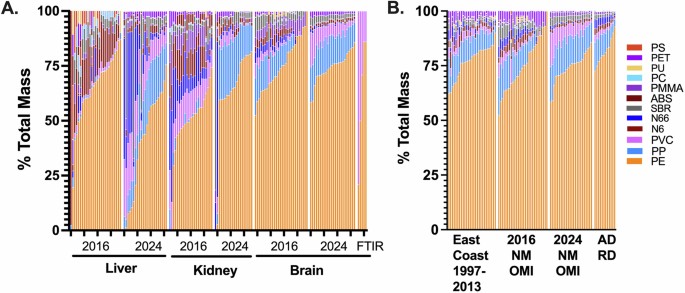
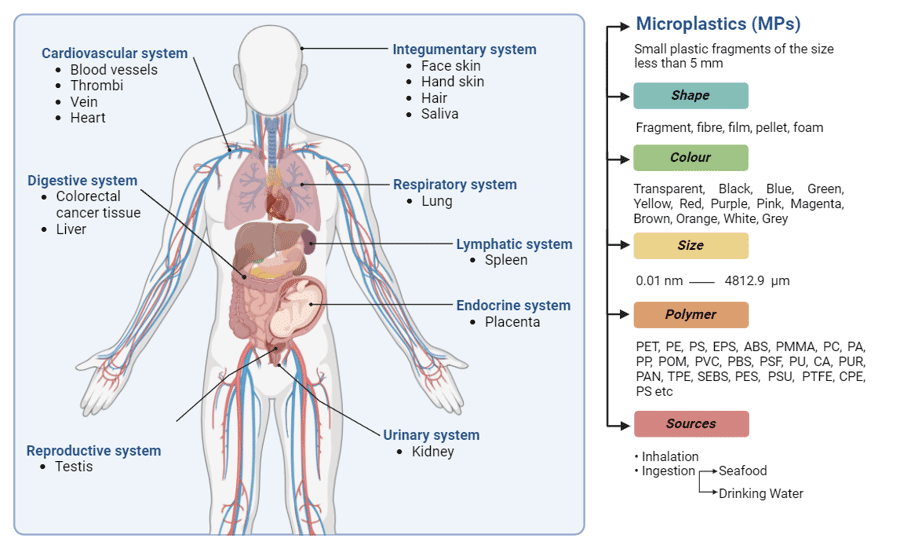
The claim asks not merely whether microplastics enter human tissues, but whether their presence causes harm of sufficient likelihood or severity to constitute a significant health risk. That distinction matters because evidence of exposure, evidence of biological hazard, and evidence of population risk answer different questions and require different inferential steps. The case for concern rests on body-wide detection, plausible injury mechanisms, and an important cardiovascular association; the principal objection is that detection and observational association do not establish causation, dose-response, or the magnitude of risk at ordinary exposure levels. The strongest evidence supporting significant health risk is a prospective observational study linking micro- and nanoplastics in carotid plaques to subsequent cardiovascular events. Among 257 patients followed after carotid endarterectomy, polyethylene was detected in 58.4% of plaques and polyvinyl chloride in 12.1%, and patients with detected particles had a higher adjusted risk of myocardial infarction, stroke, or death over approximately 34 months. Because this study measured particles in diseased human tissue and then tracked clinically important outcomes, it is more probative of human health risk than studies that report tissue detection alone. A second line of support is that plastic particles or polymers have been detected beyond the digestive tract, including in blood, placenta, lung, liver, kidney, and brain, indicating internal exposure across multiple compartments (see Figure 2). One small study detected quantifiable plastic polymers in blood from 17 of 22 healthy volunteers, supporting the proposition that at least some plastic material enters human circulation. Other investigations identified microplastics on maternal and fetal sides of placentas and in 11 of 13 surgically obtained lung samples, including lower-lung regions, making barrier crossing, inhalational deposition, and persistence plausible. Autopsy analyses likewise reported micro- and nanoplastics in liver, kidney, and brain, with substantially higher measured concentrations in brain tissue (see Figure 1). Experimental evidence supplies a biologically plausible pathway from particle exposure to inflammation and tissue injury. Cultured human lung epithelial cells exhibited senescence-related responses after microplastic exposure, while exposed mice developed fibrosis-related pulmonary effects. Taken with the cardiovascular cohort, these experimental findings make an inflammatory or tissue-injury mechanism more plausible, although they do not establish the operative dose in humans. Human reproductive findings add another clinically relevant signal, though one less direct than the cardiovascular evidence. Microplastics have been detected in semen and male reproductive tissues, and observational analyses have associated detected particles with poorer sperm parameters or infertility-related measures. Finally, available measurements may understate exposure to the smallest and potentially most bioavailable particles. Stimulated Raman scattering microscopy found roughly 240,000 detectable plastic particles per liter in tested bottled water, about 90% nanoscale, showing that methods restricted to larger microplastics can substantially undercount ingestible particles. That study did not, however, measure tissue accumulation or disease, so it enlarges the exposure concern without quantifying health risk. The central challenge is that the presence of microplastics in tissue generally demonstrates exposure or accumulation, not that the particles caused clinically significant disease. Placental and lung studies established tissue presence but did not measure subsequent clinical harm. Reports of higher burdens in cirrhotic liver and dementia brain are cross-sectional and can be explained by disease-related permeability, retention, impaired clearance, comorbidity, or analytical artifacts as well as by particle-induced disease. Institutional assessments reinforce the distinction between a plausible hazard and a quantified human risk. EFSA, SAPEA, and WHO identified major uncertainties in occurrence, uptake, particle fate, toxicokinetics, dose-response, and health effects and found the available evidence insufficient for reliable or robust human risk assessment at prevailing exposures. Those assessments do not show that microplastics are harmless, but they weigh against stating that tissue presence has already been shown to create significant risk for the general population. Measurement uncertainty further limits the comparability and causal interpretation of tissue studies. A methodological review identified problems involving contamination, polymer identification, particle-size thresholds, reporting units, recovery rates, and interlaboratory comparability, any of which can generate false positives or make reported burdens difficult to compare. Consequently, variation among reported organ burdens may reflect analytical choices as well as genuine differences in exposure or biological accumulation. Experimental toxicology establishes possible mechanisms more readily than it establishes the risk posed by ordinary human exposure. The lung-cell and mouse experiment supports a respiratory-injury mechanism, but its particle types, concentrations, and routes may not reproduce real-world human tissue doses. Without dependable target-tissue dosimetry and dose-response relationships, an effect under experimental conditions cannot by itself establish significant risk at prevailing population exposures. The evidence therefore supports a conditional conclusion: microplastics in human tissues constitute a credible hazard concern, but significant causal population risk is not yet established. Internal exposure is demonstrated, and the carotid-plaque cohort supplies a notable human association with serious outcomes, making dismissal of the issue as merely hypothetical difficult to justify. Yet the cardiovascular study remains nonrandomized, while broader risk assessment is constrained by measurement and dose-response deficiencies; causality, attributable risk, and the proportion of people likely to suffer clinically significant harm consequently remain undetermined. Associations between particle burdens and disease are especially sensitive to the direction of causation. Higher measures in dementia brain, feces from people with inflammatory bowel disease, and semen associated with poorer sperm function may indicate particle-induced harm, but disease-related changes in physiology, diet, permeability, retention, or clearance can also produce these patterns. Longitudinal studies beginning before disease onset, together with interventions that reduce exposure or tissue burden, would better distinguish cause from consequence. Risk may also vary materially with particle size, polymer, surface chemistry, additives, exposure route, dose, and host susceptibility, so a single undifferentiated verdict about all microplastics is unlikely to be adequate. Nanoplastics deserve particular attention because conventional methods may miss them and institutional review has identified especially large knowledge gaps concerning their biological availability and risk. The decisive gaps concern causal human evidence, standardized measurement, target-tissue dose, dose-response, and the translation of heterogeneous particles into clinically meaningful risk estimates. The bundle contains no randomized or exposure-reduction intervention evidence showing that lowering microplastic burden improves human health outcomes. It also does not supply replicated prospective cohorts across organ systems, dependable thresholds for harm, or estimates of absolute and attributable risk in representative populations. Analytical gaps limit even the exposure side of the inference. Needed evidence includes harmonized collection and contamination controls, validated recovery and identification methods across particle sizes, common reporting units, and interlaboratory replication. Better characterization of real-world mixtures, chronic exposure, clearance, susceptible subgroups, and nanoscale particles is necessary before experimental hazards can be converted into reliable population-risk estimates. A further structural uncertainty is that conflict-of-interest classifications remain unresolved, which limits confidence in judgments about whether sponsorship or investigator interests systematically influence the evidence base. On the current evidence, the claim is best judged as plausible and concerning but not established in its full form: tissue microplastics support a credible health hazard, while significant causal risk at typical population exposures remains unquantified. Confidence in this balanced assessment is high because it distinguishes consistently between detection, hazard, association, and demonstrated risk rather than treating those categories as interchangeable. The dominant scientific uncertainty is the absence of causal, dose-response human evidence under real-world exposure conditions; unresolved conflict-of-interest classification is an additional limitation in evaluating the evidence base.
Supporting Arguments
P1Human cardiovascular outcomes are associated with plaque particles
The carotid-plaque cohort provides unusually direct human evidence: patients whose plaques contained micro- or nanoplastics experienced substantially more myocardial infarction, stroke, or death after adjustment for measured risk factors. Particle-associated inflammatory markers and the location within diseased plaques make a vascular mechanism plausible, although residual confounding and reverse causation remain possible.
58/100 · Direct Evidence
P2Particles reach tissues beyond the digestive and respiratory tracts
Detection in blood, placenta, liver, reproductive organs, arterial plaques, and brain indicates that at least some inhaled or ingested particles can cross biological barriers and persist or circulate. Systemic distribution increases the range of organs that could be exposed to particle surfaces, additives, or associated chemicals.
77/100 · Logical Inference
P3Multiple evidence streams support inflammatory and tissue-injury mechanisms
The systematic review found converging animal and limited human evidence for digestive, reproductive, and respiratory harm. Cell and mouse experiments additionally demonstrate lung-cell senescence and fibrosis-related effects, providing biological plausibility even though experimental doses may not match typical human exposure.
85/100 · Direct Evidence
P4Reproductive findings raise concern for fertility
Microplastics have been detected in semen and male reproductive tissues, with observational studies reporting associations with poorer sperm measures and infertility-related outcomes. Because reproductive endpoints can respond to oxidative and inflammatory stress, these results support concern, but they remain observational and vulnerable to confounding.
79/100 · Direct Evidence
P5Nanoplastic exposure may be underestimated
Advanced imaging found far more plastic particles in bottled water when nanoscale particles were included than conventional microplastic methods generally report. Because smaller particles may cross barriers more readily, undermeasurement of nanoplastics could mean that existing exposure and tissue-burden estimates omit the potentially most bioavailable fraction.
37/100 · Logical Inference
Opposing Arguments
C1Tissue presence does not itself demonstrate disease causation
Most tissue studies establish exposure or accumulation but do not measure subsequent clinical outcomes. Particles may be inert at detected doses, or elevated burdens may result from disease-related changes in clearance and permeability rather than causing the disease.
82/100 · Logical Inference
C2Major assessments find human risk cannot yet be quantified reliably
WHO, EFSA, and SAPEA all identified large gaps in exposure measurement, toxicokinetics, dose-response evidence, and human clinical data. Their assessments do not establish that microplastics are harmless, but they oppose a confident claim that tissue presence has already been shown to pose significant health risk at typical population exposures.
70/100 · Expert Opinion
C3Detection studies face contamination and comparability problems
Microplastics are ubiquitous in laboratory air, clothing, equipment, and packaging, making rigorous blanks and contamination controls essential. Differences in digestion procedures, size cutoffs, spectroscopy, recovery, and reporting units also limit replication and make tissue concentrations difficult to compare across studies.
82/100 · Expert Opinion
C4Animal and cell doses may not represent ordinary human exposure
Experimental studies can demonstrate possible mechanisms but often use uniform virgin particles, short exposure periods, or concentrations and delivery routes unlike environmental exposure. Without reliable measurements of dose at target human tissues, translating such findings into significant real-world risk is uncertain.
78/100 · Logical Inference
All contributions are reviewed for clarity, balance, and evidence. The strongest insights are elevated into the argument graph — with credit to you.
Help improve this analysis on ProConWiki →