The mental health crisis is primarily a social problem, not a medical one
What's this about?
People disagree about whether the mental health crisis mostly comes from society or from health problems in the body.
The facts support both views, but social life strongly affects whole groups.
What supporters say
- Poverty, bias, unsafe homes, war, bad jobs, and being shut out can harm mental health.
- Money help can lower stress and improve mood for some people.
- The COVID-19 crisis showed how being cut off, losing loved ones, and job loss can raise distress.
- Care in local groups, fair rights, and safer living can help people stay well.
What critics say
- Talk care, drugs, and other health care help many people with mental health problems.
- Some people inherit a higher risk of these problems from their birth family.
- Brain changes can play a part, even when hard life events help cause the pain.
How to read this
The number of points on each side does not show who is right; check how strong the proof is.
The bottom line
Social forces play a big role, so fixing homes, jobs, safety, and rights matters.
Still, body causes and health care matter too, so this crisis is not only a social problem.
The claim that the mental-health crisis is mainly a social problem, rather than a medical one, is partly supported by the evidence—but only with important qualifications. Social conditions strongly shape mental-health risks across whole populations, while biology and clinical treatment remain essential for many individuals.
The case for
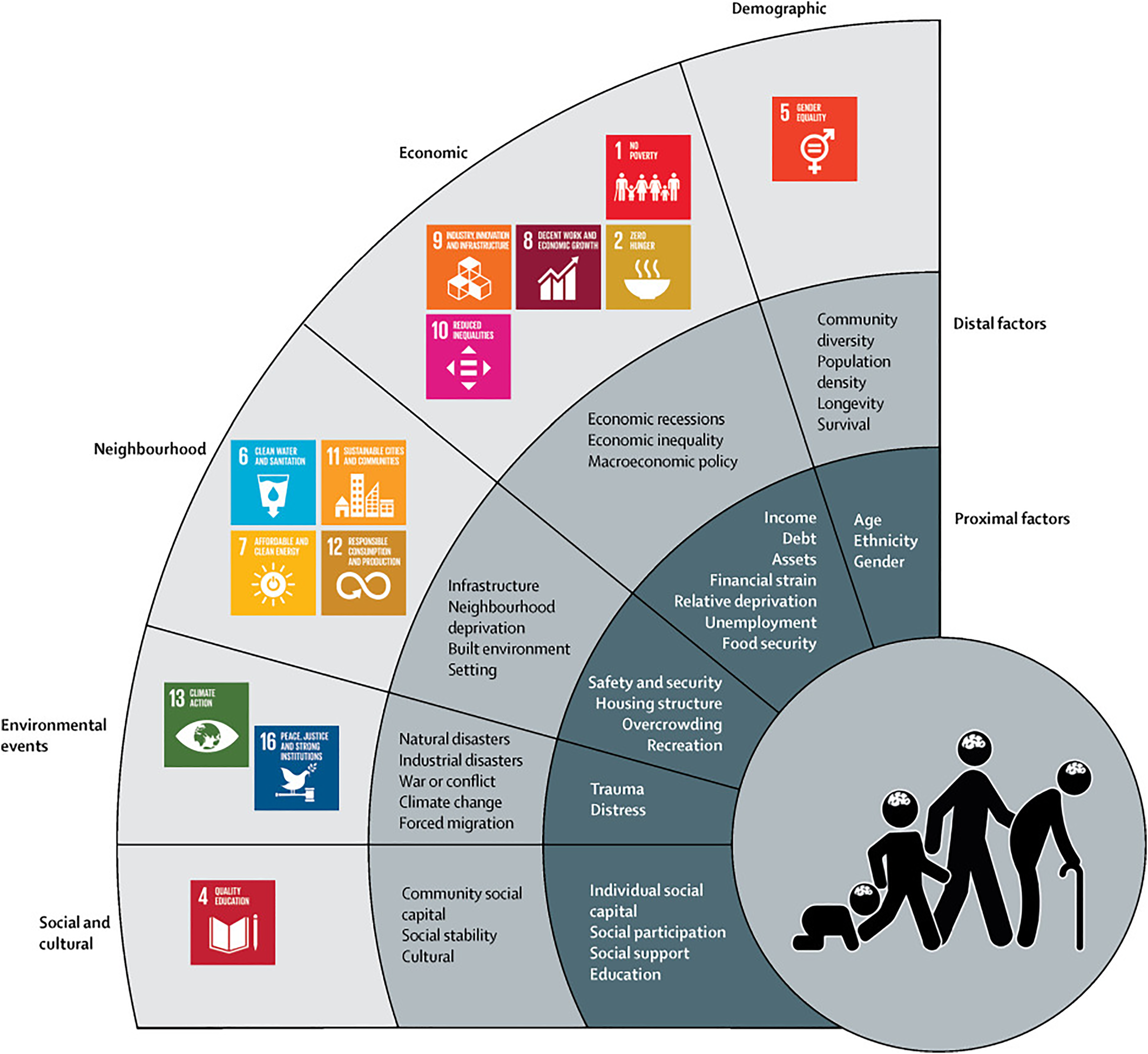
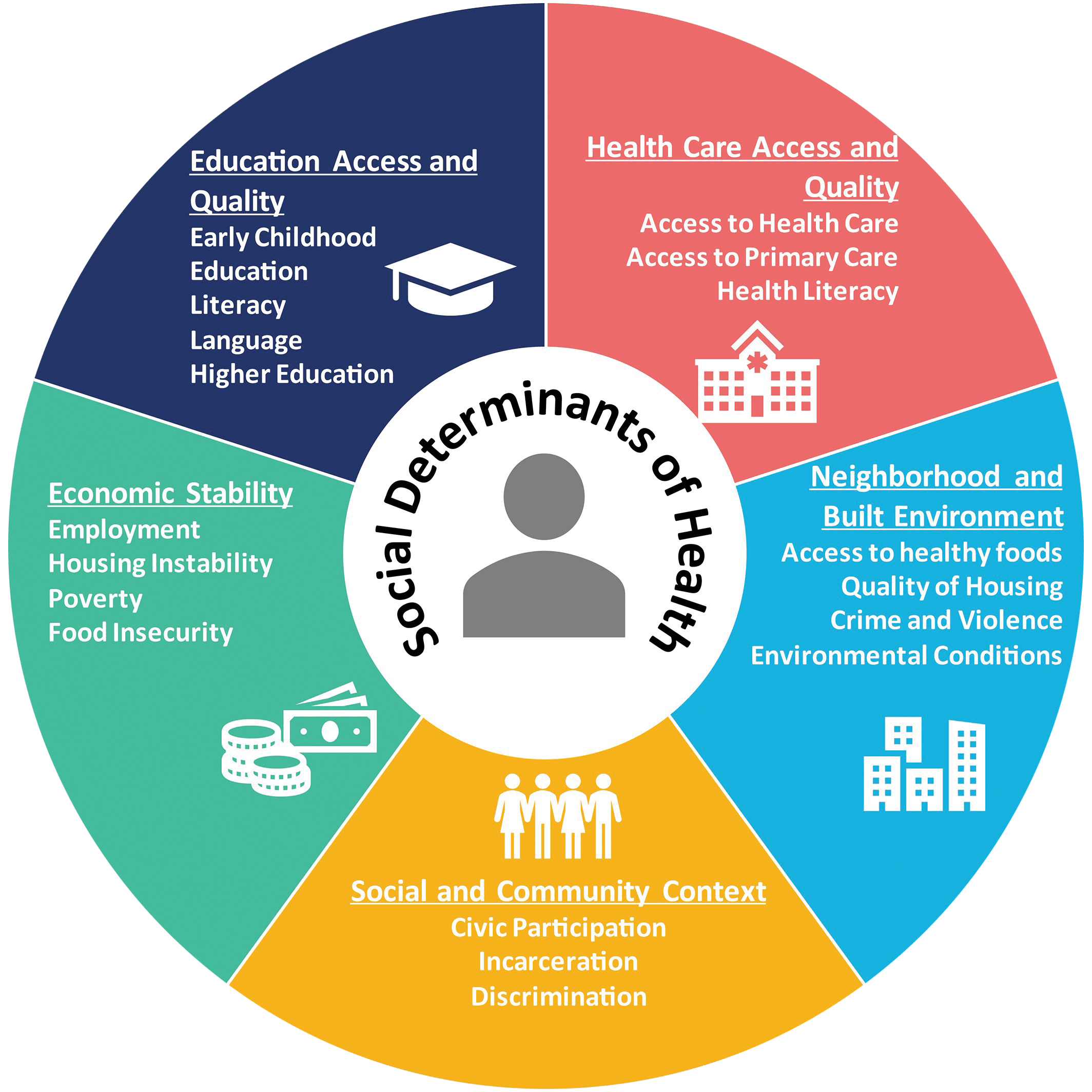
Living conditions are major drivers of mental-health problems. Reviews link poverty, discrimination, insecure housing, violence, unsafe or unstable work, and social exclusion to depression, anxiety and other difficulties. These pressures can increase exposure to harm, make illness last longer, limit access to care and hinder recovery. Because governments can influence housing, employment, income, education, justice and social protection, prevention cannot depend only on expanding psychiatric services. 1
Evidence from economic-support programs strengthens this argument. A review of cash-transfer studies generally found improvements in depression, anxiety and psychological distress. An evaluation in South Africa also reported better mental-health outcomes, while a randomized guaranteed-income trial found improvements in mental health and well-being. The effects were often modest and varied by setting, but they show that reducing material insecurity can help. 2
The pandemic offered a large-scale example of social disruption affecting mental health. Global estimates for 2020 found substantial increases in depression and anxiety, with young people and women especially affected. Isolation, restrictions, bereavement and economic disruption were all plausible contributors, although the analysis could not determine how much each factor mattered. 3
The claim also draws support from weaknesses in the current biomedical model. Brain-imaging studies find differences in brain-network organization among people with psychiatric disorders, but the results vary widely and are not specific enough to provide reliable diagnoses in the way many other medical tests do. Psychiatric biomarkers have not yet achieved the consistency expected in much of medicine. This challenges the idea that mental-health problems should be understood primarily through biology, though it does not deny that biology is involved. 4
For that reason, major institutions increasingly call for a broader approach involving prevention, community support, social protection and rights-based services alongside clinical care. Critics of global mental-health programs have also warned that exporting standard biomedical categories can overlook local culture, inequality and structural power. 5
The case against
A social explanation does not remove inherited vulnerability. Genetic studies show that psychiatric disorders involve many genes, with some risks shared across conditions and others more specific to particular disorders. The findings point to complex interactions between genes and environments, not biological destiny—but they still show that social conditions alone cannot explain every person’s vulnerability or symptoms. 6
Brain processes also matter, even when social experiences help trigger illness. Psychiatric symptoms are associated with altered functional brain networks. Current scans are too inconsistent to serve as simple diagnostic tests, but the underlying biological involvement remains real.
Clinical treatment provides another strong challenge to a purely social response. Research shows that psychotherapy and antidepressant medication can help many people with major depression. Additional medicines benefit some patients whose depression has not responded to initial treatment, and antipsychotic drugs reduce the risk of relapse for many people with schizophrenia. Benefits, side effects and treatment responses vary, but medical and psychological care are clearly valuable for at least some forms of mental illness. 8
The phrase “mental-health crisis” also groups together conditions that may have very different causes. Pandemic-related distress, anxiety and depression may not follow the same pathways as persistent psychotic or bipolar disorders, where inherited and biological vulnerability and the value of clinical care are more directly evident. Social programs can help, but their effects depend on the setting, design, level of need and length of follow-up. They cannot automatically replace treatment.
The bottom line
The evidence favours a qualified version of the claim. Social conditions are a major, changeable and policy-relevant cause of population-level mental-health problems, and the case for giving them central weight is strong. But the evidence does not show that mental illness is primarily social in every diagnosis or that medical care should be displaced.
The strongest conclusion is not “social rather than medical.” It is that social action and accessible, individualized clinical care are both necessary. The research does not provide a single measure for deciding which is “primary” across all the different problems included in the crisis. Confidence is high that social determinants deserve a central role; confidence is lower that one explanation can rank above the other for every condition, person or time period.
Pros — Supporting Arguments
Figures & data
All contributions are reviewed for clarity, balance, and evidence. The strongest insights are elevated into the argument graph — with credit to you.
Help improve this analysis →