The United States remains fundamentally divided over whether capital punishment should be retained
Bottom line (updated 2026-10-13): The United States still has real disagreement about the death penalty. But support has fallen, and its use has shrunk, so the country is not split evenly.
What's this about?
People disagree about whether the United States should keep the death penalty.
The country still has deep conflict, but the sides do not have equal strength.
What supporters say
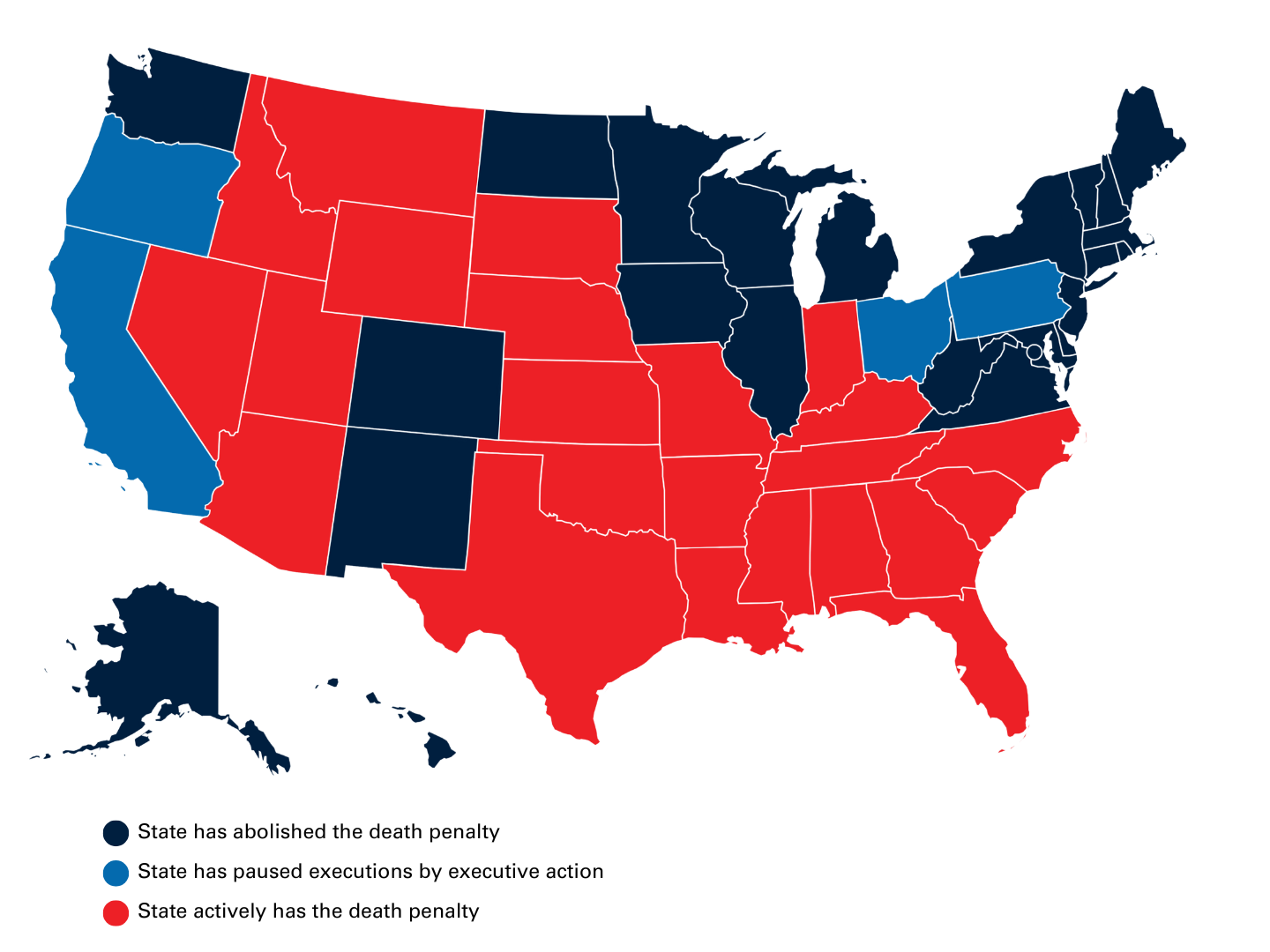
- State laws show a divided country, since some states allow executions while others ban or stop them.
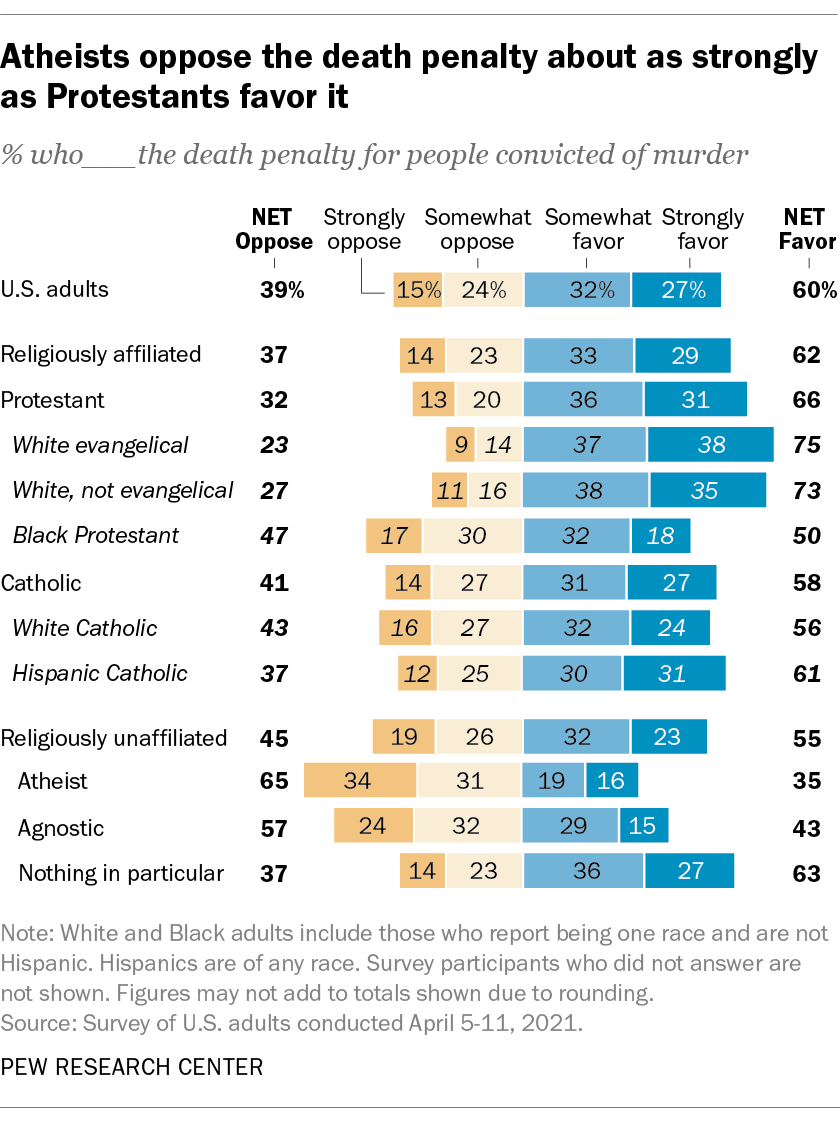
- Many people still support the death penalty, and views differ by party, race, and faith.
- We are not sure whether the death penalty lowers murder rates or can avoid deadly mistakes.
What critics say
- The death penalty now affects fewer people, since many states have banned it or stopped executions.
- Public support has dropped far below its level during the 1990s.
How to read this
The number of points on each side does not show who is right; the strength of the proof matters more.
The bottom line
The United States still has real disagreement about the death penalty.
But support has fallen, and its use has shrunk, so the country is not split evenly.
The United States remains deeply contested over capital punishment, even though support for the death penalty has declined and its use has narrowed. The evidence points to lasting disagreement, but not to an evenly balanced split between two fixed national camps.
The case for
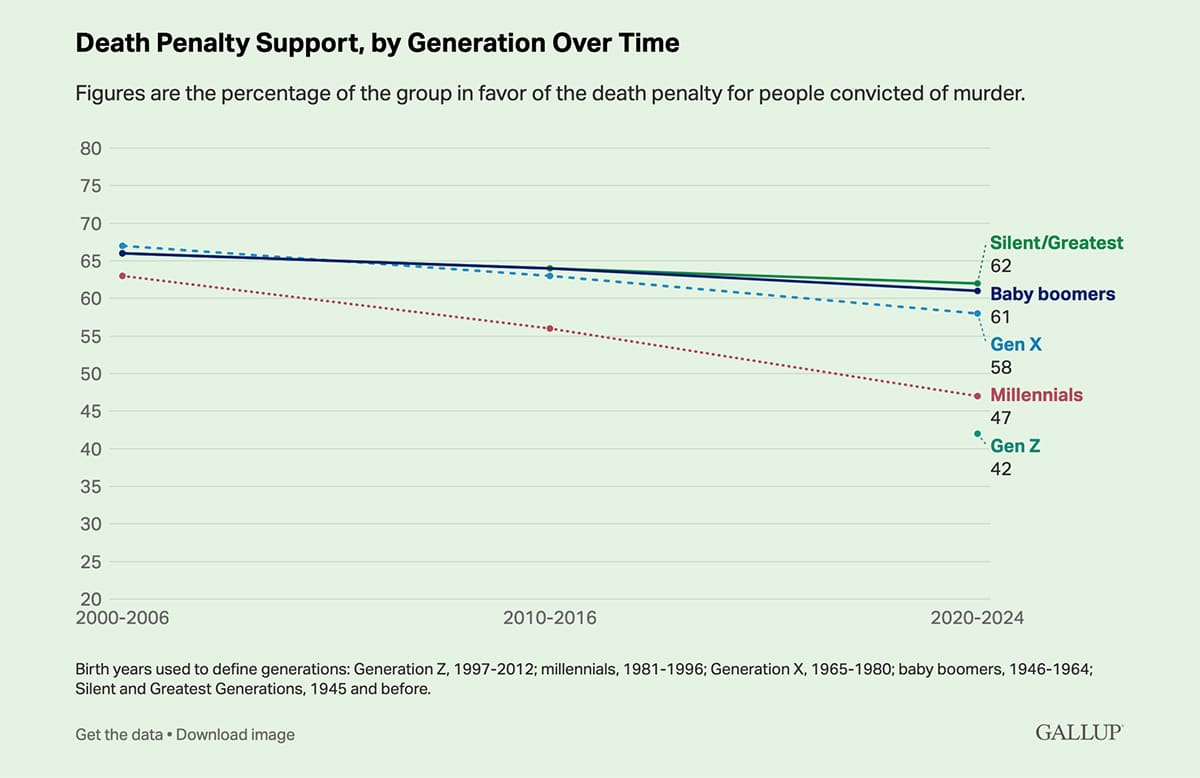
Public opinion remains divided along durable political and social lines. Views on the death penalty vary significantly by party, race and religion, showing that support and opposition are tied to established identities rather than scattered randomly across the population. Gallup’s long-term polling shows that overall support has fallen from its historic peak, but substantial numbers of Americans continue to hold views on both sides. The downward trend does not mean the issue is settled. 1 (see Figure 1; see Figure 2)
The clearest evidence of national disagreement comes from state policy. Some states have abolished capital punishment or stopped carrying out executions through formal moratoriums. Others continue to authorize the death penalty and conduct executions. This has produced a sharply divided legal map, with the country operating under markedly different rules depending on where a person lives. 2 (see Figure 3)
The disagreement also rests on unresolved questions about whether capital punishment works and whether it can be administered fairly. The National Research Council concluded that existing research was not strong enough to determine whether the death penalty reduces homicide rates. At the same time, studies of exonerations have documented wrongful convictions and the systemic problems that can cause them. Those findings leave serious grounds for both supporters who emphasize punishment and opponents who stress the risk of fatal error. 3
The case against
The strongest challenge is that the word “divided” may suggest a closer or more evenly balanced national split than the evidence supports. Support for the death penalty is well below its level in the 1990s, while opposition has grown. This still shows continuing disagreement, but it points to a country increasingly tilted away from retention rather than one evenly divided between retention and abolition. 4 (see Figure 1)
Capital punishment is also increasingly limited in practice. Executions and new death sentences have declined from earlier periods, and federal statistics show that they are concentrated in a minority of states. Retention therefore remains an institutional reality, but it is neither uniformly practiced nor nationally dominant. 5
Public opinion itself is more complicated than a simple yes-or-no divide. Recent research identifies several groups of Americans, including people whose support or opposition depends on the circumstances. Views are linked not only to political ideology but also to broader beliefs about punishment and the proper role of government.
Poll results can also change depending on the alternatives respondents are given. Support for execution tends to fall when people are asked to choose directly between the death penalty and life imprisonment without parole. That suggests headline polling figures do not always measure a fixed moral commitment to capital punishment.
The bottom line
The evidence moderately supports the claim that the United States remains fundamentally divided over capital punishment. The country clearly has persistent disagreement, reflected in durable demographic differences, sharply contrasting state laws and unresolved questions about deterrence and wrongful convictions.
But the division is multidimensional and increasingly tilted away from retention, not an even contest between two equally strong national movements. Polls measure stated preferences, state records measure government practice, and research on deterrence and exonerations measures consequences. These sources illuminate different parts of the issue, and no single measure captures conditional opinions, intensity of belief and the link between public sentiment and policy. The main uncertainty is therefore not whether disagreement exists, but how large and consequential the remaining support for capital punishment is.
Figures & data
All contributions are reviewed for clarity, balance, and evidence. The strongest insights are elevated into the argument graph — with credit to you.
Help improve this analysis →