Obesity is primarily a disease, not a lifestyle choice
Aldo's Synthesis high
Based on the strength of the Arguments below
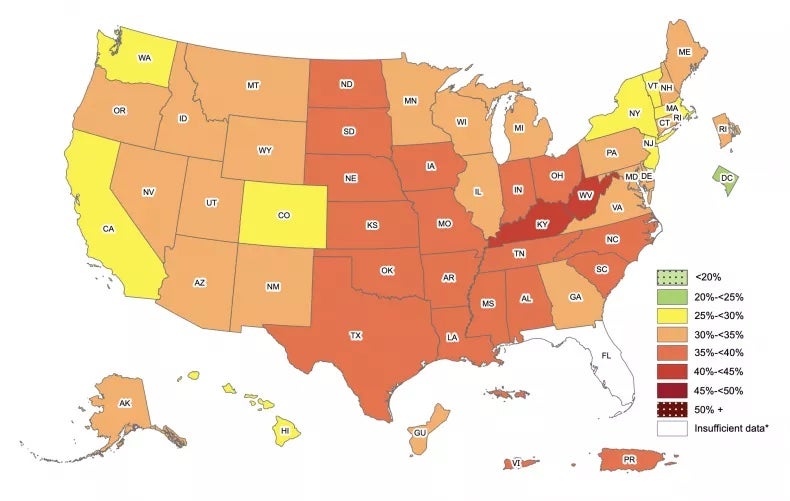
The claim asks whether obesity is best understood primarily as a chronic, multifactorial disease or as the result of voluntary lifestyle choice. The distinction matters because causal explanation, individual diagnosis, responsibility, treatment, and public policy do not necessarily follow from one another. A defensible assessment must therefore consider both whether biological and environmental mechanisms limit voluntary control and whether behavioral responsiveness or variation in present impairment defeats a general disease classification. The strongest support for the disease model is that body weight reflects inherited susceptibility and physiological regulation, including adaptations that can resist weight loss and promote recurrence. Reviews of family, twin, adoption, monogenic, and polygenic evidence identify a substantial inherited contribution to body-mass variation while emphasizing that genetic susceptibility interacts with environmental exposure rather than making obesity inevitable. Following diet-induced weight loss, participants exhibited persistent hormonal changes favoring hunger and regain one year later, although the selected sample and uncontrolled follow-up limit generalization. In a semaglutide trial extension, participants regained about two-thirds of their previous weight loss within a year of stopping medication and structured lifestyle support, and several cardiometabolic improvements moved toward baseline; the absence of a continued-treatment comparator and industry funding qualify the inference. Environmental exposure can also alter intake and weight causally, which weakens an account centered on unconstrained personal choice. In a controlled crossover trial of 20 adults, an ultra-processed diet produced roughly 500 additional kilocalories of daily intake and about 0.9 kilograms of gain over two weeks, whereas participants lost about 0.9 kilograms on the unprocessed diet; its small sample and short duration constrain extrapolation. CDC accordingly describes obesity as a chronic disease arising from behavioral, genetic, medication-related, environmental, and social determinants rather than willpower alone; population prevalence patterns provide relevant context for this multifactorial account (see Figure 1). The disease model also rests on clinically important consequences rather than etiology alone. CDC associates obesity with elevated risks of type 2 diabetes, cardiovascular disease, and several cancers and characterizes it as common, serious, and costly. A 97-study meta-analysis found higher all-cause mortality for grade 2–3 obesity, although it did not find significantly higher mortality for grade 1 obesity and was vulnerable to residual confounding, reverse causality, and BMI misclassification. Finally, evidence for genetic, environmental, and social causation undercuts the inference that obesity reliably records character or motivation, while evidence on weight stigma gives the classification debate practical clinical significance. A peer-reviewed review associates weight stigma across health care and other settings with psychological distress, health-care avoidance, disordered eating, and additional adverse outcomes, while cautioning that terminology changes alone are unlikely to remove stigma. The strongest challenge is that behavior-focused interventions can materially change weight and disease risk, so lifestyle is causally important even if obesity is not simply chosen. In the randomized Diabetes Prevention Program, an intensive intervention targeting at least 7% weight loss and 150 minutes of weekly activity reduced diabetes incidence by 58% relative to placebo among high-risk adults, compared with a 31% reduction from metformin. Look AHEAD likewise produced greater sustained weight loss and improvements in fitness, mobility, sleep apnea, quality of life, and some diabetes outcomes, although the between-group weight difference diminished over time. A second challenge is that a BMI threshold does not establish that every individual above it has the same adiposity, impairment, or active disease. BMI is an inexpensive population screening measure but does not directly measure adiposity, fat distribution, fitness, or organ dysfunction and can perform differently across demographic groups. Reviews identify a heterogeneous subgroup with obesity but no major current metabolic abnormalities; that status is often temporary and may retain elevated long-term risk, yet it demonstrates that body size and present clinical illness are not synonymous. The 2025 Lancet Commission consequently distinguishes preclinical obesity—excess adiposity without ongoing organ dysfunction—from clinical obesity involving objective impairment or reduced capacity for daily activities, rather than diagnosing disease from BMI alone (see Figure 2). Weight change and improvement in intermediate outcomes also do not guarantee every anticipated clinical benefit. Despite sustained weight loss and several risk-factor improvements, Look AHEAD did not significantly reduce its primary composite cardiovascular outcome over a median 9.6 years. Mortality associations also differ across standard BMI categories, cautioning against using body size or weight loss as a complete proxy for disease severity or long-term benefit. Finally, formal disease classification includes policy and definitional judgments, not merely an empirical finding about causation. The AMA council acknowledged the absence of a universally accepted definition, imperfect BMI cutoffs, and cases without evident impairment before disease recognition was adopted partly to improve clinical attention, treatment, and research. Those institutional benefits may justify a classification without independently proving that every presentation above a conventional threshold is an active disease. The evidence supports treating disease and lifestyle as overlapping rather than mutually exclusive explanations: behavior can affect outcomes while operating within biological and environmental constraints. Diet and activity remain relevant to energy balance, but CDC identifies multiple nonbehavioral determinants and weight-loss research documents compensatory hormonal changes that make maintenance more difficult. Randomized trials show that intensive, structured lifestyle support can improve weight and health, while diminishing differences over time and regain after treatment withdrawal caution against equating efficacy under support with effortless long-term control. At the individual level, the disease label is strongest when assessment confirms excess adiposity and identifies organ dysfunction, symptoms, functional limitation, or clinically meaningful future risk rather than relying on BMI alone. This preserves the population-level conclusion that excess adiposity can cause chronic disease while recognizing heterogeneous present health and the diagnostic limits of a screening metric. The causal food-environment evidence is consistent with broader population changes, but the cited randomized trial was too small and brief to establish the magnitude or universality of long-term population effects (see Figure 3). The bundle contains no major structural absence, but several inferential limits narrow what the conclusion can establish. It does not provide a single criterion that resolves whether disease status should attach to excess adiposity itself, elevated future risk, or only present organ dysfunction and functional impairment. Nor does it quantify how much variation in obesity is attributable to voluntary behavior versus biological, environmental, and social constraints across individuals and settings. Some treatment evidence also carries unresolved conflict-of-interest concerns, limiting confidence in the precise interpretation of recurrence after medication withdrawal. On balance, the evidence supports with high confidence the claim that obesity is primarily a chronic, multifactorial disease rather than simply a voluntary lifestyle choice, while not supporting the stronger proposition that behavior is irrelevant or every BMI-defined case is active clinical disease. The dominant uncertainty is definitional and diagnostic: where to draw the boundary between risk state and present disease, especially when adiposity, impairment, and treatment response do not align. The most defensible formulation is therefore a disease model that incorporates behavioral influence but requires individual clinical assessment beyond BMI before inferring present impairment or severity.
Supporting Arguments
P1Biological regulation makes obesity more than a voluntary choice
Genetic research identifies substantial inherited susceptibility, while weight-loss studies show persistent hormonal changes that increase hunger and favor regain. Regain after withdrawal of effective pharmacotherapy further resembles a chronic, relapsing condition rather than a one-time failure of willpower.
63/100 · Direct Evidence
P2Environment can causally drive intake and weight gain
The inpatient ultra-processed-food trial showed that changing food type while controlling many meal characteristics caused greater calorie intake and short-term weight gain. Together with WHO's multifactorial framework, this supports treating obesity as an interaction between biology and an obesity-promoting environment, not merely an unconstrained personal decision.
64/100 · Direct Evidence
P3Obesity is linked to clinically important morbidity
Public-health authorities classify obesity as a chronic disease because excess adiposity is associated with diabetes, cardiovascular disease, cancer, and functional impairment. Mortality evidence is strongest at higher obesity grades, supporting clinical concern while also showing that risk is not uniform across all BMI categories.
76/100 · Data Analysis
P4A disease model counters inaccurate blame
Evidence that obesity reflects genetics, physiological adaptation, food environments, and social determinants undermines the idea that it simply records moral character or motivation. Weight stigma is itself associated with harmful health and health-care consequences, so reducing blame can have clinical value.
67/100 · Logical Inference
Opposing Arguments
C1Lifestyle intervention can change weight and disease risk
The Diabetes Prevention Program showed that an intensive diet-and-activity intervention reduced diabetes incidence by 58% in high-risk adults, demonstrating that behavior is causally important and modifiable. Look AHEAD likewise achieved sustained weight and functional benefits, so describing lifestyle as irrelevant would be inconsistent with randomized evidence.
59/100 · Direct Evidence
C2BMI-defined obesity does not always equal active disease
BMI cannot directly establish excess fat, its distribution, or organ dysfunction, and some people meeting obesity cutoffs do not have current metabolic impairment. The Lancet Commission therefore distinguishes excess adiposity and preclinical obesity from clinical obesity rather than assigning the same disease status to everyone above a cutoff.
78/100 · Expert Opinion
C3Health benefits do not always track weight or event reduction
Look AHEAD improved weight, fitness, and several risk factors but did not significantly reduce its primary cardiovascular-event outcome. Mortality associations also vary markedly by BMI category, so neither body size nor weight loss is a complete proxy for clinical disease or long-term benefit.
75/100 · Data Analysis
C4Disease classification is partly a policy judgment
The AMA's own review acknowledged definitional difficulties, heterogeneous impairment, and limitations of BMI before the organization adopted disease status. Classification can improve access and research, but those policy benefits do not by themselves prove that every obesity presentation is a disease.
60/100 · Expert Opinion
All contributions are reviewed for clarity, balance, and evidence. The strongest insights are elevated into the argument graph — with credit to you.
Help improve this analysis on ProConWiki →