The Federal Reserve should raise interest rates when inflation remains persistently above target
Bottom line (updated 2026-10-25): The evidence supports careful rate rises when high prices last and strong demand drives them. The Fed should not raise rates automatically, since rate rises can cause real harm and may not fix supply troubles.
What's this about?
People disagree about whether the Fed (America’s main bank) should raise rates when prices rise too fast.
What supporters say
- Long-lasting price rises can grow harder to stop if people expect prices to keep rising.
- Recent price rises came partly from strong demand, when people bought more than firms could make.
- Higher rates can slow loans and spending, which can ease price pressure.
- Firm action may keep future price rises low and help the economy grow later.
What critics say
- Rate changes work slowly, so the Fed might raise rates too much before seeing the full effect.
- Higher rates can cause job losses and less growth.
- Very high rates can reveal weak spots in banks, businesses, and markets.
- If supply troubles cause price rises, higher rates may hurt people without fixing the main problem.
How to read this
The number of points on each side does not show who is right; the strength of each point matters more.
The bottom line
The evidence supports careful rate rises when high prices last and strong demand drives them.
The Fed should not raise rates automatically, since rate rises can cause real harm and may not fix supply troubles.
The Federal Reserve should raise interest rates when inflation stays above its target—but not automatically. The evidence favors a carefully calibrated response when inflation is persistent, driven by strong demand and beginning to shape expectations.
The case for
The strongest argument is that persistent inflation can become harder to stop. If households and businesses begin to expect prices to keep rising, those expectations can feed into wages, prices and contracts. An IMF study concluded that when policymakers are unsure whether inflation will last, a “better safe than sorry” approach may be justified: accepting a modest short-term cost can reduce the risk of a prolonged departure from the target. Research also links well-anchored inflation expectations with less persistent inflation. 1
Higher rates work mainly by cooling demand. They can discourage borrowing and spending, easing pressure on prices, although the historical evidence also shows that this process reduces output and employment. That cost is part of how monetary restraint brings inflation down, rather than a separate effect that can be ignored. 2
The case is stronger when inflation comes from an overheated economy rather than temporary supply problems. An NBER study of the post-pandemic period found that unexpectedly strong demand played a predominant role in inflation in both the United States and the euro area. The finding remains somewhat uncertain because the study is a working paper and depends on its model, but it supports tightening when demand is clearly running too hot. 4
Timely, credible action may also protect longer-term growth. Central-bank announcements can help keep long-term inflation expectations under control, while the Volcker-era experience suggests that forceful disinflation can eventually be followed by sustained recovery. That success, however, came with severe short-term costs.
The case against
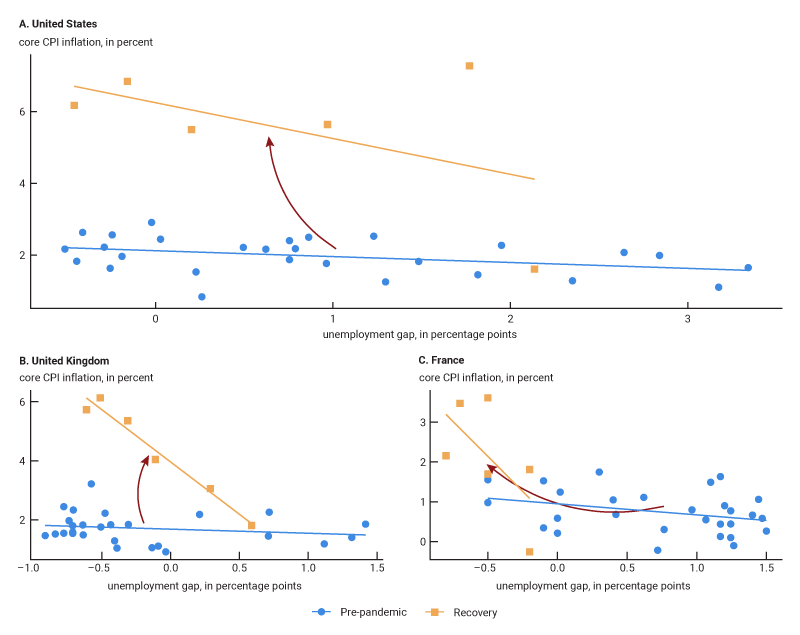
Rate increases impose real costs under the Federal Reserve’s dual mandate to pursue both stable prices and maximum employment. Historical research connects disinflation with weaker output and employment, while Richmond Fed analysis shows that price stability and maximum employment can conflict in the short run (see Figure 3). These costs matter especially when inflation is not mainly caused by excessive demand. 5
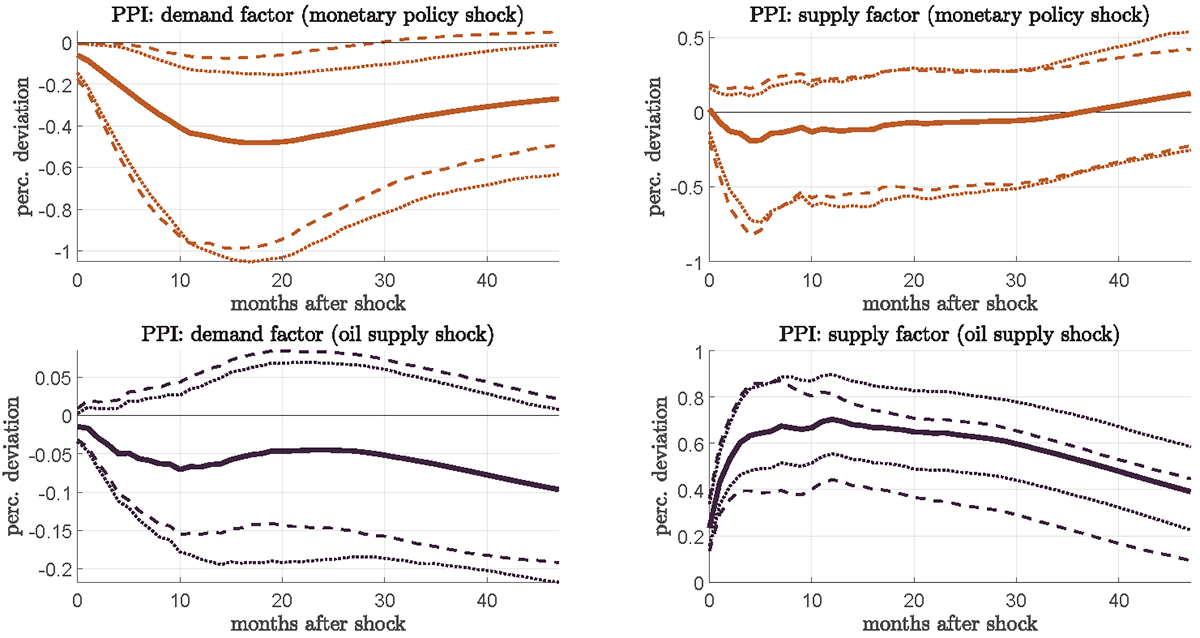
Supply-driven inflation is a particular problem. Interest rates cannot directly repair disrupted factories, transport networks or other production constraints. Federal Reserve research found that both supply and demand contributed to manufactured-goods inflation during 2021–2023 (see Figure 2). In such cases, reducing demand may weaken jobs while leaving the original supply problem unresolved. 6
There is also a timing risk. Monetary policy affects different prices with different delays, so a rate increase based on today’s inflation may continue slowing the economy after earlier measures have already begun working. The result could be unnecessary overtightening and recession. 7
Tighter policy can expose weaknesses in the financial system as well. The Federal Reserve’s 2023 Financial Stability Report identified persistent inflation, monetary tightening and banking stress as interacting risks. Historical evidence from 17 developed countries also links rate increases after earlier cuts with a higher risk of financial crises. That means the cost of tightening may become much larger when financial conditions are already fragile. 8
The bottom line
The evidence moderately favors raising rates when above-target inflation is clearly persistent, demand-driven and beginning to destabilize expectations. The basic mechanism—higher rates can reduce demand and inflation—is supported, and credible action may limit longer-term damage.
But the evidence does not support an automatic rule to raise rates whenever inflation remains above target. Policymakers should also consider whether inflation is temporary or supply-driven, how much previous rate increases have yet to affect the economy, and whether financial vulnerabilities are building.
Central-bank credibility can reduce the output cost of disinflation, but it cannot guarantee a soft landing. The main uncertainty is episode-specific: policymakers must judge the sources and staying power of inflation, as well as the likely size and timing of employment, growth and financial costs. The strongest conclusion is therefore responsive tightening, not mechanical tightening.
Figures & data

All contributions are reviewed for clarity, balance, and evidence. The strongest insights are elevated into the argument graph — with credit to you.
Help improve this analysis →