Should Albany voters approve Measure T? (November 3, 2026 ballot)
What's this about?
People disagree about whether Albany voters should approve Measure T on the November 3, 2026 ballot.
The measure would add a tax for street trees and streetlights.
What supporters say
- Better streetlights may help stop some crime and make public spaces safer.
- Street trees can give shade, cool hot places, and bring other public benefits.
- A set pool of money could help keep tree and light work from losing funds.
What critics say
- The measure does not promise a set number of trees, light fixes, or service levels.
- The tax could cost property owners money and may raise some renters’ costs.
- Trees need care over time, which could create new costs and hard choices.
How to read this
The number of points on each side does not show who is right; the strength of the proof matters more.
Measure T would create a dedicated parcel tax to fund Albany’s street trees and streetlighting. Voters must weigh likely public benefits against the tax burden, continuing maintenance costs and the risk that the measure may not deliver clearly measured results.
The case for
Albany has a documented infrastructure need. A citywide review examined about 900 streetlights and led to a capital-improvement project, suggesting that Measure T responds to a real public-works problem rather than an entirely speculative one (see Figure 2).
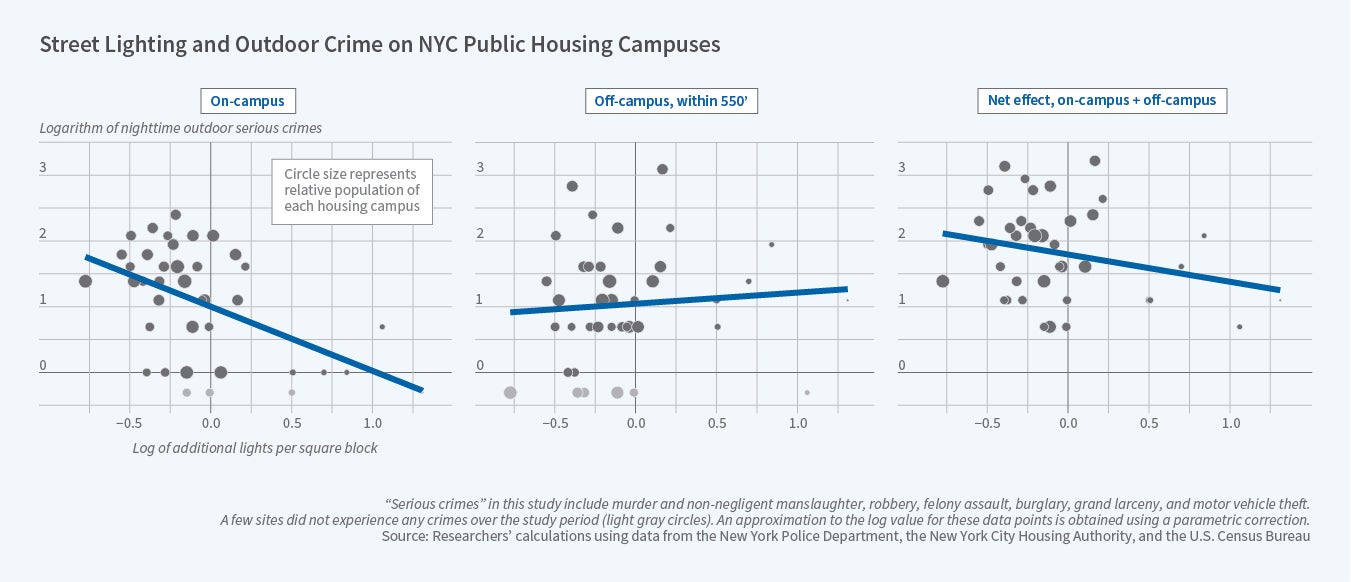
Better-designed streetlighting can improve public safety. A major review of lighting studies found evidence that streetlighting can help prevent crime, while a randomized experiment found that changing lighting reduced violent crime in the setting studied (see Figure 1; see Figure 3). Those findings do not establish the exact effect Albany would see, but they support the basic idea that targeted lighting improvements can help. 1
Street trees also have credible environmental and public benefits. Research covering 115 studies found that urban trees can reduce heat through shade and the release of water from leaves. Other reviews link trees to broader benefits, although the results depend heavily on local conditions, management and how benefits are measured. 2
The measure could also give these services a more stable funding source. It is expected to raise about $775,000 a year for a dedicated street-tree and streetlighting account, with annual reports on revenue, spending and completed work. Supporters argue that this could protect tree and lighting programs when they compete with other general-budget priorities. California fiscal research identifies parcel taxes as one way for local governments to diversify revenue when other sources are limited. 3
The case against
Measure T promises funding and reporting, not specific results. It does not guarantee a certain number of trees, lighting upgrades, service levels or improvements in public safety. Research shows that tree cooling varies by species, location, climate and survival, while lighting effects depend on the design of the intervention and the surrounding setting. The available material does not provide a project-by-project cost estimate, baseline measures or an Albany-specific forecast of crime reduction, cooling, tree survival or service improvements. 4
The tax also raises fairness concerns. It would initially charge $0.0354 per taxable lot square foot and could rise with inflation by as much as 3 percent a year. The measure exempts area above 500,000 square feet and includes low-income homeowner exemptions and renter rebates, but the tax is still based on lot size rather than income or property value. That means its effect on owners and renters may vary in ways that are not fully clear. 5
Trees create continuing obligations, not just one-time costs. Albany’s existing urban-forestry program already uses public money for staff, contractors, equipment, supplies and care. If the city expands its tree stock without securing long-term maintenance, some trees may not survive, expected benefits may shrink, or future budgets may have to absorb additional costs. 6
Annual reporting would provide some transparency, but it is an incomplete safeguard. The cited materials do not require independent audits, measurable performance targets or a sunset date. Reports showing how money was spent would not necessarily show whether the spending was effective or whether poorly performing projects were changed.
- Citywide Streetlighting Evaluation albanyca.gov
- Albany Street Lighting Evaluation: Final Recommendations albanyca.gov
- The impact and policy relevance of street lighting for crime prevention: A systematic review based on a half-century of evaluation research onlinelibrary.wiley.com
- Reducing Crime Through Environmental Design: Evidence from a Randomized Experiment on Street Lighting link.springer.com
- City Attorney’s Impartial Analysis of Measure T acvote.alamedacountyca.gov
- Parcel Taxes as a Local Revenue Source in California ppic.org
- The impact and policy relevance of street lighting for crime prevention: A systematic review based on a half-century of evaluation research onlinelibrary.wiley.com
- Urban trees and cooling: A review of the recent literature (2018 to 2024) pubs.usgs.gov
- City Attorney’s Impartial Analysis of Measure T acvote.alamedacountyca.gov
- Urban Tree Mortality: A Literature Review research.fs.usda.gov
- City Attorney’s Impartial Analysis of Measure T acvote.alamedacountyca.gov
- Parcel Taxes as a Local Revenue Source in California ppic.org
- Reassessing the Property Tax by Christopher R. Berry papers.ssrn.com
- Urban Tree Mortality: A Literature Review research.fs.usda.gov
- Urban Forestry albanyca.gov
Figures & data