Should Albany voters approve Measure Q? (November 3, 2026 ballot)
What's this about?
People disagree about whether Albany voters should pass Measure Q on November 3, 2026.
The plan would change a tax that helps pay for fire and medical aid.
What supporters say
- The tax would keep money set aside for fire crews, ambulances, gear, and urgent care.
- The plan would give more tax help to some low-income home owners and renters.
- Albany has few ways to raise local funds, so this tax could offer steady aid.
What critics say
- A rule for large lots could make future tax rates hard to know.
- The plan could keep a tax in place for a very long time.
- Raising money does not prove that people will get faster or better aid.
- The tax could hit some home owners much harder than others.
How to read this
The number of points on each side does not show who is right; check how strong the proof is for each point.
Measure Q would change Albany’s existing parcel tax for emergency medical, advanced life-support and fire services. The Nov. 3 decision pits a dedicated source of emergency funding and targeted tax relief against concerns about fairness, accountability and an open-ended financial commitment.
The case for
The strongest argument for Measure Q is that it would preserve dedicated funding for essential emergency services. The city’s official analysis estimates about $2.5 million a year for paramedic and advanced life-support services, firefighting, equipment and ambulances. Research on emergency medical systems has linked system design and available resources to response times, treatment and patient outcomes. (see Figure 1) 1
That research, however, does not show that Measure Q itself would measurably improve response times, staffing, equipment or patient outcomes in Albany. It supports maintaining emergency capacity as a public goal, but not a precise estimate of what this measure would accomplish locally.
Measure Q would also expand relief for some lower-income residents. Very-low-income homeowners would continue to receive full exemptions, while qualifying low-income homeowners would receive a 50% exemption. Renters would continue to qualify for full rebates in the first category, with 50% rebates added for qualifying low-income renters. 2
The relief is targeted, but residents must apply every year. That means the program’s real effect will depend partly on whether eligible people can navigate the application process.
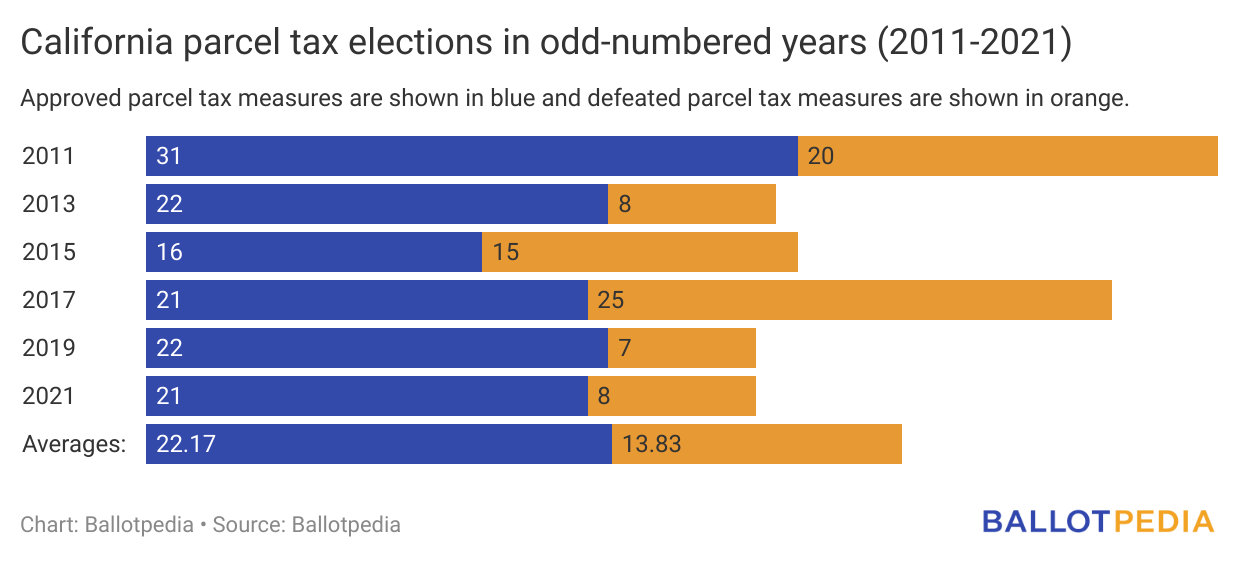
Supporters can also point to California’s limited local revenue options. Proposition 13 restricts locally controlled property-tax revenue, and parcel taxes are a common alternative. Albany already treats its emergency-services parcel tax as a special revenue source in the city’s financial plan. Continuing that structure could provide more predictable funding, though this does not prove the tax is the most efficient or least burdensome option. 3
The case against
The central objection is that Measure Q guarantees continuing revenue without demonstrating that Albany residents will receive better service in return. The official estimate shows how much money could be raised, but the available materials do not quantify changes in response times, staffing, equipment or patient outcomes. The emergency-services research is general, not an evaluation of Measure Q. 6
The parcel tax may also affect property owners unevenly because liability depends on parcel characteristics rather than directly on income or property value. The available evidence does not estimate the burden on Albany homeowners, renters, businesses or moderate-income households. 4
A separate concern involves large parcels. If a parcel of at least 500,000 square feet becomes exempt, the measure allows higher maximum rates: $0.254 per building square foot for developed property and $0.110 per lot square foot for undeveloped property. The official analysis does not identify the parcel involved, estimate how likely the trigger is, or calculate the resulting burden for individual taxpayers. 5
Measure Q would also create a continuing obligation. The tax would remain in place annually unless voters repeal it, rather than expiring automatically. The annual increase cap would fall from 5% to 3%, but that is a limit on growth, not a freeze. The City Council could charge less than the approved maximum and later restore the rate up to that ceiling. 7
Annual reports and the city’s published budgets would provide some transparency. But the measure does not, on the cited record, require an independent audit, set service-performance targets or guarantee that new money would expand services rather than replace other funding.
- City Attorney’s Impartial Analysis of Measure Q acvote.alamedacountyca.gov
- EMS.gov: What is EMS? ems.gov
- Comparing Response Times, Intensity of Care and Outcomes between EMS Systems annemergmed.com
- City Attorney’s Impartial Analysis of Measure Q acvote.alamedacountyca.gov
- Parcel Tax Exemptions & Renter Rebates albanyca.gov
- Parcel Taxes as a Local Revenue Source in California ppic.org
- Parcel Tax Elections in California ballotpedia.org
- Proposition 13: Some Unintended Consequences ppic.org
- City Attorney’s Impartial Analysis of Measure Q acvote.alamedacountyca.gov
- City Attorney’s Impartial Analysis of Measure Q acvote.alamedacountyca.gov
- Comparing Response Times, Intensity of Care and Outcomes between EMS Systems annemergmed.com
- National organizations release data-based, peer-reviewed research to redesign EMS staffing and delivery firerescue1.com
- City Attorney’s Impartial Analysis of Measure Q acvote.alamedacountyca.gov
Figures & data