Qwen3-Coder-30B-A3B-Instruct performs multi-step technical reasoning effectively
What's this about?
People disagree about whether Qwen3-Coder can solve hard coding jobs that need many steps and checks.
What supporters say
- Qwen made this model for coding agents that can use tools, read files, and run tests.
- It can inspect a whole project, find bugs, change files, and try again after mistakes.
- SWE-bench uses real GitHub bug reports, so it tests more than small coding puzzles.
- Reported scores suggest Qwen has useful skills for larger coding jobs.
What critics say
- Good test scores do not prove the model works well on every long software project.
- Real projects can have messy code, unclear goals, and problems the model has never seen.
- The model may need an agent system to read files, run tests, and check its work.
- We do not have proof that it stays dependable through long, hard projects every time.
The bottom line
Qwen3-Coder seems able to handle many coding tasks with several steps, especially when tools and tests help it.
But we do not yet know if it works dependably on long, new real-world software projects.
Qwen3-Coder-30B-A3B-Instruct appears capable of handling many multi-step coding and repository tasks, especially when it works inside an agent system that can inspect files, run tests and check its output. But the available evidence does not show that it is consistently reliable on long, unfamiliar real-world engineering projects.
The case for
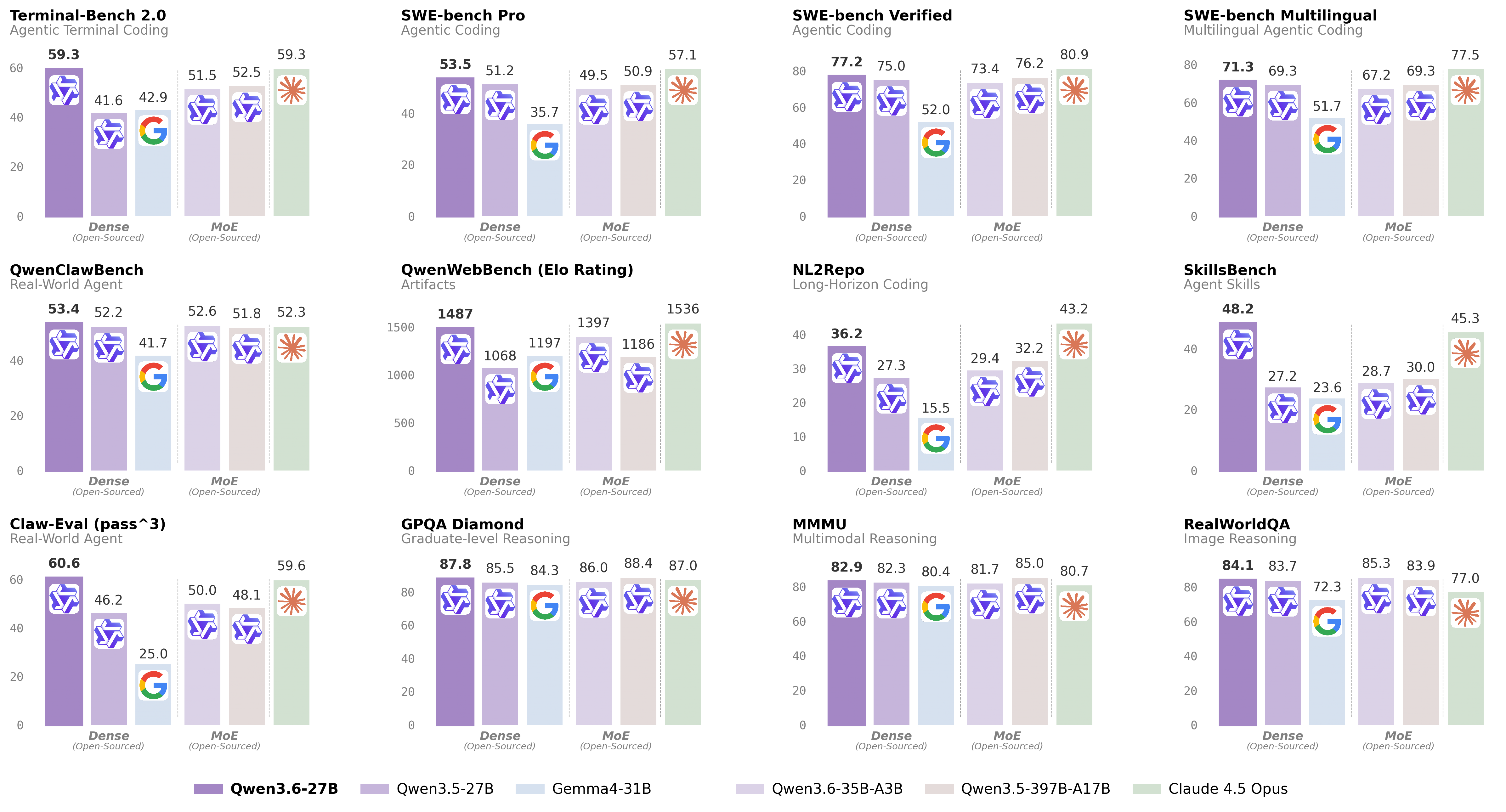
Qwen designed Qwen3-Coder-30B-A3B-Instruct specifically for coding agents, rather than just for answering one-off programming questions. Its official documentation describes a code-focused, instruction-tuned model built for repository-scale work, tool use and longer software-engineering workflows (see Figure 1) 1. The project’s repository also explains how to format tool calls, handle context and connect the model to agent frameworks.
That matters because multi-step engineering is not simply writing a function from a prompt. An effective system may need to read a codebase, identify the source of a bug, change several files, run tests, and revise its approach after a failure. The model’s documented setup is intended to support that kind of repeated interaction with code and tools.
The strongest relevant benchmark is SWE-bench, which is based on real GitHub issues. It tests whether a system can understand an existing repository, make a code change and validate it through tests. That makes it a more meaningful measure of multi-step engineering than isolated coding quizzes (see Figure 2) 2. Qwen’s model card reports results in this kind of agentic software-engineering setting, and a reproduction discussion indicates the model has actually been run on SWE-bench Verified.
More conventional coding tests also support a narrower conclusion: the model has the building blocks needed for larger workflows. HumanEval tests whether code solves self-contained programming tasks, while LiveCodeBench uses newer problems intended to reduce the chance that answers were present in training data. Reported results suggest the model can contribute to algorithm design and implementation, even if those tests do not prove full engineering independence 3.
Finally, the model can be deployed in a practical agent system. Its documented interfaces allow an outside system to give it access to files, tests and other tools. With reliable state tracking and validation supplied by that surrounding system, it can take part in an iterative engineering loop rather than merely generate a single response 4.
The case against
The central weakness is the source of the most favorable evidence. The model card, product announcement and repository materials are all produced by Qwen. They are useful evidence of the model’s design, supported interfaces and reported scores, but they are not independent proof of broad real-world reliability 5.
Benchmarks also have limits. A system that resolves a relatively contained GitHub issue may still fail at extended work requiring sustained planning across unfamiliar systems. Newer tests such as SWE-bench Pro were designed to address harder, longer-horizon engineering tasks, highlighting the gap between fixing a bounded issue and carrying out a major project (see Figure 3) 6.
There is also a risk that static benchmark results can overstate novel reasoning if test material overlaps with training data. LiveCodeBench and SWE-bench Live were created partly to reduce that risk by using newer tasks. A non-peer-reviewed analysis has additionally raised concerns about contamination and evaluator flaws in interpreting SWE-bench scores, though it is not enough by itself to dismiss benchmark findings 7.
Crucially, tool-based performance belongs to the model-plus-agent system, not necessarily to the model alone. Success depends on the agent harness, test environment, patch format, inference settings and its ability to recover from failed actions. A Qwen reproduction discussion reports that these surrounding choices can materially change results 8. Nor should results for a quantized or otherwise modified release be assumed to match the original model exactly, since changes in precision can affect speed, memory use and sometimes output quality.
The bottom line
The evidence supports a qualified verdict: Qwen3-Coder-30B-A3B-Instruct is plausibly effective for many bounded, scaffolded multi-step coding and repository workflows. Its design, reported repository benchmarks and tool interfaces all point in that direction.
However, the record does not justify calling it uniformly dependable across long-horizon projects, unseen repositories or varied deployment setups. Confidence in the narrower conclusion is high, but independent controlled testing of this exact model on newer, longer and more diverse real-world tasks remains the key missing evidence.
Figures & data


All contributions are reviewed for clarity, balance, and evidence. The strongest insights are elevated into the argument graph — with credit to you.
Help improve this analysis →