Qwen3-Coder is broadly capable but optimized and evaluated mainly for coding
What's this about?
People disagree about whether Qwen3-Coder works well for many tasks, or mostly for computer coding. Its makers mainly built and tested it for coding work.
What supporters say
- Its makers say it can follow directions and help with many steps in software projects.
- It can read large groups of code files and find ways to fix problems.
- It can use tools to help build, test, and put software online.
- The wider Qwen family can also handle math, facts, many languages, and reasoning.
What critics say
- The makers show far more proof for coding than for normal chat or school-like tasks.
- A major test checks if AI can fix real bugs in shared code projects.
- That test does not show how well it writes stories, makes plans, or researches topics.
- Results for the whole Qwen family may not match this exact coding model.
The bottom line
Qwen3-Coder seems to have skills beyond coding, but its makers built, sold, and tested it mainly as a coding helper. We are not sure yet how strong it is as an all-purpose assistant.
Qwen3-Coder-30B-A3B-Instruct appears to be a model with wider conversational abilities, but it is designed, marketed and tested chiefly for programming. The evidence strongly supports that narrow description, while leaving open how strong it is as a general-purpose assistant.
The case for
The clearest evidence is how its maker presents the product. Qwen3-Coder-30B-A3B-Instruct is explicitly described as an instruction-tuned model for software engineering and coding agents. Its official materials emphasize understanding large code repositories, using tools, helping implement and deploy software, and carrying out multi-step engineering tasks. The Qwen project also separates its Coder models from the broader Qwen3 lineup, underlining that this is a distinct, code-focused branch of the family. 1
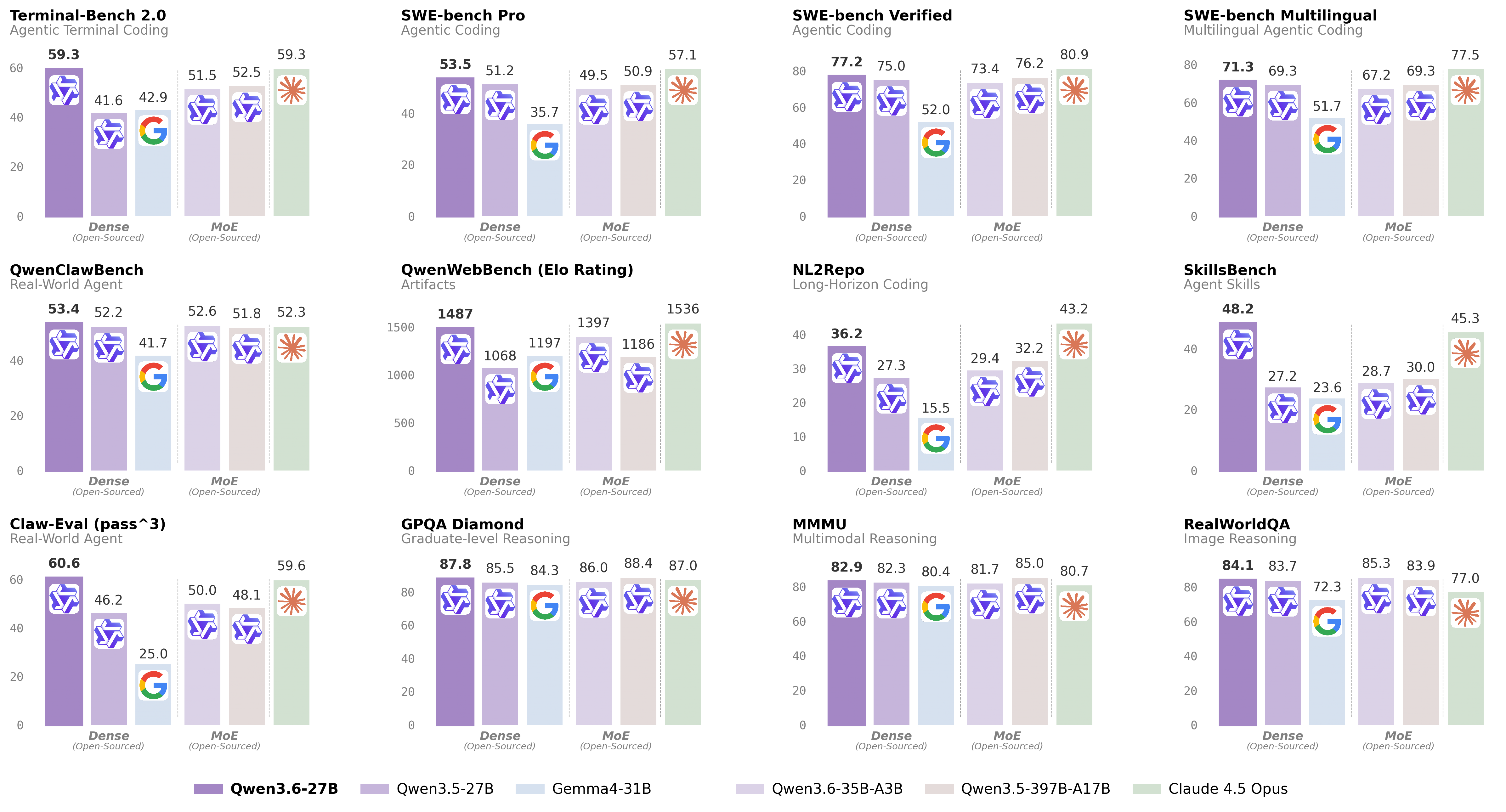
Its public testing record points in the same direction. Release materials prominently feature coding-agent and software-engineering comparisons, rather than a broad set of everyday assistant tests. One key measure, SWE-bench, asks whether AI agents can fix real issues reported in GitHub repositories. That is useful evidence of software-engineering skill, but it does not show how well a model handles tasks such as writing, planning, general research or ordinary instruction following (see Figure 2). 2
The available documentation is also uneven. Qwen’s wider Qwen3 reports discuss capabilities in mathematics, reasoning, knowledge, multilingual work and instruction following. But those family-wide results do not automatically establish the same performance for this specific Coder variant. For Qwen3-Coder-30B-A3B-Instruct, the evidence is much more direct and detailed on coding than on non-coding use. 3
That gap matters because developer materials are strongest as evidence of a model’s intended role and product positioning. They are less decisive proof of how it compares independently with general-purpose models. A firm judgment about its broader usefulness would need model-specific testing across non-coding tasks, including instruction adherence, writing, knowledge, planning and other common assistant functions.
The case against
A focus on coding does not mean the model can only write code, or that it is poor at ordinary requests. The model is explicitly instruction-tuned, which suggests it should be able to respond to general prompts as well as technical ones. Its connection to the wider Qwen3 family—documented across reasoning, mathematics, knowledge, multilingual and coding tasks—also gives reasonable grounds to expect some broader assistant abilities. 4
Public benchmark summaries and API listings support that more mixed picture. These sources present Qwen3-Coder as available for chat-style use and show indicators that go beyond code generation, alongside programming measures (see Figure 3). That is consistent with a model that can be useful outside software development, even if coding is its main strength. 5
Still, this evidence is not conclusive. Public aggregations and API pages can reflect different model versions, providers, settings and benchmark sources. Their methods and underlying results may not always be fully verifiable. They therefore provide supporting context, rather than the same level of evidence as direct, independently reproduced evaluations of the exact model.
The bottom line
The evidence supports the claim with high confidence: Qwen3-Coder-30B-A3B-Instruct is primarily optimized, positioned and publicly evaluated as a coding and software-engineering model.
That does not justify saying it is incapable of broad assistance, useful only for programming, or necessarily worse than general models on every non-coding task. Its instruction tuning, family background and public chat-oriented listings all suggest it may have meaningful general capabilities.
But the central uncertainty remains unresolved: for this exact variant, broad assistant performance is more plausible than thoroughly demonstrated. The public record is rich in coding evidence and comparatively thin in independent, model-specific tests of everyday non-coding tasks.
Figures & data

All contributions are reviewed for clarity, balance, and evidence. The strongest insights are elevated into the argument graph — with credit to you.
Help improve this analysis →