Policy changes can keep Social Security solvent long term without substantially cutting scheduled benefits
Bottom line (updated 2026-11-12): The evidence shows that benefit-saving plans can work in theory. But we are not sure leaders can agree on a full plan that stays fixed for good.
What's this about?
People disagree about whether new rules can keep Social Security stable without large cuts to planned benefits.
The key question is whether new money and small rule changes can fix the gap for many years.
What supporters say
- Higher taxes could close much of the money gap without broad cuts to benefits.
- A mix of tax hikes and rule changes could share the cost among more people.
- Early, small changes could stop the need for sudden, harsh cuts later.
What critics say
- The money gap is so large that fixing it would cost workers, firms, or taxpayers a lot.
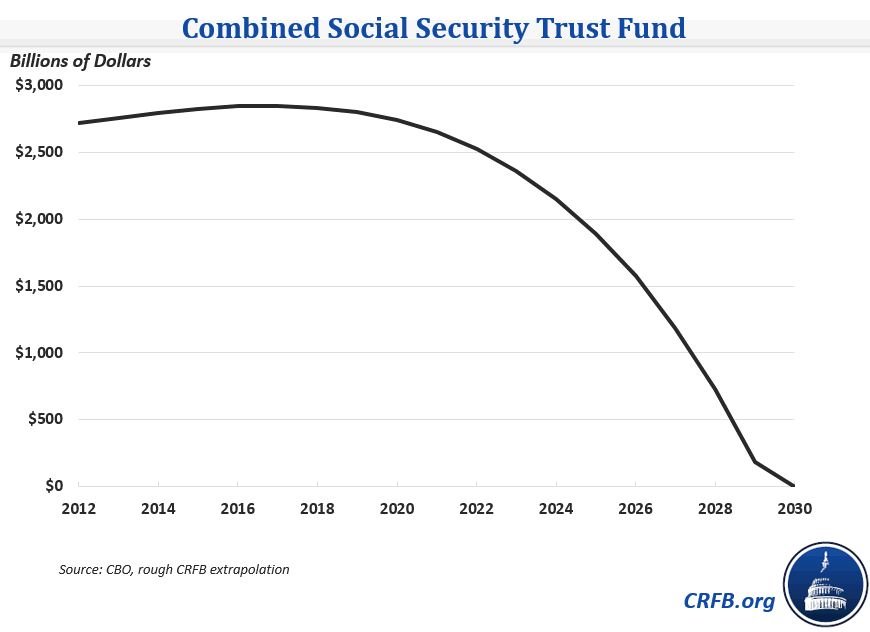
- If leaders do nothing, benefits could drop sharply after Social Security runs short of money.
- Taxing only high pay may not fix the money gap for good.
How to read this
The number of points on each side does not show who is right; the strength of each point matters more.
The bottom line
The evidence shows that benefit-saving plans can work in theory.
But we are not sure leaders can agree on a full plan that stays fixed for good.
The claim is that Social Security can be put on a stable long-term financial footing without broadly cutting the benefits people are scheduled to receive. The evidence shows that this is possible in principle, but does not establish that a complete, politically acceptable plan can do it permanently.
The case for
Higher revenues could close much of the shortfall without across-the-board benefit cuts. Social Security Administration analyses examine changes to taxable earnings, payroll taxes, benefit formulas, eligibility and inflation adjustments. The Congressional Budget Office and Brookings Institution have also described combinations that rely more heavily on new revenue and less on reducing scheduled benefits.
One SSA policy brief modeled an immediate 1.92-percentage-point increase in the payroll-tax rate. Under the assumptions used in that analysis, the increase would close the then-estimated 75-year financing gap while leaving annual benefits unchanged from current law. That example does not prove the same tax increase would solve today’s larger gap, but it shows that benefit-preserving designs are actuarially possible. 1
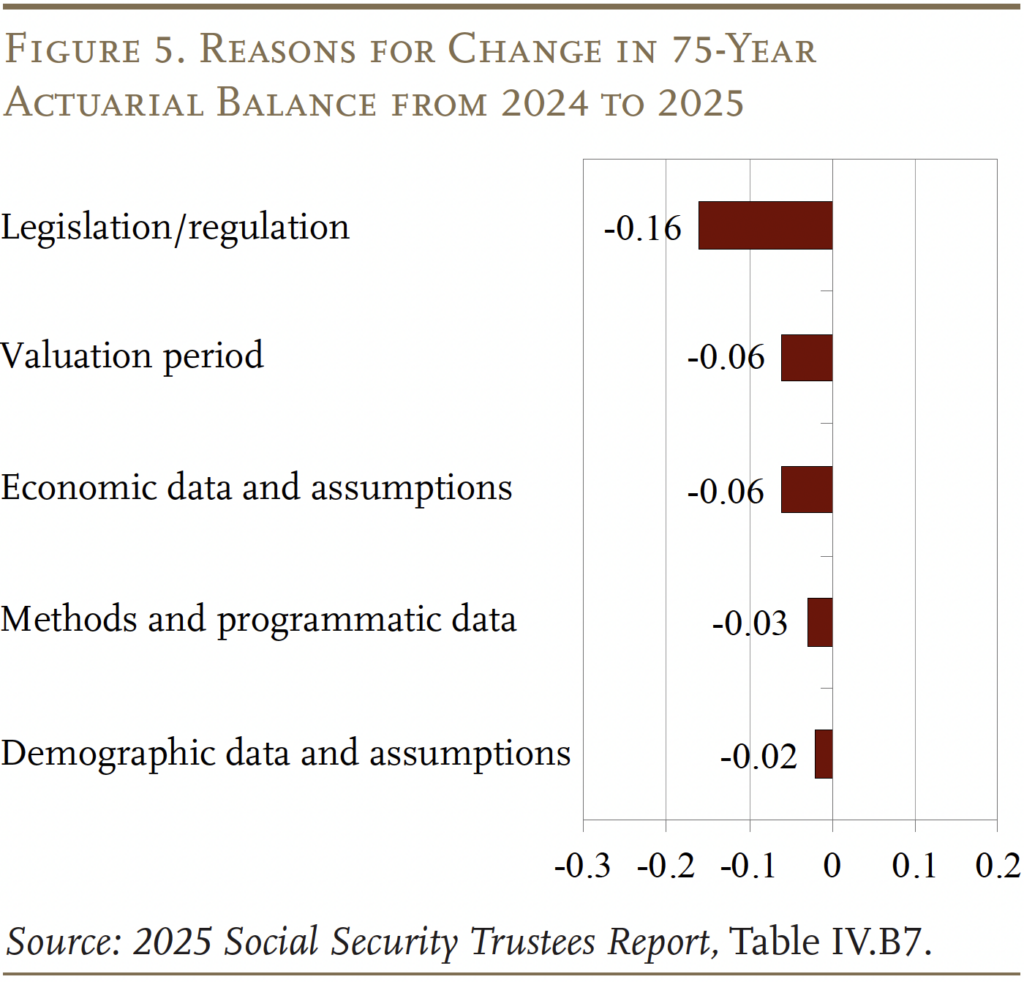
A broader package could spread the burden among higher earners, employers, workers, beneficiaries and taxpayers. That might include higher taxes on earnings, changes to benefit growth or eligibility, and transfers from general government revenues. SSA’s actuarial summaries compare the effects of individual provisions, making it possible to combine them rather than relying on one sweeping benefit reduction (see Figure 1). 2
Gradual or automatic changes could also reduce the risk of sudden cuts. Brookings has examined rules that would adjust taxes and benefits over time if Social Security moved off course. Such systems could make smaller changes earlier, rather than waiting until a financing crisis required an abrupt reduction. Their success, however, would depend on lawmakers adopting them early enough for the adjustments to work.
The case against
The strongest concern is the size of the financing gap. The 2025 Trustees report estimates a 75-year actuarial imbalance of about 3.82 percent of taxable payroll. The CBO projects that, by 2035, incoming revenues would cover only about 77 percent of scheduled benefits. Preserving scheduled benefits would therefore require substantial tax increases, government transfers or other measures whose economic and distributional effects could themselves be considered substantial. 4
Raising taxes on high earners could help, but probably would not solve the problem by itself. The Bipartisan Policy Center cites an SSA estimate that increasing the taxable maximum would reduce the long-term shortfall by about 19 percent. Other proposals could extend solvency considerably, but would likely need additional measures to make it permanent. 5
If Congress does nothing, scheduled benefits would not continue in full after the trust funds are depleted. Under a strict payable-benefits approach, the CBO’s estimate implies a reduction of roughly 23 percent in 2035. Lawmakers therefore must act to prevent an automatic cut, but the size of that cut also shows why benefit preservation cannot be treated as costless. 6
The bottom line
The evidence is roughly balanced, with low confidence, rather than clearly favoring either side. Official analyses strongly establish that the financing gap is large and that inaction would bring a sharp reduction in payable benefits. Other analyses show that revenue increases and mixed reform packages could improve or potentially restore solvency without relying on a broad cut to scheduled benefit formulas.
What remains unproven is whether one current, fully specified package could achieve permanent solvency while avoiding effects that are substantial under a clear benchmark. A plan might leave nominal benefits untouched but raise taxes substantially, slow future benefit growth or reduce benefits compared with wages and living standards. Long-term projections also depend on uncertain assumptions about fertility, mortality, immigration, wages, productivity and interest rates.
The claim is therefore plausible as a matter of policy design, but not demonstrated as a certain long-term outcome. The central question is less whether reforms can improve Social Security’s finances than whether lawmakers can agree on a permanent package whose costs are judged acceptable across workers, employers, beneficiaries and taxpayers.
Figures & data

All contributions are reviewed for clarity, balance, and evidence. The strongest insights are elevated into the argument graph — with credit to you.
Help improve this analysis →