Partisan conflict in Congress over major political events reduces public trust in democratic institutions
Bottom line (updated 2026-11-09): The evidence partly supports the claim: harsh fights and gridlock can lower trust, especially during key issues. But not every fight causes harm, and Congress may not always cause falling trust.
What's this about?
People disagree about whether party-based fights in Congress over big events lower trust in government and fair rules.
This may happen when leaders attack each other or stop needed work.
What supporters say
- Party attacks can make people view Congress and the federal government more poorly.
- Deep hate between parties can make people value party goals over fair rules.
- Gridlock, or no action, can hurt trust most when many people agree on what Congress should do.
- Trust in government has fallen as party fights grew, but this link does not prove cause.
What critics say
- Fights can show real choices, helping voters see what each party wants.
- Changes in party control may explain much of the rise or fall in trust.
- During a crisis, people may unite behind leaders, raising trust for a while.
How to read this
The number of points on each side does not show who is right; look at how strong each point’s proof is.
The bottom line
The evidence partly supports the claim: harsh fights and gridlock can lower trust, especially during key issues.
But not every fight causes harm, and Congress may not always cause falling trust.
The claim is partly supported: partisan conflict in Congress can reduce trust in government, especially when it involves personal attacks, obstruction or gridlock. But the evidence does not show that every dispute over a major political event damages democratic institutions, or that Congress is always the main cause of declining trust.
The case for
Research offers a plausible causal link between congressional conflict and public distrust. In one experiment, people who saw partisan House rhetoric developed more negative views of Congress and the federal government. By contrast, bipartisan rhetoric produced more positive reactions. Other experiments and a broader review similarly find that political incivility often reduces political trust or satisfaction with democracy, although the size of the effect depends on the setting and the type of behavior. 1
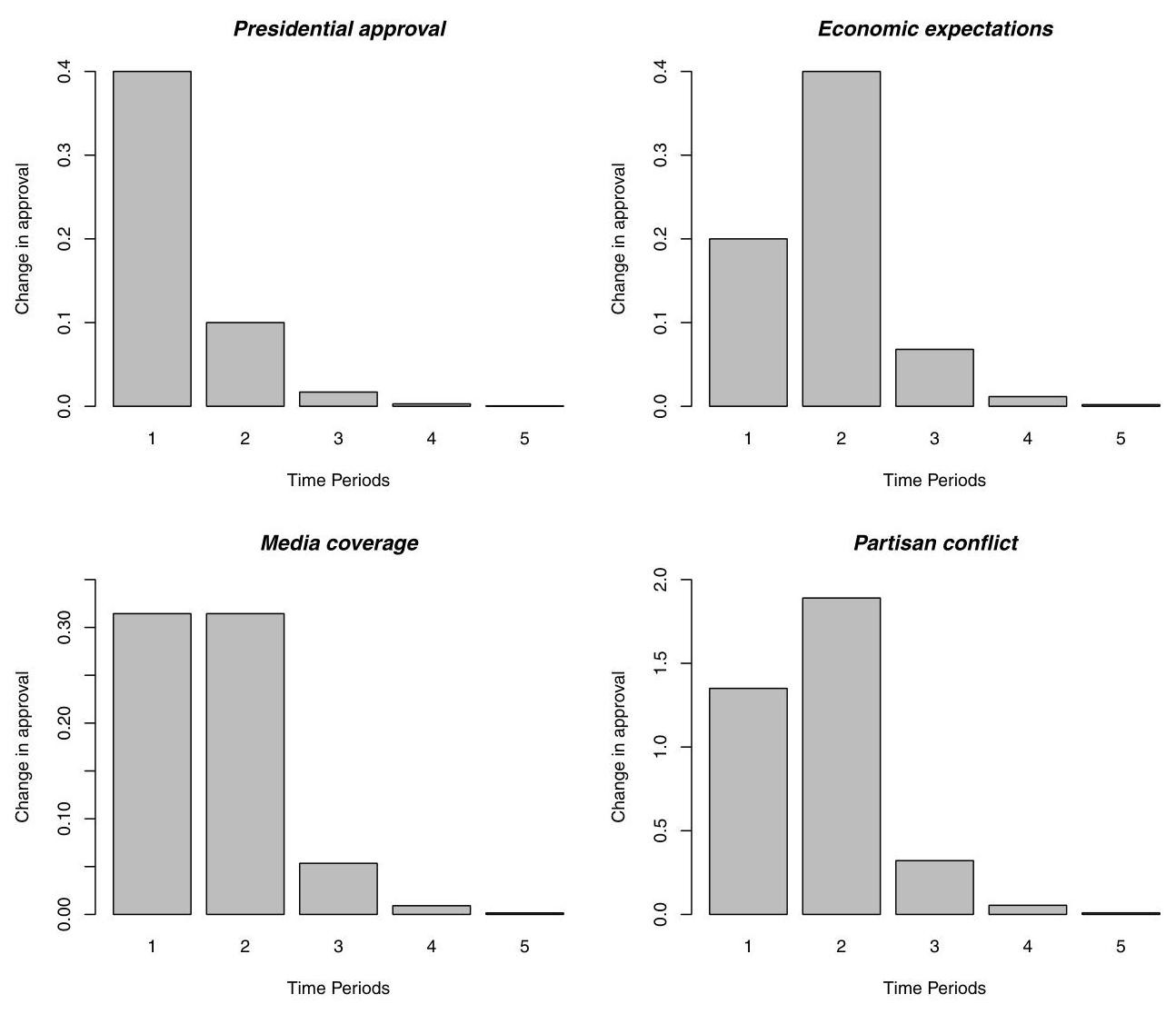
The message voters may take from personal attacks, contempt and procedural obstruction is that institutions cannot—or will not—carry out their representative duties. This effect appears particularly strong when conflict leads to visible gridlock on issues that many citizens consider important. Studies of Congress find that overall evaluations fall as partisan conflict rises, with especially sharp declines when conflict prevents action on broadly supported issues. Voters may still welcome victories by their own party, but that does not erase the broader impression of institutional failure. (see Figure 3) 2
A wider concern comes from research on affective polarization—the growing dislike of members of the opposing party. Intense partisan hostility can weaken support for democratic norms by encouraging citizens to put partisan goals ahead of fair procedures and democratic rules. That process could damage trust not only in Congress but also in other parts of the political system. 3
Long-term polling is consistent with this explanation. Confidence in government has fallen from earlier highs while partisan divisions in institutional evaluations have grown. Studies also connect congressional polarization and gridlock with lower political trust. (see Figure 1) 4 Still, this longer-term evidence shows a relationship rather than proving that congressional conflict itself caused the decline.
The case against
The main challenge is attribution. Trust often rises among supporters of the party controlling government and falls among opposition supporters, regardless of how much conflict Congress displays. Economic conditions, scandals, government performance, media coverage and disappointment with political outcomes can also shape public confidence. A drop in trust during a period of congressional conflict therefore does not, on its own, show that the conflict caused it. 5
Nor is all disagreement equally damaging. Hostile incivility appears more corrosive than ordinary ideological debate. Political conflict can sometimes help voters understand meaningful choices between competing policies, particularly when institutions continue to function and disagreement does not block action. 6
Major events can also produce the opposite of distrust. When citizens see institutions responding in a coordinated and legitimate way, crises may create a “rally” effect. Research on Denmark’s COVID-19 lockdown found increased trust in some democratic institutions, while comparative studies suggest national crises can sometimes narrow partisan gaps in trust. This does not disprove the harm caused by hostile congressional conflict, but it rules out a universal link between major events, disagreement and declining trust. 7
The evidence also covers a narrower range of institutions than the claim suggests. Much of the research measures approval of Congress, trust in government or satisfaction with democracy. Those findings do not automatically establish effects on courts, elections, the civil service or democratic institutions as a whole. Experimental studies offer stronger evidence that rhetoric and incivility can have effects, but they do not fully reproduce particular congressional crises or measure long-term trust.
The bottom line
The evidence favours a qualified version of the claim, with high confidence. Hostile rhetoric, visible obstruction and gridlock over widely supported issues can reduce public evaluations of Congress and related government institutions. The strongest direct evidence supports that narrower conclusion.
The evidence is much weaker against ordinary ideological disagreement, effective crisis management and the broader claim that all partisan conflict over major political events undermines democracy. Party control, government performance and the nature of the conflict all shape public trust, and existing research has not fully separated their effects. In short, congressional conflict is most damaging when it signals incapacity or unfairness—not simply when politicians disagree.
Figures & data


All contributions are reviewed for clarity, balance, and evidence. The strongest insights are elevated into the argument graph — with credit to you.
Help improve this analysis →