Supreme Court decisions undermine democratic governance
Bottom line (updated 2026-10-23): The proof points more toward a real risk that some rulings weaken fair and open rule. But the full claim remains unproven because the Court has also defended equal rights and a voice in public life.
What's this about?
People disagree about whether Supreme Court rulings harm rule by the people. The Court has sometimes hurt fair voting, but it has also helped protect people’s rights.
What supporters say
- Sharp court fights can make people lose trust in the Court and other parts of the state.
- Some rulings may give rich groups more power, so people may not get an equal say.
- Judges who voters do not choose can block plans backed by most voters and their elected leaders.
What critics say
- Court review can guard fair rule by stopping leaders from shutting some people out.
- Rules in the nation’s main law can limit leaders and help keep free and fair rule safe.
How to read this
The number of points on each side does not show who is right; strong proof matters more than a long list.
The bottom line
The proof points more toward a real risk that some rulings weaken fair and open rule. But the full claim remains unproven because the Court has also defended equal rights and a voice in public life.
The claim that Supreme Court decisions undermine democratic governance is plausible in some areas but not established overall. The evidence shows a mixed record: the Court has sometimes weakened democratic responsiveness, while in other cases it has protected equal citizenship and political participation.
The case for
The strongest argument is that unelected justices can override decisions made by elected institutions. Because justices serve for life, the Court can block policies supported by democratic majorities while facing limited direct accountability. Historical research covering five periods of democratic crisis found that the Court has rarely acted as an effective barrier against governments trying to entrench their power, although its overall record was mixed rather than consistently anti-democratic. 1
Several major rulings illustrate this concern. In *Shelby County v. Holder*, the Court struck down the coverage formula used to decide which jurisdictions needed federal approval before changing voting rules. The rest of the Voting Rights Act remained in place, but the decision removed a major preventive safeguard against voting discrimination.
In *Rucho v. Common Cause*, the Court ruled that claims about partisan gerrymandering raised political questions beyond the reach of federal courts. That eliminated a federal judicial remedy for maps critics said could protect legislative majorities from meaningful electoral competition. Supporters of the ruling, however, viewed it as a recognition that courts lack clear standards for resolving such disputes.
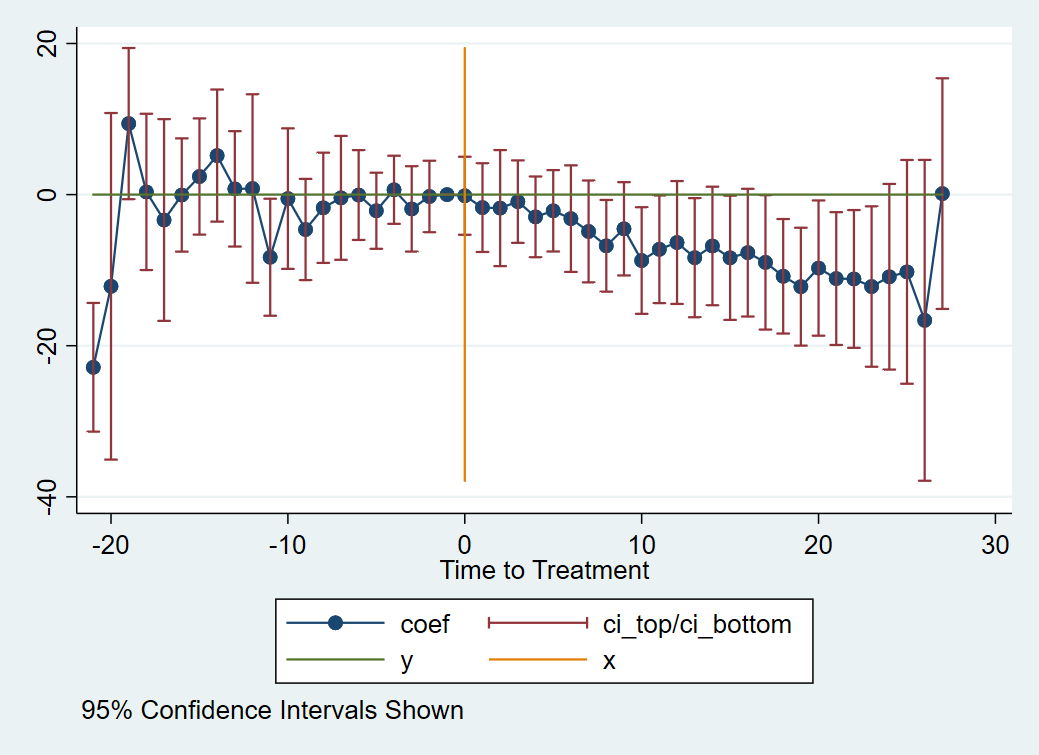
A stronger empirical concern is that some rulings may make political influence less equal. Peer-reviewed research found that *Citizens United* was followed by weaker state-level measures of democratic performance after limits on independent political spending were struck down, although the way “democratic performance” was measured remains open to debate (see Figure 1). The Court reasoned that restricting spending based on a speaker’s corporate identity could suppress protected political expression. But allowing more spending may also give wealthy organizations greater political influence. 2
Polarized rulings may create another problem: damage to the Court’s legitimacy. Survey research found that *Dobbs* sharply reduced public evaluations of the Court, especially among people who opposed the ruling, and produced more partisan division than earlier decisions. Related experiments suggest that people’s support for the institution depends partly on whether they believe its procedures were fair (see Figure 2). These findings show a credible risk to institutional trust, but they do not by themselves prove that democratic governance has declined. 3
The case against
The opposing view is that democracy means more than following the immediate preferences of a majority. It also includes equal citizenship, meaningful participation and protection against exclusion. On that understanding, judicial review can correct failures by elected governments.
In *Brown v. Board of Education*, the Court rejected legally required racial segregation in public schools. Implementation was resisted and incomplete, but the decision remains evidence that judicial intervention can expand equal citizenship when elected institutions deny basic rights.
In *Allen v. Milligan*, the Court required Alabama to create another congressional district in which Black voters would have a realistic opportunity to elect a representative under Section 2 of the Voting Rights Act. That ruling protected political inclusion rather than restricting it. 4
Constitutional protections for political expression offer a separate democratic justification for judicial review. *Citizens United* held that limits on corporations’ independent political spending could improperly restrict First Amendment speech. This supports a vision of democracy in which the government cannot silence political advocacy because of who is speaking. But this is weaker support for the broader defense of the Court, because the same ruling raises concerns about unequal influence by wealthy organizations. 5
The bottom line
The evidence does not establish that Supreme Court decisions, taken as a whole, undermine democratic governance more often than they protect it. It strongly supports a narrower conclusion: the Court can damage democratic responsiveness when it weakens voting protections, leaves partisan entrenchment without a federal remedy or permits greater concentrations of political spending.
The evidence also supports the opposite conclusion in cases involving racial exclusion and equal participation. The legitimacy research points to a possible institutional cost from polarizing decisions, but it measures public trust and partisan reactions—not democratic performance directly.
Overall, the record is mixed, with high confidence in that assessment. Confidence is lower in any claim that the Court does more harm than good overall, because no single accepted measure combines voting access, political equality, accountability, rights protection and majority rule. The balance therefore remains unresolved rather than clearly tilted against the Court.
Pros — Supporting Arguments
Cons — Opposing Arguments
Figures & data

All contributions are reviewed for clarity, balance, and evidence. The strongest insights are elevated into the argument graph — with credit to you.
Help improve this analysis →