Incumbent governments that call snap elections do not systematically improve their electoral performance
Bottom line (updated 2026-10-25): Early elections do not reliably improve a government’s result. They can help or hurt, based on voter mood, rival party plans, the economy, and election rules. Some evidence supports a boost, but the full evidence does not show a steady, sure gain.
What's this about?
People disagree about whether a government gains votes by calling an early election.
The key question asks if this move helps leaders in a steady, sure way.
What supporters say
- Voters may punish leaders when an early vote seems selfish or not needed.
- The result may look better because leaders pick early votes when times look good.
- The effect may change under each country’s rules for calling votes.
- A surprise vote may catch rival parties off guard and hurt their plans.
- Some studies find that early votes give the current government more votes.
- Good timing may lift support when the economy or public mood looks strong.
What critics say
- Some studies find that early votes can give the current government a clear vote boost.
- A sudden vote may leave rival parties with less time to plan and unite.
- Leaders may gain votes by choosing a time when the economy looks strong.
How to read this
The number of points on each side does not show who is right; check how strong each point’s proof is.
The bottom line
Early elections do not reliably improve a government’s result. They can help or hurt, based on voter mood, rival party plans, the economy, and election rules.
Some evidence supports a boost, but the full evidence does not show a steady, sure gain.
The evidence does not show that snap elections reliably improve an incumbent government’s results. Instead, early elections can help or hurt depending on voter attitudes, opposition preparedness, economic conditions and the rules governing when elections may be held.
The case for
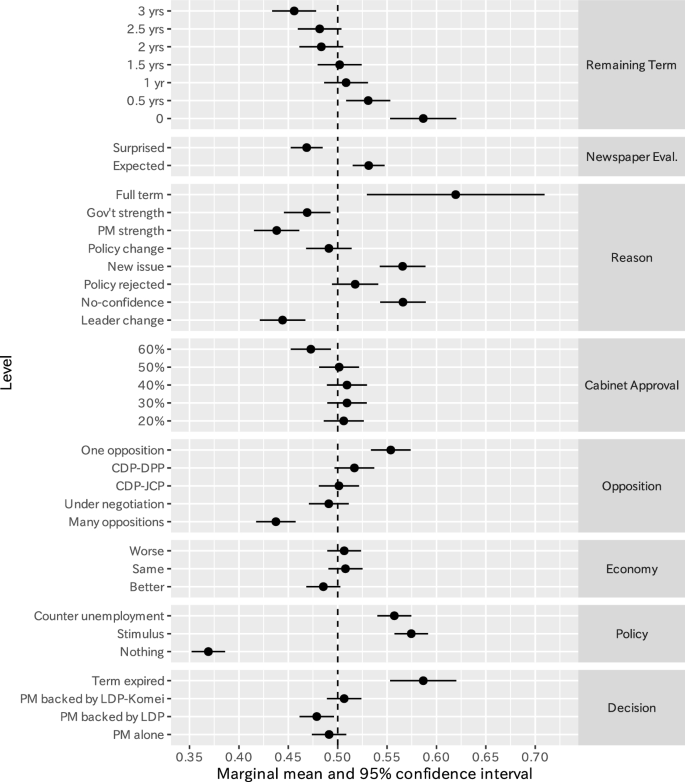
Voters may punish governments that appear opportunistic. When an early election seems unnecessary or self-serving, resentment can translate into fewer votes for the incumbent. Research on voting behavior finds that people who dislike the decision to call an early election are substantially more likely to punish the government. Evidence from Canada’s 2000 election also found costs among some voters who viewed the election as opportunistic. Two experiments reached a similar conclusion: early election calls produced more negative views among opposition and independent voters, suggesting that perceived opportunism can damage an incumbent’s position 1.
Apparent gains after a snap election may also be misleading. Governments do not choose election dates at random. They are more likely to call early elections when the economy is performing well, when they are already popular or when political conditions look favorable. Evidence from 12 parliamentary democracies shows that economic and political conditions influence the timing of elections. That means a government’s strong result may partly reflect the conditions that encouraged it to call the election, rather than the timing decision itself 2.
The effects also differ across political systems. Research covers countries with different constitutional rules, presidential powers to dissolve legislatures and limits on election timing. It also uses different definitions of what counts as an opportunistic election. Those differences make it difficult to identify one universal effect that applies to every snap election 3.
The case against
Comparative studies do find that early elections can produce a meaningful incumbent advantage. One study estimates a gain of as much as five percentage points in vote share, along with increases in seats won and the chance of remaining prime minister. Research on presidential dissolution arrangements reports similar gains—about five percentage points in votes and seats for allied prime ministers 4.
A snap election can also catch opposition parties unprepared. If opponents have little time to organize, choose candidates or communicate with voters, the incumbent may benefit from the surprise. Studies identify opposition readiness and organizational weakness as important ways in which an early election can improve the government’s performance 5. Favorable timing may provide another advantage, although this evidence is weaker. Some research finds that governments can increase support by choosing an advantageous moment, while partially fixed-term laws appear to affect both the incentives to call early elections and the resulting electoral performance 6.
These findings do not necessarily contradict the claim’s narrower meaning. They show that incumbents can gain under particular circumstances, not that snap elections produce a dependable improvement in every case. Timing is often combined with other strategies, including pre-election economic measures, making it difficult to separate the effect of the election call from the broader campaign plan.
The bottom line
The evidence supports the claim in its literal sense, but only moderately beyond the strongest findings about voter punishment and selection effects. Snap elections do not appear to be a reliable electoral technology that systematically improves incumbent performance. They are better understood as a strategic opportunity whose results depend on the circumstances.
Surprise, favorable economic conditions and a poorly prepared opposition can help a government. But voters may retaliate when they see the election as manipulative or unnecessary, and some apparent gains may simply reflect the government’s pre-existing popularity or favorable conditions. The strongest overall conclusion is therefore that the effects are conditional and varied, with high confidence that there is no single average result across all political systems. The main uncertainty is how much of any observed gain is caused by the election call itself, rather than by the conditions and accompanying strategies surrounding it.
Figures & data
All contributions are reviewed for clarity, balance, and evidence. The strongest insights are elevated into the argument graph — with credit to you.
Help improve this analysis →