Candidate debates have limited effects on final vote choice
Bottom line (updated 2026-10-20): Debates can change views, teach voters, and sometimes shift votes. Still, the evidence clearly shows that debates usually have a small effect on the final result.
What's this about?
People disagree about whether debates make many people change their final vote.
The best evidence says debates can matter, but usually only a little.
What supporters say
- Party loyalty often shapes how people react to what candidates say.
- A large study found that debates caused only small changes in votes, on average.
- Debates can teach voters more without making them choose a different candidate.
- Views people held before the campaign explain much of their final vote.
What critics say
- Some tests show debates can change how voters rate candidates and judge key issues.
- A very strong debate performance can sometimes win more support for a candidate.
How to read this
The number of points on each side does not show who is right; strong proof matters more than a longer list.
The bottom line
Debates can change views, teach voters, and sometimes shift votes.
Still, the evidence clearly shows that debates usually have a small effect on the final result.
Candidate debates can influence voters, but their effect on the final result is usually limited. The evidence suggests that debates more often reinforce or inform existing views than persuade large numbers of people to change their vote.
The case for
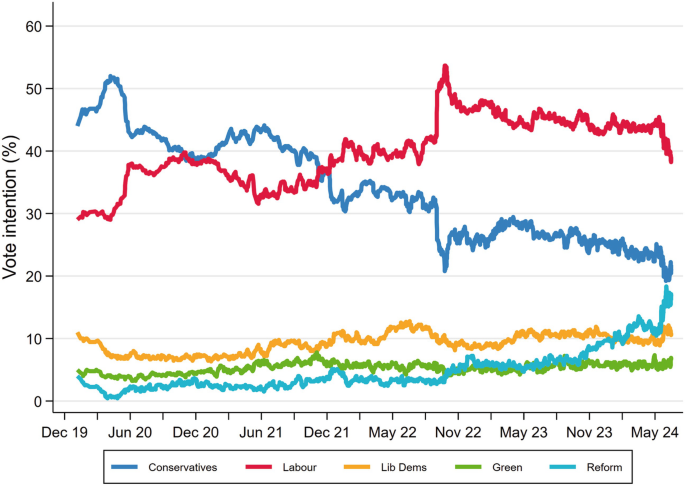
The strongest evidence comes from large comparative research covering about 253,000 survey responses, 62 elections and 56 televised debates in 10 OECD countries. It finds that many voters have already formed their vote intention before the debates, and that debates produce only small average changes in the eventual vote (see Figure 1). A related analysis reaches a similar conclusion: pre-election intentions often match final votes, while the average effect of debates is minimal. 1
Debates also commonly work through voters’ existing party loyalties rather than replacing them. Studies suggest that watching a debate can strengthen affection for one’s own party and intensify partisan reactions. National surveys from two election cycles likewise found that party identity continued to shape how people interpreted what they saw. In this sense, debates often meet voters whose preferences are already substantially anchored.
Other research finds that debates can be informational without being decisive. Viewing may increase knowledge, make issues more prominent and change perceptions of where candidates stand. Reviews also find effects on candidate images and vote preferences, with larger effects in primary contests than in general elections. But a change in knowledge or candidate impression does not necessarily lead to a different ballot choice. 4
Prior attitudes matter as well. Party identification and views of presidential performance, measured before the main campaign, explain much of individual vote choice. The evidence for this point is weaker when estimating the effect of any particular debate, but it supports the broader conclusion that debates usually operate within a decision process already shaped by earlier preferences. 3
The case against
The average pattern can hide important exceptions. A debate may shift support when it provides unusually clear and credible information, especially for voters who are less informed or less firmly attached to a party.
A randomized field experiment during Ghana’s 2016 parliamentary election found that debate exposure improved evaluations of candidates, made voters more open to candidates they did not initially prefer and encouraged more policy-based voting. The effects were particularly notable for minor-party candidates. This shows that debates can cause meaningful changes, although Ghana’s multiparty parliamentary setting may not closely resemble a highly polarized presidential election. 6
The 2024 Biden–Trump debate offers another possible exception. An unexpectedly poor performance was followed by substantial changes in candidate support. The event suggests that debates can matter greatly when a performance reveals information voters consider important. But it was a single, unusual event, and the cited study is a working paper. 5
Debates may also have consequences beyond immediate vote switching. They can affect candidate images, media coverage, emotional reactions, fundraising, elite judgments and perceptions of whether a campaign remains viable. These broader effects may be politically significant even when they do not immediately change a respondent’s stated vote intention.
The bottom line
The evidence strongly supports the claim that candidate debates have limited average effects on final vote choice, with high confidence in that overall pattern. Large comparative studies show that many voters decide early and that debates usually produce only modest direct persuasion. Party identity and prior preferences remain more powerful forces. 1
That does not mean debates are inconsequential. Their effects are more credible among less-informed or less-partisan voters, in minor-party contests and after unusually revealing performances. The main uncertainty is how often changes in knowledge, attitudes or candidate evaluations last through election day. Overall, debates usually inform and reinforce more than they convert, but exceptional debates can still matter.
Figures & data
All contributions are reviewed for clarity, balance, and evidence. The strongest insights are elevated into the argument graph — with credit to you.
Help improve this analysis →