Four-day work weeks increase productivity

Updated 2026-07-29 4 supporting · 4 opposing arguments
Aldo's Synthesis high
Based on the strength of the Arguments below
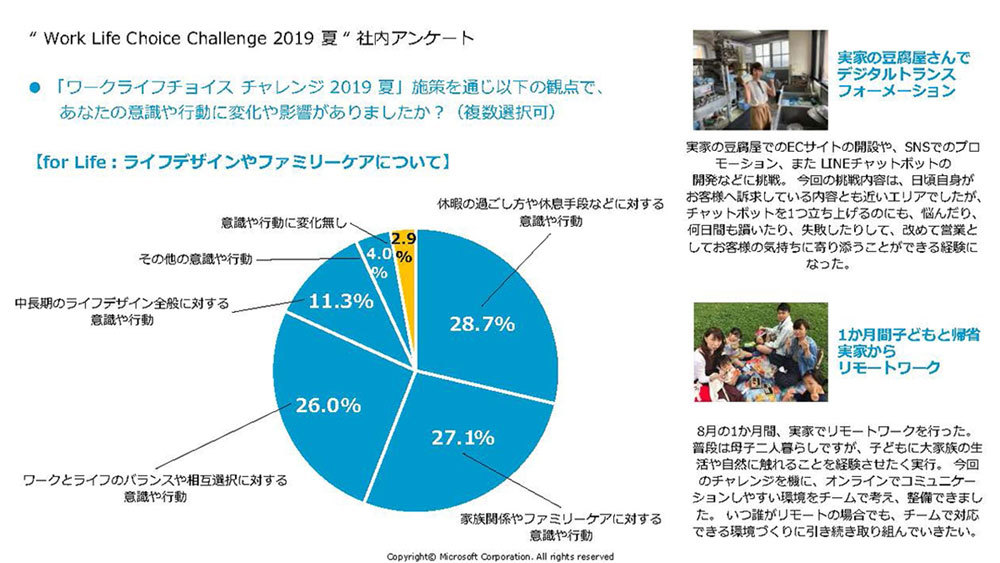
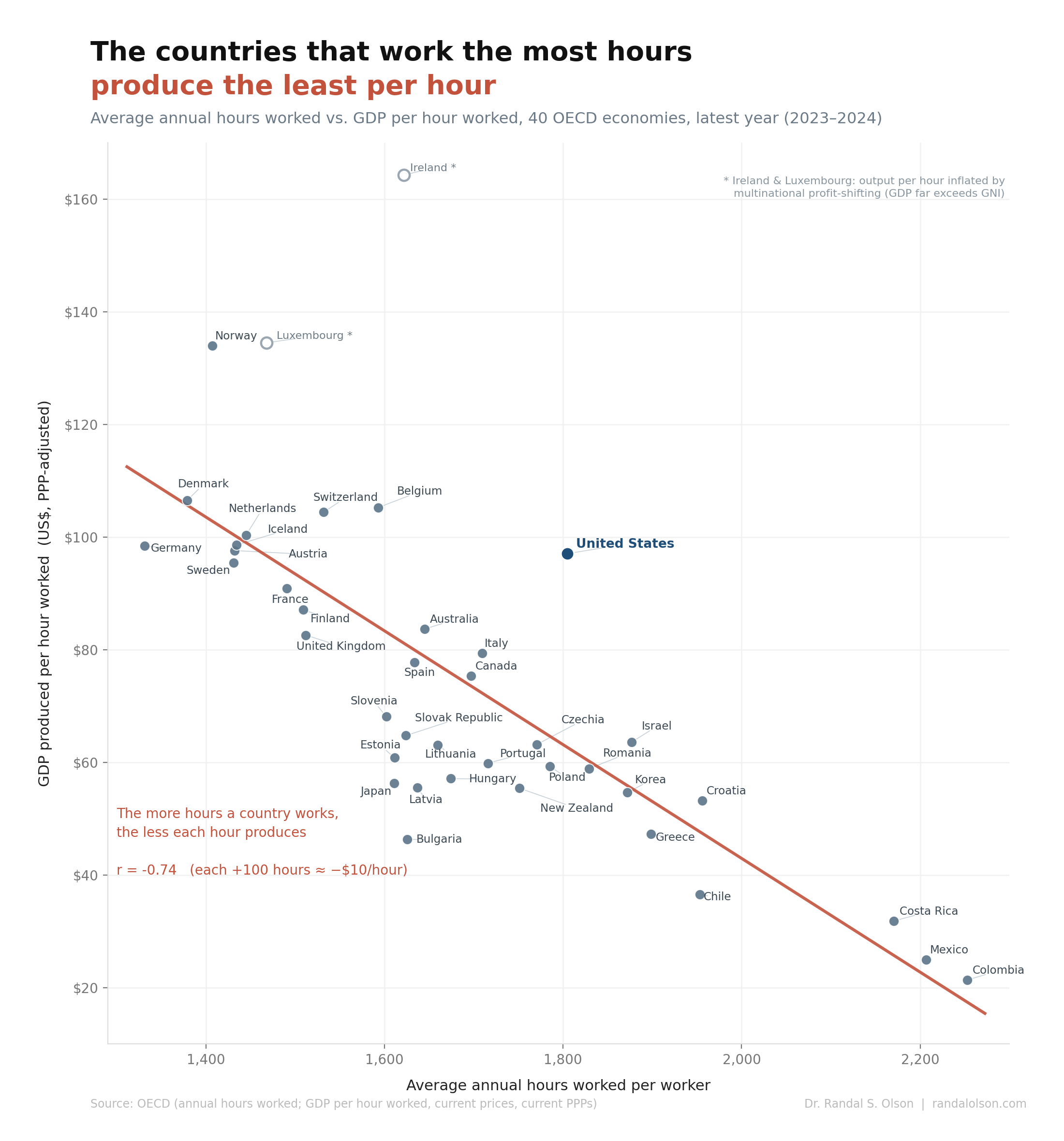
The claim asks whether replacing a conventional five-day schedule with four working days—especially while reducing weekly hours without reducing pay—increases productivity. The central questions are what “productivity” means, whether observed changes are caused by the schedule rather than accompanying reforms, and whether results transfer across occupations and sectors. At stake is the distinction between a policy that reliably raises total organizational performance and one that mainly preserves output with fewer labor hours while improving employees’ lives. The strongest affirmative evidence is that prominent UK and Icelandic trials generally maintained or improved business performance, service delivery, or workplace-specific productivity after weekly hours were materially reduced without corresponding pay cuts. The Icelandic trials covered about 2,500 public-sector workers moving from roughly 40 hours to 35–36 hours, while the UK evidence reports broadly maintained performance among participating employers. Where comparable output is produced in fewer hours, output per labor hour necessarily rises even if total output merely remains stable. The six-month UK pilot also reported broadly maintained average revenue among organizations supplying comparable data, alongside lower absenteeism and resignations (see Figure 1). A second affirmative case rests on worker capacity and organizational continuity: reduced-hour four-day schedules are associated with less burnout, fatigue, sleep difficulty, sickness absence, and turnover. The multi-country controlled study found improvements across burnout, job satisfaction, mental health, physical health, fatigue, sleep problems, and work ability, and UK research reported similar health and well-being gains. These changes provide plausible routes to more effective working time and lower disruption from absence or replacement, although well-being outcomes do not by themselves prove that total production increased. Lower absence and turnover can nonetheless improve broader organizational productivity by reducing disruption, recruitment, and onboarding burdens even when short-run revenue is unchanged. The mechanism is most credible where existing hours are excessive or contain substantial low-yield time, because research on long working hours finds sharply diminishing marginal output at high hour levels. Historical production data show that beyond about 48 hours, additional hours produced sharply diminishing returns and that output changed little above roughly 55 hours. A shorter week can also induce employers to remove unnecessary meetings and streamline communication, allowing some lost hours to be recovered through process improvements. Cross-national data likewise show that hourly and total productivity are distinct and that countries with longer hours do not thereby achieve higher hourly output, but such comparisons cannot identify the causal effect of changing an individual employer’s schedule (see Figure 3). The principal challenge is causal identification: the most visible productivity results do not establish that the extra day off, rather than participant selection or accompanying management changes, produced the observed performance. Many adopting employers volunteered, received implementation assistance, knew they were being studied, and were not randomly assigned against comparable organizations retaining a five-day week. Consequently, self-selection, unusually motivated managers, favorable industries, management attention, concurrent redesign, or temporary enthusiasm can account for part of the apparent effect. Even the large controlled multi-country study centered on worker well-being rather than a standardized, universal measure of organizational output, so its stronger design does not directly settle the productivity claim. Microsoft Japan’s widely cited result illustrates why dramatic company figures should not be read as clean causal estimates. The company reported an approximately 40% year-over-year rise in sales per employee during a one-month initiative, but the intervention also changed meetings and communication and relied on employer-controlled reporting (see Figure 2). That comparison cannot separate schedule effects from seasonality, simultaneous workflow reform, or measurement choices. A further objection is that higher output per hour does not necessarily mean higher total output, improved service quality, or greater profitability. Maintaining the same output with fewer labor hours establishes an hourly-productivity gain, but a broad assertion that production itself increases requires evidence of greater total output rather than a changed denominator. In the Swedish elder-care experiment, healthier and less absent workers coexisted with the need to hire additional staff to preserve coverage, raising payroll costs. Thus, an intervention can benefit workers and perhaps service users while failing to lower labor costs or increase organization-wide productivity. Finally, evidence favoring reduced-hour schedules cannot be generalized to compressed schedules that retain standard weekly hours across four longer days. A systematic review of compressed workweeks found mixed health, sleep, work-life, and operational outcomes and identified potential fatigue and safety concerns from longer shifts. Four ten-hour days may therefore create different effects from a genuine reduction to approximately 32–36 weekly hours. The evidence most strongly supports a conditional proposition: reduced-hour four-day weeks can preserve output or raise hourly productivity when they are implemented with deliberate organizational redesign. Successful initiatives commonly changed meeting practices, communication, prioritization, staffing, or employee autonomy rather than simply closing the workplace on Friday. The evidence consequently favors a package of work-time reduction and process reform more strongly than the proposition that removing one workday, standing alone, causes greater productivity. The answer also turns on the chosen outcome because revenue, output per hour, total output, service quality, labor cost, and self-rated performance are not interchangeable measures. A schedule that preserves weekly output with 20% fewer hours records a substantial hourly-productivity improvement without necessarily increasing total production. Its practical desirability may still depend on whether revenue, service coverage, quality, and staffing costs remain acceptable over time. Sector, baseline hours, and schedule design further delimit the expected effect. Reducing very long or inefficient hours offers more scope for hourly-productivity gains than cutting an already efficient schedule, and outcomes depend on occupation, worker control, and enterprise needs. Continuous-service and safety-critical settings face coverage, fatigue, and staffing constraints that differ from those confronting professional-service offices. Results among volunteer adopters therefore should not be presumed to transfer unchanged to healthcare, manufacturing, retail, or small businesses. Finally, the evidence is more direct and consistent for worker well-being than for increased objective organizational output. Controlled evidence supports multiple health and satisfaction improvements, whereas standardized objective output measures are less common and organizational performance measures vary across trials. Well-being gains may support performance over time, but treating that pathway as equivalent to demonstrated output growth would overstate the evidence. The main evidence gap is not the absence of studies or opposing arguments, but the scarcity of long-term, randomized, organization-level comparisons using common productivity measures. Existing studies often cannot disentangle reduced hours from implementation support, management attention, workflow reform, employee expectations, or selection into adoption. Comparable evidence is also thin for continuous-service, safety-critical, manufacturing, retail, and small-business settings, and for outcomes measured after novelty effects have plausibly dissipated. Measurement heterogeneity leaves unresolved whether favorable findings concern hourly efficiency, total output, revenue, service quality, labor cost, retention, or subjective performance. The evidence base also includes reports from participating employers and organizations associated with four-day-week implementation, making unresolved conflict-of-interest classification a material uncertainty when interpreting headline results. These gaps limit confidence in a universal causal claim even though the available evidence is sufficient to support narrower conditional findings. On balance, the evidence supports with high confidence the narrower conclusion that a well-designed, reduced-hour four-day week can preserve total output and thereby increase output per hour in some organizations, but it does not establish that four-day schedules universally increase total productivity. The case is stronger for reduced-hour arrangements and worker well-being than for compressed four-day schedules or generalized increases in objective organizational output. The dominant uncertainty is whether observed performance reflects the shorter week itself or the selected employers, organizational redesign, measurement choices, and potentially interested reporting that accompany many trials.

Supporting Arguments

P1Many trial employers maintained output despite substantially fewer hours
UK and Icelandic pilots reported that most participating organizations maintained or improved output, service delivery, or revenue after reducing weekly hours. Producing comparable output in fewer paid hours implies higher productivity per hour, although volunteer selection and nonrandom designs weaken the causal inference.
67/100 · Direct Evidence
P2Lower fatigue and burnout can improve effective performance
The large 2025 multi-country study found reduced burnout, fatigue, and sleep problems and improved work ability under reduced-hour four-day schedules. Together with UK findings on health and absenteeism, these outcomes provide a credible pathway to better concentration, fewer errors, and more productive time at work, even though they do not directly establish increased total output in every organization.
72/100 · Logical Inference
P3Cutting low-yield hours can raise output per hour
Evidence on working hours shows diminishing marginal output when hours become long. A shorter week can force organizations to remove unnecessary meetings and inefficient processes, potentially preserving output while using fewer labor hours.
57/100 · Logical Inference
P4Retention and absence gains can support organizational productivity
The UK pilot reported lower sick leave and resignations, and follow-up evidence indicates that most adopters kept the schedule. Reduced absence and turnover can avoid recruitment, onboarding, and disruption costs, improving broader organizational productivity even where short-run sales do not rise.
64/100 · Logical Inference

Opposing Arguments

C1The strongest direct productivity claims lack randomized controls
Most prominent four-day-week pilots involve employers that volunteered, received implementation support, and knew they were being studied. Without randomized assignment or strong counterfactuals, improvements may reflect self-selection, management attention, favorable industries, concurrent workflow reforms, or temporary enthusiasm rather than the extra day off itself.
71/100 · Direct Evidence
C2Hourly productivity can rise while total output or profitability does not
Maintaining output over fewer hours increases output per hour, but the broad claim may be read as an increase in total production. Staffing-intensive operations may need replacement workers to preserve coverage, as illustrated by the Swedish care experiment, so costs can increase even when workers are healthier or individually more effective.
87/100 · Logical Inference
C3A compressed four-day week may increase fatigue
Four ten-hour days do not reduce weekly working time and can lengthen exposure to fatigue, especially in physically demanding or safety-critical jobs. Reviews of compressed schedules find mixed outcomes, so favorable findings for a 32-hour model cannot automatically be generalized to every four-day arrangement.
51/100 · Direct Evidence
C4Highly publicized company results are weak causal evidence
Microsoft Japan’s reported 40% increase was a one-month, company-reported year-over-year comparison introduced alongside meeting and communication reforms. It is impossible from that comparison to isolate the effect of a four-day week from seasonality, workflow changes, or measurement choices.
34/100 · Data Analysis

All contributions are reviewed for clarity, balance, and evidence. The strongest insights are elevated into the argument graph — with credit to you.

Help improve this analysis on ProConWiki →
𝕏 Share Facebook LinkedIn