For most people, the health benefits of receiving a COVID-19 vaccine outweigh its risks
Bottom line (updated 2026-10-30): For most people, the health gains from COVID-19 vaccine shots outweigh their risks. The gap gets smaller for healthy young men and people with little chance of catching COVID-19.
What's this about?
People disagree about whether COVID-19 vaccine shots help most people more than they hurt.
The answer changes with age, health, sex, and how much COVID-19 spreads.
What supporters say
- Vaccine shots help older people and those with health issues avoid the worst COVID-19 illness.
- Serious harm from vaccine shots happens rarely, and large studies found no rise in deaths.
- Vaccine shots may lower the risk of long COVID and help protect babies during pregnancy.
What critics say
- Vaccine shots can cause heart swelling, called myocarditis, mostly in young males.
- Healthy people in places with little COVID-19 may gain less from each shot.
How to read this
The number of points on each side does not show who is right; strong proof matters more than point counts.
The bottom line
For most people, the health gains from COVID-19 vaccine shots outweigh their risks.
The gap gets smaller for healthy young men and people with little chance of catching COVID-19.
The claim is broadly supported: for most people, the health benefits of COVID-19 vaccination are greater than the risks. But the balance is not the same for everyone, and it is narrowest for some healthy young men.
The case for
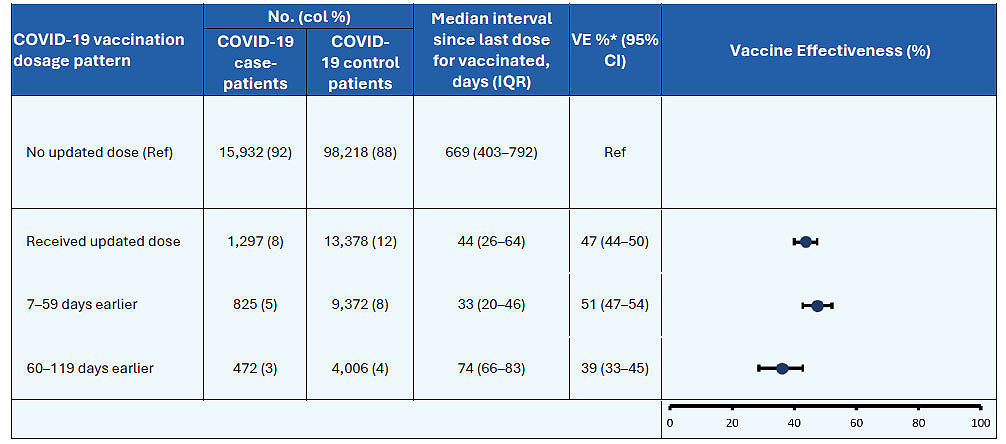
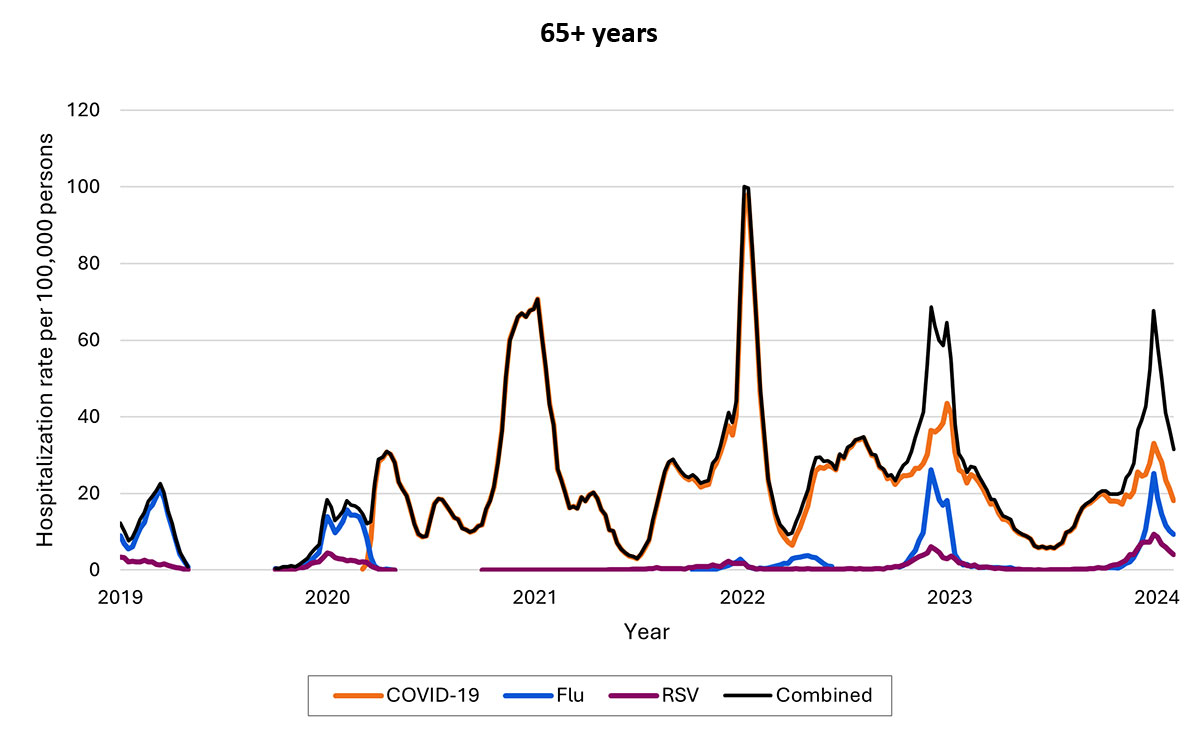
Vaccination most clearly helps people at higher risk from COVID-19. Older adults and people with underlying health conditions face the greatest danger of hospitalization, intensive care and death. Adults aged 65 and older accounted for about 70% of adult COVID-19 hospitalizations from October 2023 through April 2024. Among older adults, an updated vaccine reduced critical illness by about 67% during the first two months after vaccination. Real-world reviews also continue to find protection against hospitalization, although the level of protection changes with the variant, time since vaccination, age and previous infection. 1 (see Figure 1)
Randomized-trial reviews find that authorized vaccines reduce symptomatic infection and likely reduce severe disease. The trials were not large enough to measure the rarest harms precisely, but they found that serious adverse events were uncommon. Large studies conducted after authorization have also found no increase in overall, non-COVID or selected cardiac deaths following vaccination, though one analysis cautioned that healthier people may be more likely to get vaccinated, which can affect comparisons. 2
Vaccination may also provide benefits beyond preventing immediate severe illness. Several studies have linked vaccination before infection with a lower risk of long COVID, although much of that evidence is observational and therefore less certain. Vaccination during pregnancy has also been associated with fewer COVID-related hospitalizations among babies younger than six months. Pregnancy-specific reviews have found protection against infection-related complications without clear evidence of increased harm to mothers, pregnancies or newborns, though this evidence too is largely observational. 3
The case against
The main concern is myocarditis and pericarditis, rare inflammations of the heart muscle or surrounding tissue that can follow mRNA vaccination. The risk is concentrated among adolescent and young adult males and varies by product, dose, spacing between doses and whether someone has recently had COVID-19. 4 (see Figure 2)
That risk does not mean vaccination is generally more dangerous than infection. Reviews generally find that myocarditis is more common after SARS-CoV-2 infection than after vaccination. But for healthy young people—especially young men—the vaccine-specific risk still matters because their risk of severe COVID-19 may already be low.
In places with low transmission, widespread prior immunity and a low rate of COVID-related hospitalization, the added benefit of repeated booster doses can be small. Some models have estimated that repeated booster mandates for low-risk young adults could cause more serious adverse events than the number of hospitalizations prevented, or leave the balance uncertain for young men. Those results depend heavily on assumptions about infection levels, vaccine effectiveness, existing immunity, myocarditis rates and which outcomes are counted. 5
The evidence also has limits. Clinical trials cannot reliably measure extremely rare side effects, while observational studies can be affected by hidden differences between vaccinated and unvaccinated people. Estimates may also change as variants, transmission levels and vaccine products change. Some unresolved conflicts of interest across the research base mean that not every estimate should be treated as equally independent.
The bottom line
The evidence favors vaccination for most people, with high confidence at the population level. The advantage is strongest for older adults, pregnant people, immunocompromised people and those with chronic conditions, because their risk from COVID-19 is much higher.
The conclusion is less certain for healthy young adults, particularly young males. For them, the decision depends more closely on current transmission, previous infection, the vaccine product and dose, and the person’s risk of severe disease. Overall, vaccination is not risk-free and is not equally valuable for every person or every dose—but the best available evidence supports the claim that its expected health benefits outweigh its risks for most people.
Figures & data

All contributions are reviewed for clarity, balance, and evidence. The strongest insights are elevated into the argument graph — with credit to you.
Help improve this analysis →