All sugar substitutes are healthier than sugar itself
Too close to call
PRO 47%CON 53%
Pro 31% · Con 35% — Nuanced 35% — evidence mixed
What the evidence says Evidence quality: Pending
Graded from the quality of the cited sources · Evidence Protocol
Analysis in progress.
Pros — Supporting Arguments
P1Replacing added sugar can reduce calorie and disease exposure
P2Some substitutes offer dental benefits
Figures & data
The evidence base behind this claim: 15 distinct cited sources
Every source cited on this claim, counted once at its highest evidence strength and grouped by the side it supports. Generated from this page's own evidence rows — the same records the verdict is computed from — so the chart and the score cannot disagree. Strength labels follow the scoring methodology.
View figure at source: Health effects of non-nutritive sweeteners: systematic review and meta-analysis
Toews et al. (2019) forest plot of randomized-trial effects of non-sugar sweeteners on body weight or BMI, showing pooled estimates and confidence intervals across studies.
This systematic review’s trial evidence directly tests whether non-sugar sweeteners improve outcomes compared with controls. The forest plot makes the modest, uncertain, and outcome-dependent effects visible rather than implying a universal health advantage.
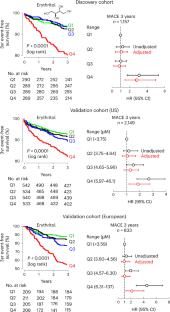
Witkowski et al. (2023) figure showing the association between circulating erythritol levels and incident cardiovascular events, including event-free survival across erythritol levels.
It illustrates a specific, emerging safety signal for one sugar substitute, helping show why evidence about one sweetener cannot establish that all substitutes are healthier. The observational association should be interpreted cautiously and does not prove that erythritol consumption causes cardiovascular events.
All contributions are reviewed for clarity, balance, and evidence. The strongest insights are elevated into the argument graph — with credit to you.
Help improve this analysis →