Zoos should be phased out
Aldo's Synthesis high
Based on the strength of the Arguments below
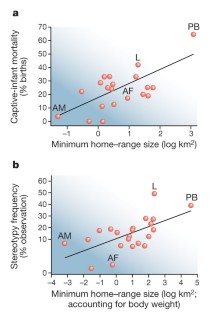
The claim asks whether governments and society should gradually end conventional zoos organized around public exhibition, provide appropriate lifetime care for animals already held, and preserve only conservation programs that are demonstrably necessary and compatible with animal welfare. The dispute therefore concerns transformation as much as closure: it requires weighing captivity-related harms against conservation, education, research, and care functions, while distinguishing ordinary exhibition from specialized ex situ management. The principal policy risk runs in both directions—retaining institutions whose animals cannot be accommodated acceptably, or dismantling useful capabilities merely because they are presently housed within institutions called zoos. The strongest case for phasing out conventional zoos is that captivity appears structurally ill-suited to some species, rather than merely imperfectly administered. Comparative research on captive carnivores associates stereotypic route tracing with aspects of species-typical ranging and travel, indicating that the behavioral biology of wide-ranging species can itself generate serious accommodation problems (see Figure 1). That evidence supports species-specific restrictions because it undercuts the assumption that ordinary enclosure improvements can satisfy every carnivore's needs. Management improvements may alleviate particular welfare indicators, but they do not establish that a captive setting can meet the needs of every species or reproduce the welfare conditions of wild living. Public exhibition adds a distinct welfare concern because visitor effects range from negative to neutral or positive depending on the species, individual, enclosure, crowd, noise, program design, husbandry, and ability to retreat. The mixed aggregate result does not establish universal harm, but it makes retreat opportunities and repeated species- and animal-level monitoring central where exhibition is retained. Where animals cannot control their exposure and monitoring repeatedly records adverse responses, ending public display follows more directly from the evidence than assuming visitors are harmless. Reliance on licensing alone is also weakened by evidence that formal inspection does not necessarily produce consistent welfare assessment. An analysis of British government-appointed inspection reports found considerable inconsistency in how inspectors assessed and recorded welfare, raising doubt that licensing by itself reliably identifies poor conditions or ensures uniform standards. This finding does not show that every inspection regime fails, but it supports requiring transparent outcome measures rather than treating institutional status as proof of acceptable welfare. Broad conservation defenses are further limited because maintaining a captive collection is not equivalent to restoring a species in the wild. A North American analysis found relatively limited zoo-origin contributions to conservation translocations, with many released animals coming from wild or non-zoo sources. Research across captive-bred populations also indicates that post-release offspring survival can change over captive generations, while reviews emphasize that successful breeding is technically demanding, costly, and best integrated with wider conservation planning. These results support ending collections without a defined conservation pathway, though they do not justify eliminating carefully managed breeding that has a credible recovery role. Educational value, although real in some studies, does not by itself settle whether conventional exhibition should continue. A meta-analysis found positive aggregate effects on conservation knowledge, beliefs, self-reported behavior, and observed behavior, but also substantial heterogeneity and a limited evidence base for durable real-world behavioral change. A large pre/post-visit study reported improved biodiversity literacy, but the absence of randomized nonvisitor controls and zoo-sector involvement leave selection, testing, and institutional-interest concerns. The evidence therefore rebuts the proposition that zoo education has no value, yet does not demonstrate that its benefits necessarily outweigh the costs of keeping species in unsuitable settings. The strongest challenge to a phase-out is that selective ex situ management and zoo-based expertise can make legitimate contributions to species recovery that would be costly or impossible to recreate after indiscriminate closure. IUCN guidance recognizes insurance populations, research, education, demographic or genetic reinforcement, and production of animals for release as possible ex situ roles, provided that objectives, risks, feasibility, resources, welfare, and integration with in situ conservation are explicitly assessed. Accredited North American zoos and aquariums have participated in recovery activities for a meaningful subset of species listed under the United States Endangered Species Act, including captive propagation, research, and field work (see Figure 2). Participation is uneven across taxa and does not establish that zoo activity caused recovery, but it does show that some institutions possess relevant infrastructure and expertise. Captive breeding is most defensible as a selective, last-resort instrument rather than a general justification for exhibition. A review reports that well-managed breeding has assisted recovery of threatened taxa, supplied animals for reinforcement or reintroduction, and helped preserve genetic diversity, while emphasizing its cost and technical difficulty. IUCN translocation guidance also makes clear that breeding alone is insufficient: release requires threat removal, feasibility analysis, risk management, monitoring, and adaptation because ecological, disease, genetic, social, and welfare harms can result. Consequently, the case against eliminating all breeding capacity is substantial, even though that capacity does not vindicate ordinary display collections. A second objection is that poor welfare is not inevitable in every captive setting and can sometimes be improved through evidence-based design and management. A review of enclosure complexity found that environments offering choice, stimulation, refuge, and opportunities for species-typical activity can materially affect captive-animal behavior and physiology, although adequate design remains species-specific and demanding. Across many North American zoo elephants, greater walking, social experience, enrichment diversity, feeding diversity, and staff-directed exercise were associated with welfare-related outcomes. Those observational associations do not prove causation or equivalence with wild living, but they support reform rather than automatic closure where independently verified welfare can be sustained. Educational evidence also contradicts an absolute claim that zoo visits provide no conservation benefit. The meta-analytic evidence reports positive overall effects across knowledge, beliefs, and behavior-related outcomes, although effect sizes vary by outcome and study design. The global pre/post study likewise found gains in biodiversity understanding and knowledge of protective actions, though its design cannot exclude selection and testing effects. Education is thus a genuine countervailing interest, but the evidence is stronger for near-term learning and attitudes than for durable, consequential behavior change. Taken together, the evidence supports triage and institutional transformation more clearly than either preservation of conventional zoos or abolition of every zoo-based program. IUCN's framework supports ex situ intervention only where urgency, conservation role, feasibility, risks, resources, and integration with broader species planning have been assessed. Welfare evidence likewise points toward species- and setting-specific decisions: some wide-ranging carnivores present structural difficulties, whereas complex environments with refuge, choice, and species-typical opportunities can improve outcomes for some captive animals. A defensible phase-out would therefore target entertainment-led facilities, programs without a defined recovery function, and exhibits that cannot meet species-specific welfare requirements, while allowing independently evaluated conservation programs to continue. Accreditation is relevant to institutional capacity, but the evidence favors verification of outcomes over reliance on accreditation or mission statements alone. Inspection inconsistency and critiques of conventional collection planning support transparent animal-level welfare data, measurable conservation outcomes, institutional specialization, and coordinated oversight. Because some education findings are heterogeneous and some zoo-sector research carries institutional-interest concerns, independent evaluation is especially important when claimed public benefits are used to justify continuing captivity. Continuation should therefore depend on audited welfare and conservation performance rather than categorical confidence in institutional labels. Any transition must treat animals already in captivity as lifetime-care obligations rather than presume that closure permits wholesale release. Zoo-origin animals make limited contributions to many North American translocations, while managed breeding and release demand genetic, technical, and strategic planning rather than simple transfer from captivity to the wild. For animals that remain captive, species-specific environments offering refuge, stimulation, choice, and opportunities for typical behavior are material to welfare. A gradual policy should consequently secure long-term funding, cease breeding where no justified role exists, and base transfers or releases on individual welfare and conservation feasibility rather than institutional deadlines. The evidence base covers all major sides of the dispute, but it leaves important policy-design questions unresolved. The bundle does not supply a comprehensive cross-jurisdictional inventory of facilities, species, welfare outcomes, conservation results, closure costs, replacement capacity, or lifetime-care liabilities, so it cannot specify the appropriate timetable or predict the aggregate consequences of a national or global phase-out. It also does not provide direct comparative evaluations of conventional zoos against sanctuaries, specialized breeding centers, field conservation, or non-captive education, limiting claims about which institutional substitute would produce the best outcomes. The dominant interpretive gap concerns institutional interest and independent verification. Some studies involve the zoo sector, and the frozen bundle does not resolve all conflict-of-interest classifications or provide independent replication for every claimed educational, conservation, and welfare benefit. Several welfare and recovery findings are observational, which limits causal attribution even when the associations are policy-relevant. These limitations make independent audits, preregistered outcome measures, longitudinal welfare records, and facility-level conservation accounting important conditions for implementing the conclusion. On balance, the evidence supports the claim if “phase out” means gradually ending conventional, exhibition-led zoos while preserving only independently verified, welfare-compatible programs with a defined conservation function and guaranteeing lifetime care for animals already held. Confidence in that qualified conclusion is high because strong welfare evidence, systematic and meta-analytic research, peer-reviewed conservation studies, and expert guidance converge on selective rather than categorical decision-making. The dominant uncertainty is unresolved institutional conflict of interest, compounded by observational designs and the absence of comparative implementation data. The evidence does not support keeping every zoo, but neither does it support eliminating every captive conservation capability; it supports a controlled transition in which continued captivity bears the burden of demonstrating both necessity and acceptable welfare.
Supporting Arguments
P1Some species cannot be accommodated humanely in conventional zoos
Comparative evidence links large natural ranging behavior in carnivores with stereotypic pacing and other adverse captive outcomes. For species whose behavioral needs exceed what ordinary exhibits can plausibly provide, ending exhibition is more defensible than relying indefinitely on incremental enrichment.
74/100 · Direct Evidence
P2Public display can itself create welfare pressures
Visitors may increase vigilance, avoidance, aggression, or stress in some animals, although effects vary widely. Because exhibition exposes animals to conditions unrelated to their own interests, a phase-out case is strongest where animals cannot retreat or where repeated monitoring shows adverse responses.
74/100 · Direct Evidence
P3Inspection systems do not guarantee acceptable welfare
British inspection records showed inconsistent welfare assessment and reporting, weakening the argument that licensing automatically prevents suffering. If oversight cannot reliably detect or remedy poor conditions, gradual closure or conversion of substandard institutions becomes more compelling.
76/100 · Data Analysis
P4Zoo collections rarely function primarily as release pipelines
North American evidence found limited zoo-origin contributions to conservation translocations. Captive breeding can also alter traits relevant to survival after release, so keeping a species in captivity should not be equated with meaningful restoration in the wild.
76/100 · Direct Evidence
P5Broad educational claims exceed the strongest evidence
Zoo visits can improve knowledge and attitudes, but evidence for durable, consequential behavior change is less extensive and studies are heterogeneous. Educational benefit therefore does not automatically outweigh captivity costs, particularly when similar learning might be delivered without maintaining unsuitable species.
34/100 · Logical Inference
Opposing Arguments
C1Selective captive breeding can prevent extinction
IUCN recognizes ex situ populations as legitimate tools for insurance, genetic management, research, reinforcement, and release when integrated with species recovery. Eliminating all zoo-based breeding capacity could remove an important last-resort option for species facing immediate threats in the wild.
80/100 · Expert Opinion
C2Accredited zoos contribute beyond displaying animals
North American accredited institutions have participated in recovery actions for federally listed species through propagation, research, technical expertise, and field support. Although participation is not proof of causal impact, a complete phase-out could dismantle useful infrastructure and expertise unless these functions were deliberately transferred.
60/100 · Data Analysis
C3Zoo visits can improve conservation knowledge and attitudes
A recent meta-analysis found positive aggregate effects on conservation knowledge, beliefs, and behavior-related outcomes, while a large global study reported gains in biodiversity literacy. These benefits are imperfectly measured but contradict the claim that zoos provide no educational value.
39/100 · Direct Evidence
C4Welfare can improve through evidence-based management
Elephant studies and enclosure research associate richer environments, social opportunities, diverse enrichment, movement, and greater choice with better welfare outcomes. This supports reforming husbandry and exhibit design in at least some cases rather than assuming every captive life is necessarily intolerable.
40/100 · Direct Evidence
All contributions are reviewed for clarity, balance, and evidence. The strongest insights are elevated into the argument graph — with credit to you.
Help improve this analysis on ProConWiki →