Cities should ban cars from downtown areas to reduce air pollution
Aldo's Synthesis high
Based on the strength of the Arguments below
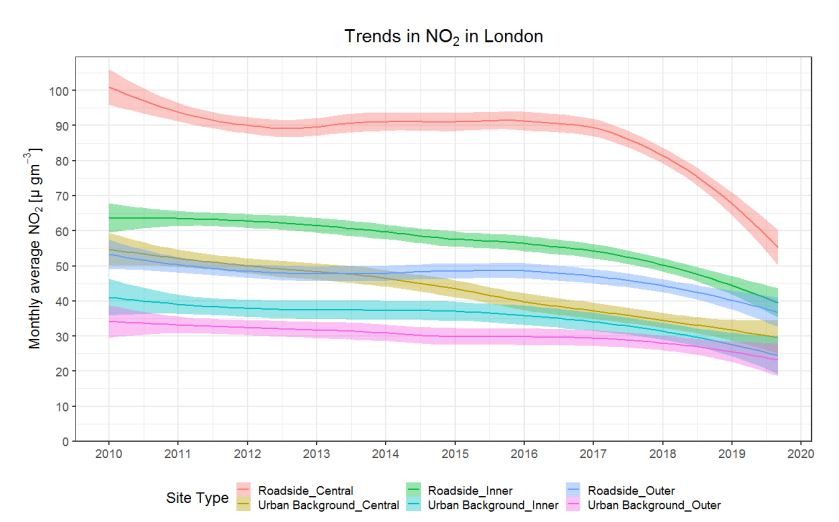
The claim asks whether municipal governments should prohibit most private cars from downtown areas on the ground that doing so would materially reduce local air pollution. The central policy question is not merely whether removing vehicles can clean the streets inside a restricted zone, but whether the resulting improvement is sufficiently large, durable, and geographically broad to justify a general prescription for cities. The strongest case for the claim concerns reduced exposure at busy downtown streets; the strongest objections concern displacement, variation in pollution sources, fleet composition, and the limited direct evidence on permanent blanket bans. The strongest support for downtown car restrictions is that road traffic remains an important urban source of nitrogen oxides and particulate pollution, while traffic-related concentrations rise sharply near busy roads, so reducing vehicle access can improve air quality where downtown pedestrians, workers, and residents are directly exposed. Quasi-experimental evidence from German low-emission zones found improved local air quality, and a Madrid Central case study reported lower nitrogen dioxide inside the restricted central area after access controls were introduced (see Figure 1). A controlled evaluation of London low-traffic neighborhoods likewise found less motor traffic and lower roadside nitrogen dioxide within intervention areas, while a review of car-free events found that such events commonly reduce traffic-related pollution and noise within their restricted areas (see Figure 2). These studies do not evaluate identical policies, but their convergent findings support the core causal mechanism: materially reducing traffic in a defined area can lower roadside pollution there (see Figure 3). A traffic-reduction policy also reaches pollution that vehicle electrification alone leaves behind, because brake, tire, and road wear remain sources of non-exhaust particulate matter. Accordingly, reducing vehicle travel can address both tailpipe emissions from combustion vehicles and particulate emissions associated with vehicle movement, whereas replacing combustion cars with electric cars addresses only part of that burden. The case becomes broader when car restrictions are paired with safe walking and cycling routes and clean public transport, because shifting trips away from cars can combine lower emissions with greater physical activity and fewer traffic hazards. Because traffic pollution is spatially concentrated near busy roads, replacing rather than rerouting downtown car trips can reduce exposure at crowded streets while also avoiding some of the external costs of motor traffic. The wider intervention literature also provides a plausible health rationale: a systematic evidence map found that traffic restrictions, low-emission zones, pricing, transit, and active-travel measures can alter emissions or air quality. That literature supports the prospect of health gains from lower exposure, but uneven methods and limited causal evidence prevent assuming that a permanent comprehensive ban would necessarily produce equal or larger health benefits than the interventions actually studied. The principal challenge to the claim is that most strong evidence concerns low-emission zones, low-traffic neighborhoods, congestion pricing, or temporary car-free events rather than comprehensive, permanent prohibitions on most private cars throughout downtown areas. The systematic evidence map describes a large but uneven literature with inconsistent outcome measurement and limited causal evidence for many intervention types; temporary-event evidence may not predict long-run travel adaptation, and German results directly establish the effectiveness of targeted high-emitter restrictions rather than blanket exclusion. A second challenge is displacement: poorly designed traffic controls can move congestion and emissions onto boundary roads or into adjacent neighborhoods instead of reducing them overall. Displacement is a risk rather than an inevitable outcome: the London low-traffic-neighborhood evaluation found no corresponding overall boundary-road increase during its study period, while the Madrid evaluation indicates that surrounding locations must nevertheless be included in any assessment. Even where vehicle regulation succeeds, fine-particle exposure disparities may persist because multiple emission sources and spatial inequalities continue to shape exposure. Fewer private cars also do not guarantee a clear reduction in every measured pollutant, because meteorology, background concentrations, fleet changes, and simultaneous policies can obscure or offset the effect of traffic reduction. The official London congestion-charge evaluation modeled modest emissions benefits but could not confidently attribute measured concentration changes to the charge because several causal influences operated at once. A government-commissioned review similarly concluded that measured effects of transport interventions are often small, context-dependent, and difficult to isolate, and it judged packages combining restrictions with cleaner fleets, transit, active travel, and enforcement more credible than single measures. Finally, a universal prescription is weakened by substantial variation in the share of ambient particulate pollution attributable to transport across cities and regions. Where industry, residential combustion, shipping, dust, or transported regional pollution dominates, restricting downtown cars will have a smaller effect on particulate concentrations than where road traffic is the principal local source. Source diagnosis therefore must precede intervention choice, rather than treating private-car access as the dominant pollution determinant in every downtown. The evidence therefore supports a conditional proposition: substantial downtown traffic reduction can lower pollution at exposed streets, but outcomes depend on zone design, exemptions, enforcement, replacement transport, freight arrangements, fleet cleanliness, and whether trips disappear or merely reroute. Restrictions are more credible when paired with adequate public transport, safe active-travel infrastructure, clean bus and taxi fleets, enforceable access rules, and measures designed to avoid simple rerouting. Monitoring must cover both the restricted area and boundary roads, because an internal improvement does not by itself establish a net reduction or an equitable distribution of exposure. Targeted access rules may sometimes capture much of the air-quality benefit without excluding every private car, as German low-emission zones improved local air quality by barring higher-emitting vehicles rather than all vehicles. That evidence directly supports pollutant-based restrictions and only indirectly supports a more comprehensive ban, so municipalities should compare a blanket prohibition with vehicle-emission standards, pricing, and narrower access controls. The relevant outcome should also be specified: a policy can materially reduce exposure on dense downtown streets even when it produces a smaller change in citywide average particulate pollution or leaves wider exposure disparities unresolved. Thus, evidence of a local roadside benefit should not be overstated as proof that the policy resolves urban particulate pollution or environmental inequity as a whole. The decisive gap is not the absence of relevant evidence, but the shortage of direct, long-term evaluations of comprehensive permanent downtown car bans using comparable pollution, displacement, exposure, and health outcomes. Evidence from low-emission zones, neighborhood traffic filters, congestion charges, and temporary events requires an inferential step when applied to the precise policy in the claim. Cross-city transferability remains uncertain because the likely result depends on the local emissions inventory, street network, vehicle fleet, exemptions, enforcement, transit capacity, freight system, and behavioral response. The bundle also does not provide a common quantitative threshold for what counts as a “material” reduction, making that term dependent on the pollutant, spatial scale, baseline concentration, and exposure population selected. The supplied structural classification identifies unresolved conflict-of-interest classifications as the dominant uncertainty driver, so source independence cannot be fully audited from the bundle even though it contains peer-reviewed studies, reviews, government data, and institutional reports. On balance, the evidence supports the narrower conclusion that well-designed downtown traffic restrictions can materially reduce local roadside pollution, especially nitrogen dioxide, but it does not establish that every city should adopt a comprehensive ban on most private cars. Confidence in this balanced conclusion is high, while confidence in the claim's universal policy prescription is lower because the available interventions and urban contexts are heterogeneous. The evidence therefore favors locally tailored restrictions—potentially including a car ban where traffic is a major source and clean alternatives can absorb trips—over an undifferentiated mandate, with the dominant residual uncertainty arising from limited direct evidence on permanent bans and unresolved conflict-of-interest classifications.
Supporting Arguments
P1Removing traffic cuts pollution at densely exposed streets
Traffic-related pollutants are most concentrated near busy roads, making downtown streets important exposure hotspots. Evidence from access restrictions, low-traffic neighborhoods, and car-free events indicates that substantially reducing traffic can lower local nitrogen dioxide and other traffic-related pollution where many pedestrians, workers, and residents are exposed.
79/100 · Direct Evidence
P2Car bans also address non-exhaust particulate emissions
Electric vehicles eliminate tailpipe exhaust locally but still generate tire, brake, and road-wear particles. A policy that reduces vehicle travel, rather than merely replacing combustion cars with electric cars, can therefore address both exhaust and non-exhaust sources.
50/100 · Logical Inference
P3Restricted zones may yield measurable health benefits
The systematic review of low-emission and congestion-charging zones found evidence of health improvements, especially for cardiovascular outcomes. A well-enforced car ban could produce equal or larger exposure reductions, although direct health evaluations of complete permanent bans remain scarce.
81/100 · Logical Inference
P4Cleaner alternatives can multiply the benefits
If road space is reassigned to walking, cycling, and clean public transport, a downtown ban may reduce emissions while increasing physical activity and improving safety and public space. This broader policy package can also reduce the demand for displaced car trips rather than merely diverting them.
35/100 · Expert Opinion
Opposing Arguments
C1Pollution may be displaced rather than eliminated
Drivers may reroute around a restricted downtown, increasing congestion and exposure on boundary roads or in adjacent neighborhoods. Some evaluations did not detect net boundary-road increases, but the possibility depends on the street network, zone size, exemptions, and behavioral responses and must be tested rather than assumed away.
75/100 · Logical Inference
C2Fewer cars do not guarantee lower levels of every pollutant
London's congestion charge illustrates how fleet composition can offset traffic reductions: increased use of diesel buses and taxis was associated with higher nitrogen dioxide despite reductions in some other pollutants. A ban containing broad exemptions for polluting buses, taxis, delivery vehicles, or residents could likewise underperform.
45/100 · Direct Evidence
C3Cars may not be the dominant local pollution source
Transport's contribution to particulate pollution varies widely, while industry, heating, shipping, dust, and regional pollution can be more important in some cities. In those settings, a downtown car ban could impose major mobility costs while producing only a modest change in citywide PM2.5.
43/100 · Data Analysis
C4Direct evidence for complete permanent bans is limited
Much of the strongest available literature evaluates low-emission zones, congestion charges, low-traffic neighborhoods, or temporary car-free events—not comprehensive permanent downtown car bans. Their findings are informative but cannot establish that a blanket ban is always more effective or proportionate than targeted vehicle standards and pricing.
82/100 · Logical Inference
All contributions are reviewed for clarity, balance, and evidence. The strongest insights are elevated into the argument graph — with credit to you.
Help improve this analysis on ProConWiki →