University rankings distort the priorities and behavior of higher-education institutions
Leaning yes
PRO 54%CON 46%
Pro 39% · Con 33% — Nuanced 29% — evidence mixed
What the evidence says Evidence quality: Pending
Graded from the quality of the cited sources · Evidence Protocol
Analysis in progress.
Figures & data
The evidence base behind this claim: 13 distinct cited sources
Every source cited on this claim, counted once at its highest evidence strength and grouped by the side it supports. Generated from this page's own evidence rows — the same records the verdict is computed from — so the chart and the score cannot disagree. Strength labels follow the scoring methodology.

Times Higher Education World University Rankings methodology infographic showing the five weighted pillars—teaching, research environment, research quality, international outlook, and industry—along w
The clearest visual demonstration that a supposedly comprehensive university ranking is constructed from a narrow, explicitly weighted set of research, reputation, internationalization, and industry measures.
Source: educatedtimes.com · Cited in: QS World University Rankings methodology
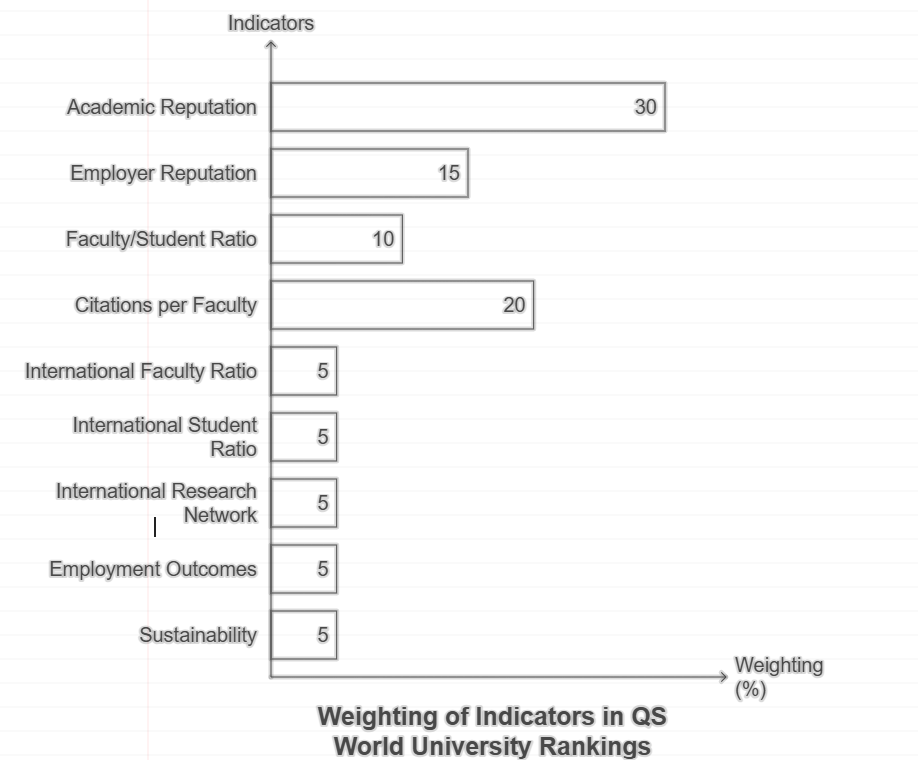
QS World University Rankings methodology weighting chart showing the relative contributions of academic reputation, citations per faculty, employer reputation, faculty-student ratio, internationalizat
This chart makes visible how ranking incentives privilege reputation, research impact, employability, and international visibility while leaving many teaching, access, regional-service, and public-mission activities unmeasured.
Source: frontiersin.org · Cited in: University rankings: What do they really measure?
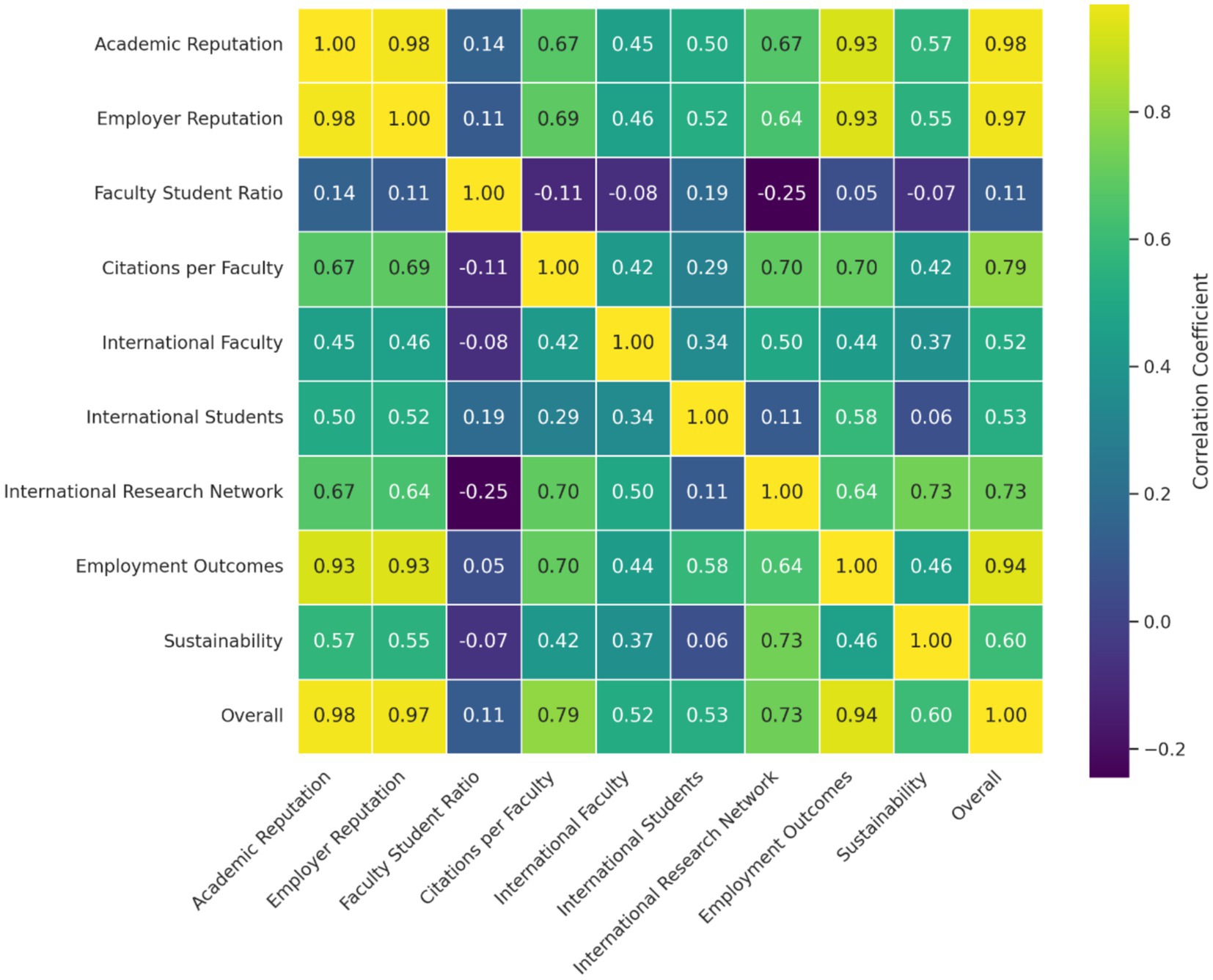
Empirical figure from the study "University rankings: What do they really measure?" showing the relationships among ranking indicators and the underlying dimensions of institutional performance, such
Unlike provider methodology pages, this peer-reviewed analysis helps show that rankings aggregate heterogeneous measures into a general league-table score, making clear why optimizing ranking performance is not equivalent to improving overall educational quality.
All contributions are reviewed for clarity, balance, and evidence. The strongest insights are elevated into the argument graph — with credit to you.
Help improve this analysis →