The slowdown of electric vehicle (EV) adoption in the U.S. poses a challenge to achieving environmental sustainability goals
What's this about?
People disagree about whether slower U.S. sales of electric cars could hurt goals for a cleaner planet. The key issue is whether this slowdown lasts for years.
What supporters say
- Cars and trucks make a large share of U.S. greenhouse gases, which warm the planet.
- Slower electric car sales keep gas cars on roads longer and delay cuts in harmful gases.
- Recent data showed fewer battery EV sales, while sales of hybrid cars rose.
- High prices, weak charging spots, grid needs, and poor policy can make EV buying hard.
What critics say
- A short drop in EV sales does not mean cleaner-car goals will fail.
- Car makers can also use hybrids and cars that burn less fuel to meet tougher rules.
- EV sales could grow again if prices fall and more charging spots appear.
- The country has other ways to cut harmful gases besides electric cars.
The bottom line
A long slowdown in EV sales would create a real problem for climate goals. A brief slowdown does not make those goals impossible, but it makes fast action harder.
The claim is that slowing U.S. adoption of electric vehicles could significantly hinder environmental sustainability goals. The evidence suggests that a prolonged slowdown would create a serious obstacle, though a short-term dip in growth does not mean those goals are out of reach.
The case for
The central concern is timing. Transportation remains a major source of U.S. greenhouse-gas emissions, and replacing gasoline-powered cars with battery-electric vehicles is expected to cut emissions substantially. If EV sales grow more slowly, older combustion-engine vehicles stay on the road longer, delaying the point at which cleaner vehicles replace them. That would postpone emissions reductions that electrification could otherwise deliver 1.
Recent market data give reason to take the possibility seriously. Federal energy analysis found battery-electric sales falling during the period it examined while hybrid sales increased. Industry reports also pointed to slower year-over-year EV growth in early 2024. Buyers continue to face obstacles including high vehicle prices, limited or unreliable charging access, consumer preferences, electricity-grid needs and policy design (see Figure 3) 2.
A sustained slowdown could also make it harder to meet plans built around cleaner cars. EPA vehicle rules require automakers to meet increasingly strict greenhouse-gas standards. Manufacturers have other options, such as efficiency improvements and hybrid technology, but weaker consumer demand for battery EVs could make compliance more difficult and reduce the expected emissions cuts from those rules 3.
The issue is also about fairness. Access to home and public charging is uneven, particularly for renters, lower-income households, rural residents and other underserved communities. A peer-reviewed review found that these groups face greater barriers to adopting EVs. If the transition reaches wealthier households first while others are left behind, it could both slow overall adoption and weaken the equity goals often included in the broader idea of sustainability 4.
The case against
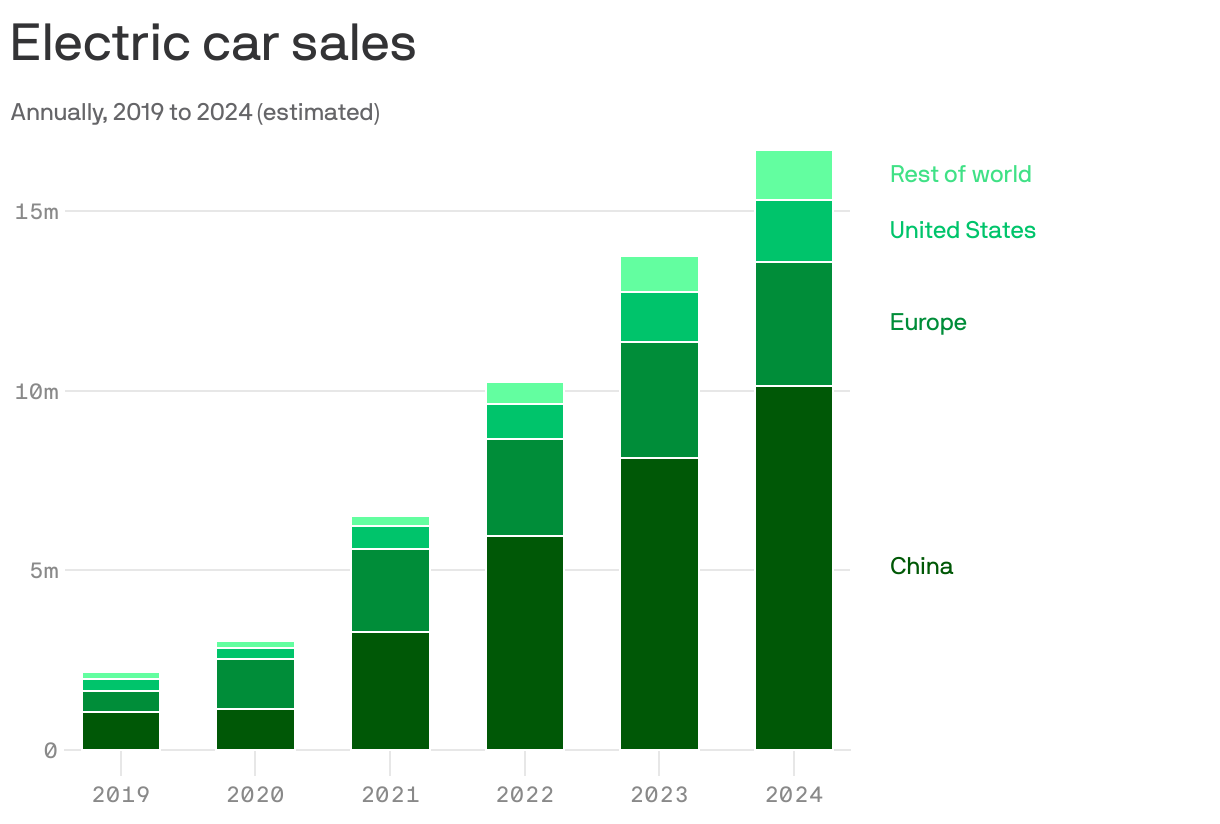
A slowdown in EV growth is not the same thing as a collapse in adoption. The available evidence does not show that U.S. EV sales have stopped or entered a lasting decline. Industry reporting recorded record U.S. EV sales in the fourth quarter of 2024, while federal sources show that public charging infrastructure continues to expand. Growth can slow even as total sales keep rising (see Figure 1) 5.
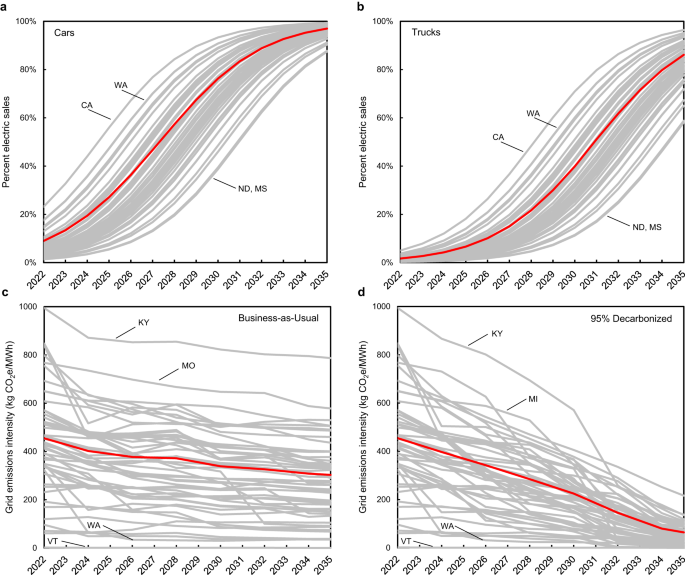
EVs also retain a broad environmental advantage over comparable gasoline vehicles. Studies of their full life cycle—including manufacturing, driving and disposal—generally find that battery-electric vehicles produce lower lifetime greenhouse-gas emissions. Manufacturing an EV, especially its battery, can create more emissions upfront, but lower emissions during use usually outweigh that disadvantage. The size of the benefit varies by region because electricity grids differ in how much carbon they produce 6.
The rise of hybrids offers some near-term cushion as well. Hybrids do not eliminate tailpipe emissions like fully electric vehicles can, but they can reduce fuel consumption and emissions compared with conventional gasoline cars. EPA rules allow multiple technologies to help meet emissions standards, meaning hybrid growth and efficiency gains could partly offset a weaker battery-EV market 7.
Still, EVs are not a complete answer to sustainability on their own. Their environmental record depends on cleaner electricity, battery size, manufacturing practices, recycling and vehicle lifespan. Mining and supply-chain risks remain, as does tire-wear pollution, which electrification does not remove. Better charging access, smaller and more efficient vehicles, public transport and other alternatives will all matter.
The bottom line
The evidence supports the claim if the slowdown lasts. A prolonged weakening of battery-electric adoption would significantly challenge U.S. sustainability goals because it would delay the replacement of gasoline vehicles and the emissions cuts that come with it 1.
But the evidence does not show that a brief period of slower growth makes those goals unattainable. EV sales have continued, charging networks are expanding, and hybrids, cleaner grids and other policies could provide partial compensation. The biggest unanswered question is whether recent market signals mark a lasting shift or a temporary pause—and how much other climate measures can make up the difference.
Figures & data

All contributions are reviewed for clarity, balance, and evidence. The strongest insights are elevated into the argument graph — with credit to you.
Help improve this analysis →