Should San Francisco voters approve Proposition G? (November 3, 2026 ballot)
What's this about?
People disagree about whether Prop G would better balance travel needs and outdoor fun in San Francisco.
It would let cars use the Upper Great Highway on workdays, but keep it open for fun on weekends.
What supporters say
- The plan keeps the road closed to cars on weekends and most holidays, when many people visit.
- Opening the road on workdays could ease some extra cars on nearby streets.
- San Francisco used a similar plan in the past, so this setup may work again.
What critics say
- The plan would cost a lot of public money, such as money for upkeep and sand control.
- Cars would block park use on most workdays, so people would lose many chances for walks, play, and ocean views.
How to read this
The number of points on each side does not show who is right; check how strong each point’s proof is.
Proposition G would reopen San Francisco’s Upper Great Highway to private vehicles on weekdays while keeping it available for recreation on weekends and holidays. The question is whether that trade would create a better balance between transportation needs and public access to the coast.
The case for
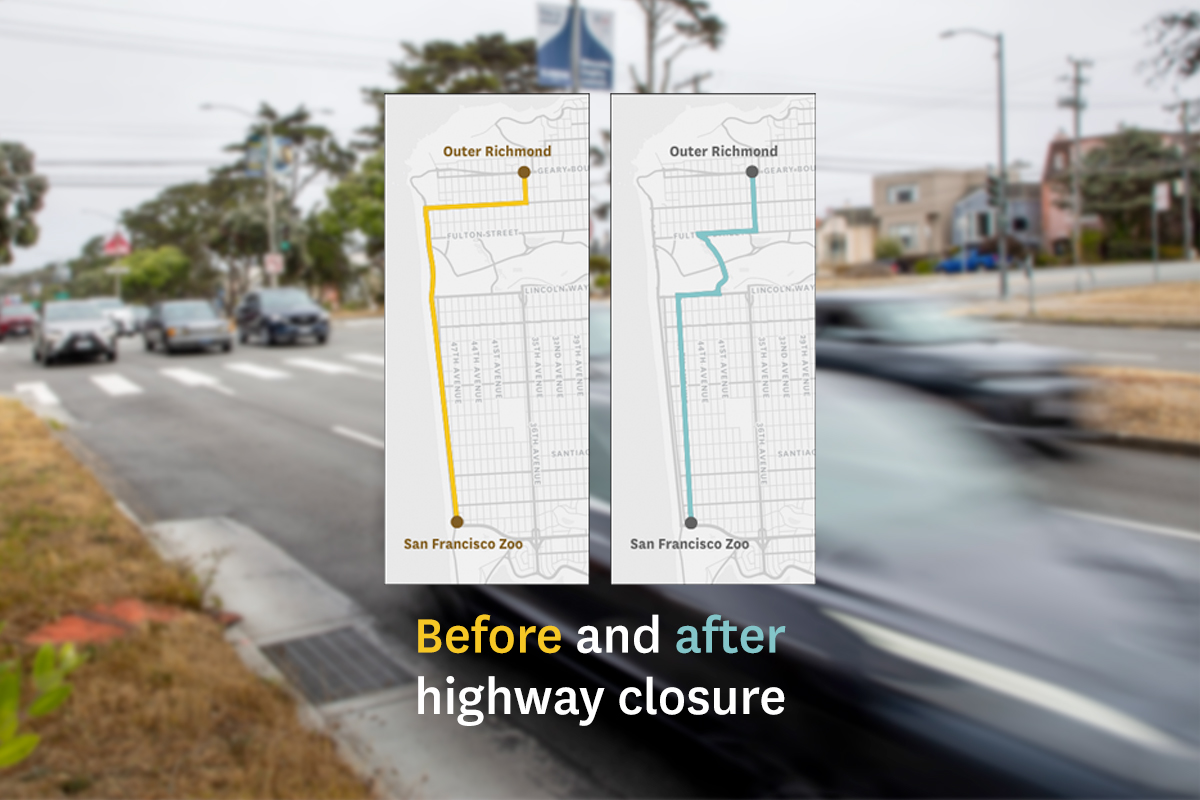
The strongest argument for Proposition G is that it could restore a direct north-south route during the workweek without ending the corridor’s main recreational periods. SFMTA data and other route analyses show that traffic patterns changed after the highway closed, with worsening conditions reported on some nearby streets. That suggests reopening could reduce at least some local traffic diversion, although the evidence does not provide a firm estimate of the citywide effect. 1 (see Figure 1)
The measure would close Sunset Dunes Park to private vehicles from Monday at 4 a.m. until Friday at 6 p.m., except on weekday holidays. The highway would remain closed to vehicles from Friday evening through Monday morning and on holidays. That makes Proposition G a partial reopening, not a complete replacement of recreational access. Visitation data show that the corridor is widely used for recreation, and the schedule would preserve regular weekend and holiday opportunities. 2 (see Figure 2)
Supporters can also point to San Francisco’s earlier use of a similar arrangement: weekday vehicle access combined with weekend and holiday closures. That history offers evidence that the operating model is familiar and potentially workable. But it does not show that the same approach would perform equally well under today’s traffic, maintenance, permitting and sand-management conditions. 3
The case against
The central objection is that Proposition G would remove public access to the park during most weekdays, while its transportation benefits remain uncertain and localized. The available visitation data show substantial use of the corridor, but do not establish that weekday demand is low or that weekend and holiday access would provide equal recreational value. The concern is therefore not that all recreation would disappear, but that an important type of access would be exchanged for a benefit that has not been clearly measured. 5 (see Figure 2)
The financial costs are more clearly documented than the measure’s overall benefits. The Controller estimates about $9.8 million in one-time capital costs and between $500,000 and $1.9 million annually. These expenses could include traffic signals, roadway upkeep, sand removal and dune reshaping. Lower weekday park staffing and maintenance might offset part of the increase, but the net fiscal effect remains unclear. 4
Traffic evidence also cuts both ways. Some studies report congestion or safety problems on nearby streets after the closure, while others find that conditions vary by route and time. The evidence supports the possibility of relief in particular corridors, but not a simple claim that reopening would improve transportation across the city. (see Figure 3)
Reopening would not be automatic. Proposition G would require Coastal Act and other government approvals, and those reviews could impose conditions or additional costs. The city’s eventual spending would also depend on future decisions about park services, roadway maintenance and promenade design.
- Proposition G ballot digest media.api.sf.gov
- Visitation Data sfrecpark.org
- Proposition G ballot digest media.api.sf.gov
- Great Highway Pilot Project sfmta.com
- Proposition G ballot digest media.api.sf.gov
- Ocean Beach Short-term Erosion Mitigation Project: Sand Relocation and Backpass sfpuc.gov
- Proposition G ballot digest media.api.sf.gov
- Visitation Data sfrecpark.org
- Sunset Dunes Background & Timeline sfrecpark.org
Figures & data