Should San Clemente voters approve Measure M? (November 3, 2026 ballot)
What's this about?
People disagree about whether San Clemente should pass Measure M. It would add a 1% sales tax for 10 years.
What supporters say
- The measure would help face real dangers from beach loss and wildfires.
- Fire funds could pay for safer homes, cleared brush, and plans that help stop fires.
- Separate funds, checks, and yearly reports could help people track the money.
- Local tax money could help if state or federal funds do not arrive.
What critics say
- Beach sand can wash away, so the city may need to pay for sand again and again.
- The measure does not show how much good each dollar would bring compared with its cost.
- A sales tax can hurt poorer people more because they spend more of what they earn.
How to read this
The number of points on each side does not show who is right; strong proof matters more.
Measure M would impose a 1% transactions-and-use tax for 10 years in San Clemente, with the money dedicated to beach protection and wildfire preparedness. The case for approval rests on real local hazards and spending controls; the case against focuses on uncertain results, repeated costs and the tax’s possible burden on lower-income households.
The case for
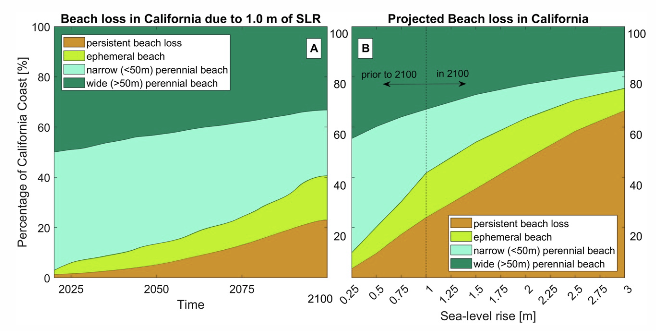
San Clemente faces documented threats from coastal erosion and wildfire. The Army Corps has described a federally authorized shoreline project for the city, while local officials monitor beach conditions. USGS modeling also suggests that rising seas will shrink nearly all Southern California beaches, even though past beach nourishment has helped expand many of them. That evidence supports continued adaptation, though it does not show that Measure M’s funding level would solve the problem. 1 (see Figure 1)
The wildfire portion could pay for measures widely recognized as useful, including home hardening, defensible space and vegetation management. Federal and state guidance says reducing flammable vegetation and creating defensible space can lower the chance that fires will damage or destroy buildings. Measure M also allows spending on fire protection, emergency medical response and wildfire-prevention outreach. The evidence is stronger that these are sensible categories of work than that they would produce a specific reduction in San Clemente’s future losses. 2
The measure would not be an unrestricted general-revenue tax. It would create two restricted funds, with money split equally between beach and fire purposes. The official analysis estimates about $15 million a year and calls for independent audits, oversight, public accounting and an annual accountability report. These safeguards could make it harder to divert funds to unrelated city needs and would give residents ways to track spending. They cannot, however, guarantee that projects are chosen efficiently or succeed. 3
Local money could also supplement uncertain federal or outside funding. San Clemente is identified as a local sponsor of the Army Corps project, while coastal work requires sediment sourcing, environmental review, monitoring and technical planning. A dedicated local revenue stream could give the city flexibility beyond any single federal project. But the record does not show the size of the funding gap or prove that this tax is the least expensive option. 4
The case against
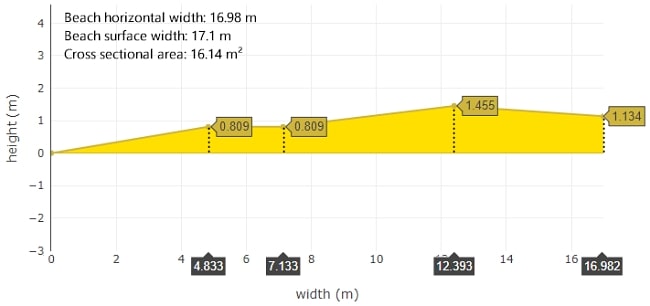
Beach nourishment may protect the shoreline, but it is generally temporary, costly and dependent on local conditions. Research finds that how long added sand remains depends on sediment movement and the shape of the shoreline. City and Army Corps documents also describe erosion control as an ongoing process involving monitoring, environmental review and repeated technical decisions. A 10-year tax could therefore finance maintenance rather than a permanent solution, while nourishment may carry site-specific environmental costs. 5 (see Figure 2)
The official materials provide a revenue estimate and list eligible uses, but they do not quantify the expected benefits. They do not say how much additional sand would be placed, how long it would last, how much coastal damage would be avoided or how much wildfire risk would fall. Nor do they set project-level performance targets or compare Measure M with alternative funding options. Audits can show how money was spent, but they cannot prove in advance that the tax is proportionate to the benefits. 6
There is also an equity concern. Because the tax applies to taxable purchases rather than directly to income or wealth, consumption-based taxes can place a larger relative burden on lower-income households. But the available evidence does not calculate Measure M’s specific effect on San Clemente residents. Visitors, businesses and other nonresidents may pay part of the tax when they make taxable purchases in the city, while residents would pay it on their own purchases. The split is unknown. 7
- San Clemente Shoreline Protection Project spl.usace.army.mil
- San Clemente Nature-Based Adaptation Project Feasibility Study sanclemente.gov
- Spring 2025 Beach Profile Survey Report sanclemente.gov
- Disappearing Beaches: Modeling Shoreline Change in Southern California usgs.gov
- Protecting Structures and Improving Communities from Wildland Fire gao.gov
- California Wildfire Mitigation Program caloes.ca.gov
- Fire Hazard Severity Zones osfm.fire.ca.gov
- Measure M official ballot question and impartial analysis ocvote.gov
- San Clemente Shoreline Protection Project spl.usace.army.mil
- Spring 2025 Beach Profile Survey Report sanclemente.gov
- Measure M official ballot question and impartial analysis ocvote.gov
- Draft Supplemental Environmental Assessment: San Clemente Shoreline Protection Project spl.usace.army.mil
- Seasonal persistence of a small southern California beach fill doi.org
- The sustainability of beach nourishments: a review of nourishment and its environmental impacts doi.org
- Jeopardizing the environment with beach nourishment pubmed.ncbi.nlm.nih.gov
- Nourish the Beach: Connecticut Beaches and Dunes beachduneguide.uconn.edu
- Regressive revenue sourcing by local governments journals.sagepub.com
- Allocating Local Sales Taxes: Issues and Options lao.ca.gov
- District Tax: Local and District Tax Guide for Retailers cdtfa.ca.gov
Figures & data