Should Piedmont voters approve Measure GG? (November 3, 2026 ballot)
What's this about?
People disagree about whether Piedmont voters should approve Measure GG in November 2026.
The measure would raise the tax paid when people sell or buy property.
What supporters say
- Measure GG could give the city about $1.5 million more each year to spend as needs change.
- The money could help pay for services, roads, parks, drains, and public buildings.
- The tax applies when property changes hands, not every year to every homeowner.
What critics say
- The city may collect less money than it predicts if fewer people sell their homes.
- A higher tax may make some people delay moving or avoid selling their homes.
- The tax may slow home sales and reduce reasons to build new homes.
How to read this
The number of points on each side does not show which side is right; strong proof matters more.
Measure GG would raise Piedmont’s real-estate transfer tax in exchange for more unrestricted money for city government. The choice pits greater budget flexibility against possible effects on home sales, household mobility, housing activity and the reliability of the projected revenue.
The case for
The strongest argument for Measure GG is that it could provide a sizeable, flexible source of city revenue without charging every property owner annually. The City Attorney’s analysis estimates about $1.521 million in additional annual revenue, with no legal restriction requiring the money to go to a particular program. 1 That would allow the City Council to shift funds among public safety, roads, drainage, parks, public facilities and other needs as priorities change.
The tax would apply when property changes hands rather than simply because someone owns a home. That may appeal to voters who prefer a charge tied to a transaction instead of an annual bill for all property owners. 2 However, who ultimately bears the cost may depend on local market customs and negotiations between buyers and sellers. The person legally responsible for paying the tax is not necessarily the person who bears its economic cost.
Piedmont’s official materials point to continuing needs involving services and public spaces. Even though the city has adopted a balanced budget, that does not eliminate future demands for maintenance, infrastructure and capital projects. A recurring general-revenue source could help the city compete for funding among those priorities. 3 The measure would not guarantee money for any one of them, however. Its proceeds would remain unrestricted, leaving accountability largely to the council’s budget decisions, public oversight and voters’ trust.
The case against
The central concern is that a higher transfer tax could discourage or delay some property sales. A peer-reviewed study using Finnish administrative data found that higher housing transfer taxes reduced household mobility, making it plausible that some Piedmont residents would postpone moving or become less willing to transact. But Finland’s tax rate, housing market and institutions differ from Piedmont’s, so the study does not show how large the local effect would be. 4 Its findings illustrate a possible risk rather than a precise forecast (see Figure 1).
Revenue itself could also be less dependable than the city’s estimate suggests. Transfer-tax receipts rise and fall with home prices and the number of transactions. If sales decline, prices weaken or buyers and sellers adjust their negotiations, the city could collect less than projected. A Los Angeles study also found that transfer taxes can affect property-tax receipts and other fiscal results beyond the direct revenue, meaning the $1.521 million should not automatically be treated as a guaranteed net gain. 5
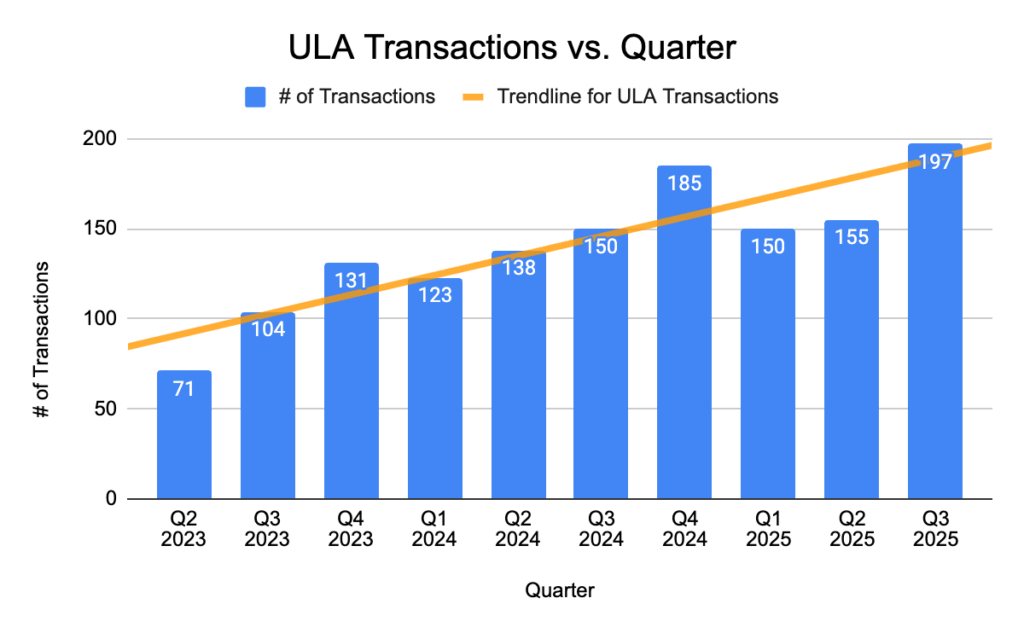
Evidence from Los Angeles raises further concerns about housing markets and construction incentives, but its usefulness here is limited. Measure ULA in Los Angeles was a much larger, tiered tax imposed in a substantially different market. Its observed effects therefore provide context, not a direct prediction for Piedmont. 6 The available research does not establish how Measure GG would affect housing supply or development in the city (see Figure 2).
The main weakness in the opposition’s case is its lack of Piedmont-specific estimates. The strongest studies concern Finland and Los Angeles, while some other opposing analyses come from advocacy groups and deserve less weight than independent research or official sources. There is no clear local estimate of the measure’s effect on mobility, transaction volume, net revenue or who would ultimately pay.
- City Attorney’s Impartial Analysis of Measure GG acvote.alamedacountyca.gov
- City Attorney’s Impartial Analysis of Measure GG acvote.alamedacountyca.gov
- Tax Information piedmont.ca.gov
- Additional revenue sources for facilities piedmont.ca.gov
- City Attorney’s Impartial Analysis of Measure GG acvote.alamedacountyca.gov
- Council adopts balanced budget June 2025 piedmont.ca.gov
- Proposed FY2025-26 budget May 2025 piedmont.ca.gov
- Revisiting the effects of housing transfer taxes sciencedirect.com
- City Attorney’s Impartial Analysis of Measure GG acvote.alamedacountyca.gov
- Fiscal externalities of transaction taxes: Evidence from the Los Angeles Mansion Tax sciencedirect.com
- Housing Downturn Takes Toll on Cities’ Revenue nytimes.com
- Taxing the Top, Building the Bottom? The Impact of Los Angeles’ Mansion Tax anderson-review.ucla.edu
- Los Angeles’ Mansion Tax: Evidence from Commercial Real Estate Transactions doi.org
- Transfer Tax Analysis communitytaxcoalition.org
- New National Report Finds Real Estate Transfer Taxes Suppress Housing Supply communitytaxcoalition.org
Figures & data