Should Los Altos voters approve Measure D? (November 3, 2026 ballot)
What's this about?
People disagree about whether Los Altos voters should approve Measure D on November 3, 2026.
The plan would guard downtown parking and some trees, but may make new projects harder.
What supporters say
- Measure D would protect 10 city-owned parking plazas and some trees from major changes.
- The city has about 1,400 free public parking spaces downtown for people who live, work, or shop there.
- Voters would get a direct say before the city sells or changes these shared public places.
- This rule could stop a future city council from making a choice that people cannot undo.
What critics say
- Measure D may limit new homes, shops, public places, and travel projects on the parking sites.
- A county review says the plan could add more steps before the city approves new projects.
- Those steps could slow city plans when needs change.
- The plan could make it harder to reuse downtown land for homes, art, travel, or business.
How to read this
The number of points on each side does not show who is right; check how strong the proof is behind each point.
Los Altos voters will decide on Measure D on Nov. 3, 2026. The proposal would protect city-owned downtown parking plazas and certain trees, but could also make future housing, transportation and redevelopment projects harder to approve.
The case for
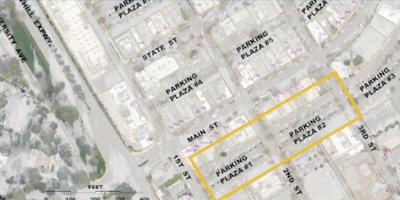
Measure D’s clearest benefit is protecting an existing public asset. It would shield 10 City-owned Downtown Parking Plazas and protected trees from being sold or changed in ways that reduce parking, access or convenience unless voters approve the change separately. The City reports about 1,400 free public parking spaces downtown, making preservation a significant practical issue for residents, workers and visitors, even though the available evidence does not show whether the current amount is the right size. The plazas’ distribution across downtown also affects how useful that system is (see Figure 1). 1
The measure would also give voters a more direct role in major decisions about public land. Instead of leaving those choices entirely to future City Councils or administrative processes, Measure D would require a separate majority vote for many changes. Supporters could view that as a safeguard against an irreversible sale or redevelopment of shared community assets. 2
That benefit is mainly about who makes the decision, rather than evidence that elections produce better land-use results. The materials show what the approval requirement would be, but not whether voters would consistently reach better outcomes than elected officials or planning agencies.
The case against
The strongest objection is that Measure D could limit the City’s ability to redevelop downtown land for housing, civic, cultural, transportation or commercial uses without a citywide vote. An official impartial analysis reports that a county impact review found the measure could potentially restrict new development by adding requirements for projects on the plazas. 3
Examples from Menlo Park and Berkeley show that city-owned downtown parking land can be used for affordable housing and related services. Those examples do not prove that similar projects would work in Los Altos, but they illustrate the opportunity cost of permanently protecting the plazas. Measure D would not completely ban housing: two plazas could be developed for affordable housing without a vote. Other housing or mixed-use plans, however, could still require voter approval.
Opponents also argue that the measure could slow the City’s ability to respond to changing transportation, climate and downtown-design needs. Bicycle facilities and electric-vehicle parking are among the changes they say could be affected, while the measure covers physical alterations that reduce protected parking access or convenience. 4 The concern is plausible, but the available official materials do not quantify how often such conflicts would arise or how much elections would cost or delay projects.
General research on parking cannot settle the local question. Studies link parking infrastructure and minimum parking rules to barriers to housing, less walkable development, environmental costs and greater dependence on cars. But those findings do not establish that Los Altos has too much parking or that Measure D would produce the same effects. Similarly, the City’s estimate of 1,400 spaces shows the size of the resource, not its actual use, future demand or replacement cost.
Pros — Supporting Arguments
Cons — Opposing Arguments
- Ballot question for Measure D vote.santaclaracounty.gov
- City Attorney’s Impartial Analysis of Measure D files.santaclaracounty.gov
- Downtown Parking losaltosca.gov
- Ballot question for Measure D vote.santaclaracounty.gov
- Measure D | City of Los Altos losaltosca.gov
- Measure D supporters’ initiative information forlosaltos-now.com
- Ballot question for Measure D vote.santaclaracounty.gov
- City Attorney’s Impartial Analysis of Measure D files.santaclaracounty.gov
- The Impacts of Minimum Parking Requirements: A Research Synthesis escholarship.org
- Affordable Housing on City-owned Downtown Parking Lots Feasibility Analysis menlopark.gov
- Berkeley Way Apartments and the Hope Center aia.org
- Ballot question for Measure D vote.santaclaracounty.gov
- City Attorney’s Impartial Analysis of Measure D files.santaclaracounty.gov
- Vote NO on Measure D to Reject Voter Approval for Parking Plaza Development greenbelt.org
Figures & data